
The consulting industry is undergoing a fundamental transformation. What was once shaped by large firms and independent consultants is now evolving into a dynamic digital ecosystem driven by online consulting marketplaces. These platforms make it easier than ever for businesses and individuals to access expert advice on demand, regardless of location, industry, or scale.
While solo consultants continue to play an important role, the strongest growth is happening in multi-expert marketplaces. Instead of depending on a single advisor, clients gain access to a curated pool of specialists across multiple domains. For marketplace founders, this model creates powerful network effects, enables faster scaling without expanding internal teams, supports multiple niches under one brand, and opens the door to recurring revenue through commissions and subscriptions.
At the core of every successful consulting marketplace is the right software foundation. The solution you choose directly impacts launch speed, scalability, user experience, and long-term profitability. Thus, relying on generic or mismatched tools often leads to limited customization, growing dependency on third-party services, and rising operational costs. Choosing the right consulting marketplace software is therefore not just a technical choice, but a strategic business decision that shapes the future of your platform.
Table of Contents
The Shift Toward Expert-Centric Consulting Platforms
Over the past few years, consulting has expanded far beyond traditional management or IT advisory. Today, businesses and individuals actively seek expert guidance across areas such as business strategy, legal compliance, financial planning, career coaching, wellness consulting, marketing advisory, and niche-specific technical expertise. Digital-first consulting platforms have made it easier than ever to access specialized knowledge without long-term contracts or geographic limitations.
This shift is driven by several factors:
- Businesses prefer flexible, outcome-driven consulting models
- Professionals increasingly choose independent consulting over full-time roles
- Global remote work has normalized virtual consultations
- Clients expect faster access to expertise with transparent pricing
As a result, consulting marketplaces have emerged as a scalable and efficient business model that benefits both experts and clients. Experts gain broader reach and flexibility, while clients benefit from choice, speed, and reliable access to specialized knowledge.
Key Features to Look for in Consulting Marketplace Software
Before comparing software options, it is important to understand the essential features that shape a successful consulting marketplace. The right capabilities ensure smooth operations, strong user trust, and the flexibility needed to scale as your platform grows. Given below are some of the key features that you should look for while selecting consulting marketplace software:
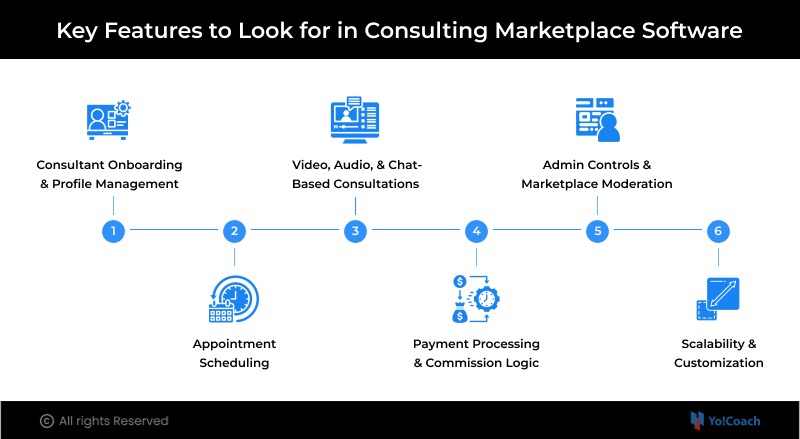
1. Consultant Onboarding & Profile Management
Your platform must support seamless onboarding for multiple consultants. Thus, the software should support structured profile creation, clear expertise categorization, availability setup, and verification processes. Well-organized consultant profiles build trust, improve discoverability, and help clients make confident, informed choices.
2. Appointment Scheduling (1:1, Recurring, Timezone-Aware)
Consulting is time-based. Advanced help with scheduling is essential, especially for global marketplaces. Your software should support:
- One-on-one and recurring sessions
- Automatic timezone detection and conversion
- Consultant availability and calendar management
3. Video, Audio, and Chat-Based Consultations
Integrated communication tools are essential for delivering consultations at scale. Built-in video, audio, and chat features allow consultations to take place directly on the platform, creating a consistent experience while reducing reliance on third-party tools and integrations.
4. Payment Processing & Commission Logic
Effective monetization is a cornerstone of any consulting marketplace. Hence, the software should handle :
- Secure payments
- Commission-based revenue models
- Multi-currency support
- Automated payouts to consultants
5. Admin Controls & Marketplace Moderation
To maintain quality and trust, marketplace owners need robust administrative controls. A comprehensive admin dashboard should support:
- Consultant approvals
- Session monitoring
- Dispute handling
- Revenue tracking
6. Scalability & Customization
As your consulting marketplace grows, the software must scale without friction. Customization options allow you to adapt workflows, branding, and feature sets over time, ensuring the platform continues to support your business model, market expansion, and evolving user expectations.
Launch a Future-Ready Consulting Platform
How to Choose the Right Consulting Marketplace Software
Selecting the right consulting marketplace software goes beyond checking feature lists. It requires aligning the platform with your long-term business vision, growth strategy, and level of control you want over your marketplace.
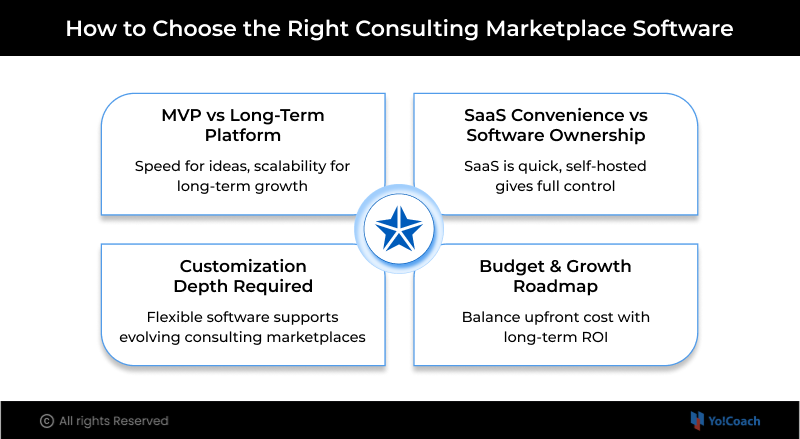
1. MVP vs Long-Term Platform
If you’re testing a new idea, you may prioritize speed. However, if you aim to build a long-term business, investing in scalable software from the beginning can help you avoid costly migrations and redevelopment later.
2. SaaS Convenience vs Software Ownership
SaaS platforms offer quick setup and ease of use, but they often come with limitations on customization, data ownership, and revenue control. Self-hosted solutions provide full ownership of your platform, branding, and data, making them better suited for businesses planning serious growth.
3. Customization Depth Required
Consulting marketplaces tend to evolve rapidly as new services, pricing models, and workflows emerge. Your software should support deep customization and flexibility, allowing you to adapt without needing to rebuild the platform from scratch.
4. Budget and Growth Roadmap
While upfront cost matters, short-term affordability should not outweigh long-term return on investment. Consider all cost factors, including licensing, customization, ongoing maintenance, and scalability, to ensure the software supports both your current needs and future growth plans.
Best Software for Launching a Consulting Marketplace
Choosing the right software is one of the most critical decisions when building a consulting marketplace. The ideal software solution should support consultation-specific workflows, offer long-term scalability, and give you full control over branding, data, and revenue. Below is a list of solutions designed specifically to meet these needs:
1. Yo!Coach
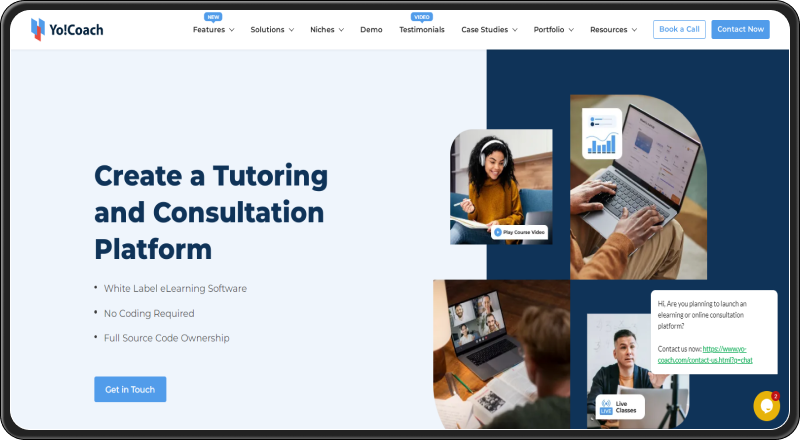
Yo!Coach is a purpose-built software solution built specifically for launching consulting and expert marketplaces. It is a self-hosted, white-label solution that gives businesses complete ownership and control over their marketplace operations.
- Purpose-Built Software for Consulting & Expert Marketplaces
Unlike solutions adapted from eLearning or service marketplaces, Yo!Coach is engineered from the ground up to support consultation-driven business models. Its architecture is designed to handle expert onboarding, session-based services, and marketplace monetization without compromises.
- Self-Hosted, White-Label, and Scalable
Yo!Coach allows full ownership of the platform, enabling businesses to customize branding, workflows, and monetization without restrictions. This flexibility ensures that your platform scales alongside business growth without technical limitations.
- Why Yo!Coach Ranks #1
- Built specifically for consultation marketplaces
- Not adapted from tutoring or generic service software
- Full ownership of brand, data, and revenue
Core Features
- Multi-consultant onboarding & verification
- Advanced scheduling & availability management
- Built-in video, audio, and chat consultations
- Multi-currency payments & commission system
- Powerful admin dashboard
Cons
- Server Requirement: You need to meet the minimum server requirements to host the platform.
Best Use Cases
- Business consulting marketplaces
- Legal & financial advisory platforms
- Career coaching & mentorship networks
- Niche expert marketplaces
Schedule a One-on-One Personalized Demo to See Yo!Coach in Action
2. Pinlearn
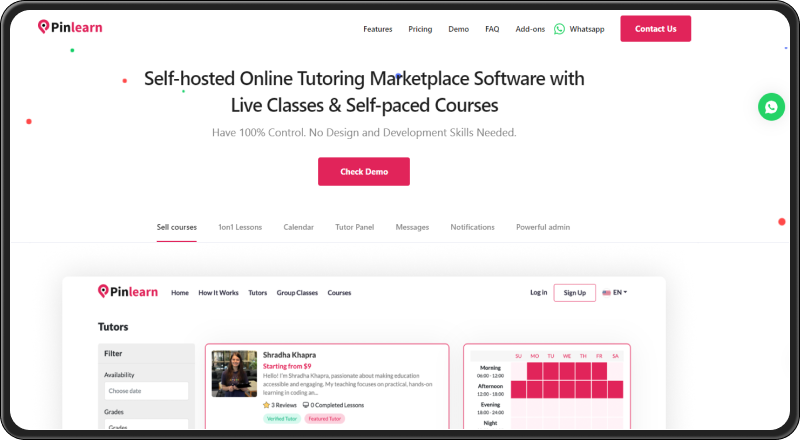
Pinlearn is a self-hosted marketplace script originally designed for online tutoring and eLearning marketplaces. It enables businesses to launch a branded platform with multi-vendor capabilities, live classes, scheduling tools, messaging, and payment capabilities.
Key Features
- One-time license with full access to source code.
- Support for 1:1 and group live classes via integrations like Zoom.
- Appointment and calendar management for sessions.
- Admin can set commissions and integrate with Stripe/PayPal.
Cons
- Not Purpose-Built for Consulting: Designed primarily for tutoring, requiring customization for advanced consulting workflows
- Steeper Learning Curve: Some features, particularly scheduling and payments, may feel less intuitive initially
- Integration Dependencies: Advanced functionality relies on third-party tools
- Customization Effort: Additional development may be needed to align with consultation-specific use cases
3. Jungleworks Panther (Consultation Solution)
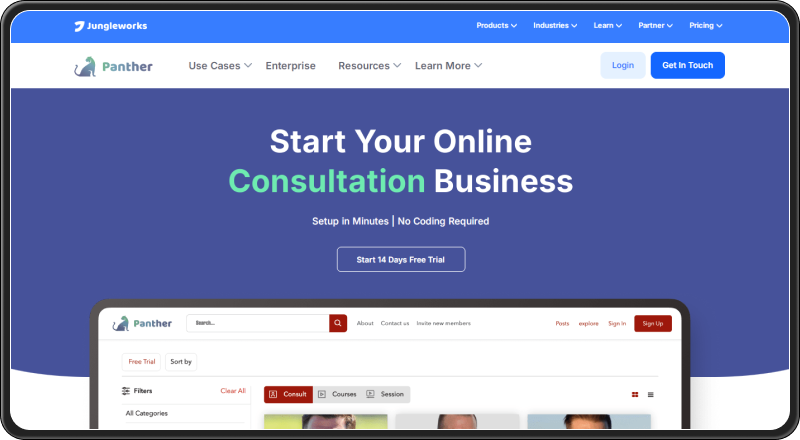
Panther (by Jungleworks) is a SaaS-based marketplace platform that enables you to set up a consultation marketplace quickly without coding. It focuses on booking management, expert discovery, real-time communication, and payments.
Key Features
- Quick setup with minimal technical involvement.
- Built-in video and voice consultation tools with screen share.
- Advanced consultant discovery with filters and categorization.
- Built-in instant chat and in-app notifications.
Cons
- Limited Deep Customization: SaaS platforms typically offer less flexibility than self-hosted options.
- Dependency on Vendor: You rely on Jungleworks for feature updates and uptime.
- May Require Add-Ons: For advanced marketplace logic or workflow custom features.
- Scaling Constraints: Long-term flexibility may be limited for complex marketplaces
4. ByteArbor Consulting Marketplace Template
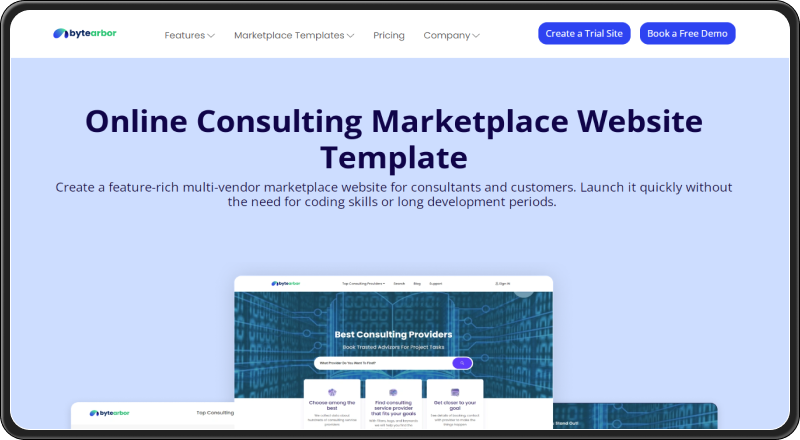
ByteArbor provides ready-made marketplace website templates, including a consulting marketplace option. These templates offer a structured starting point, but platform owners must handle hosting, setup, and further development.
Key Features
- Includes seller accounts, search functionality, booking, and chat tools.
- Support for commission-based transactions.
- Helps customers find relevant experts.
- Basic content management and admin controls.
Cons
- Not a Full Platform: It’s a template you must host and expand.
- Third-Party Integration Needed: For advanced tools such as video calling.
- Requires Technical Setup: Hosting, deployment, and optimization are your responsibility.
- Limited Scalability: Templates may restrict long-term customization and growth
5. Sharetribe
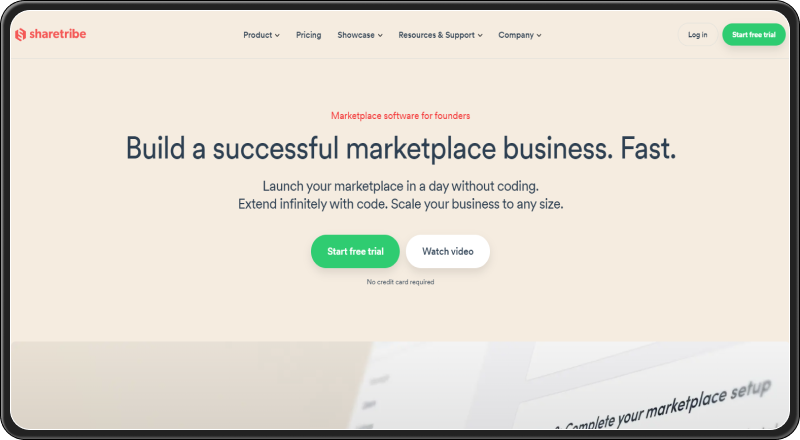
Sharetribe is a popular no-code/low-code marketplace solution that lets you launch service, rental, or product marketplaces quickly. While not consulting-native, it can be adapted for consulting use cases through integrations.
Key Features
- No-code launch suitable for non-technical founders.
- Built-in payment handling with commission support.
- Sellers/consultants can manage listings and transactions.
- Branding, templates, and domain setup.
Cons
- Limited Native Consultation Tools: Doesn’t include built-in video/chat, requires integrations.
- Customization Limits: More advanced customization requires Sharetribe Flex and dev help.
- Higher Cost Over Time: Subscription pricing can add up.
- Workflow Constraints: Not optimized for consultation-specific booking and delivery.
6. Arcadier (Consulting Use Case)
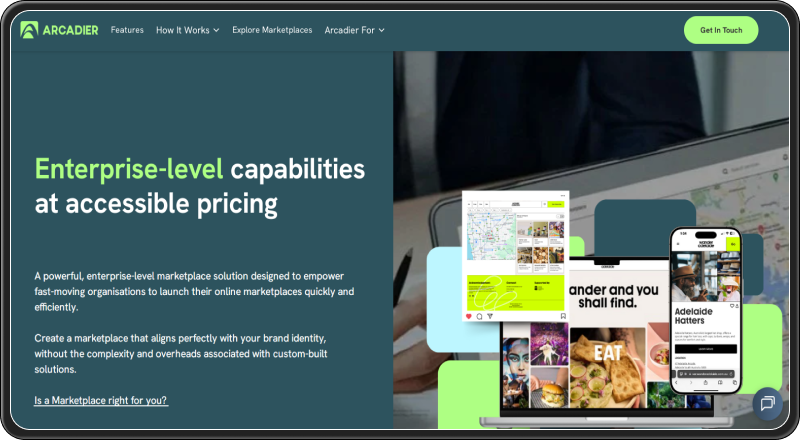
Arcadier is a cloud-hosted marketplace builder that supports products, services, and bookings. It offers basic vendor and transaction management for consulting, but lacks specialized consultation features by default.
Key Features
- Ready-to-use templates for various verticals.
- Integrated vendor dashboards and payment processing.
- Developer tools to extend functionality.
Cons
- Limited Built-in Consult Tools: Requires external integrations.
- Subscription Costs: Ongoing pricing may impact long-term ROI.
- Less Flexible Than Self-Hosted: Custom deep workflows demand developer work.
- Not Consulting-Native: Adaptation is needed for expert-led marketplaces.
7. Kreezalid
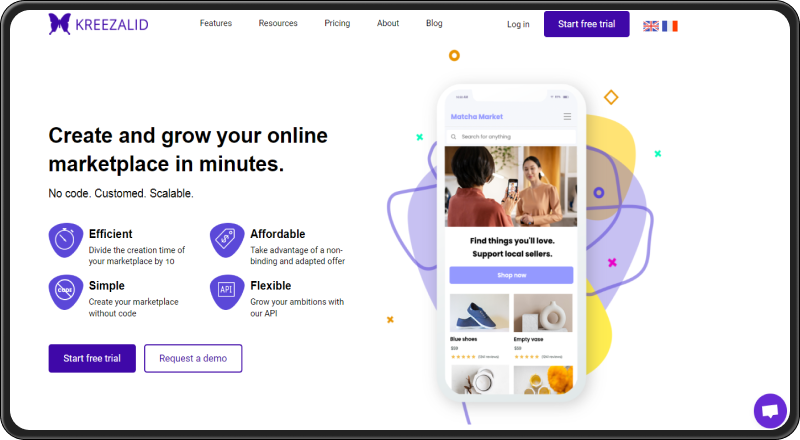
Kreezalid is a SaaS marketplace builder that enables businesses to create and launch online marketplaces without coding. Originally designed for general multivendor marketplaces, it supports physical products, services, rentals, and digital products, making it adaptable for lightweight consulting or expert marketplaces when paired with additional tools or integrations.
Key Features
- Launch a marketplace quickly without developers.
- Marketplace supports services and rentals with calendar booking.
- Apps add scalable features for messaging, reviews, and SEO.
- Marketplaces are mobile-friendly and customizable with them
Cons
- Not Built for Consulting: Real-time consultations require third-party tools.
- Limited Technical Control: Source code cannot be exported for deep customization.
- Feature Constraints: Advanced analytics and custom logic may need plugins.
- Subscription Costs: SaaS pricing may be less cost-effective to scale.
8. VCDoctor
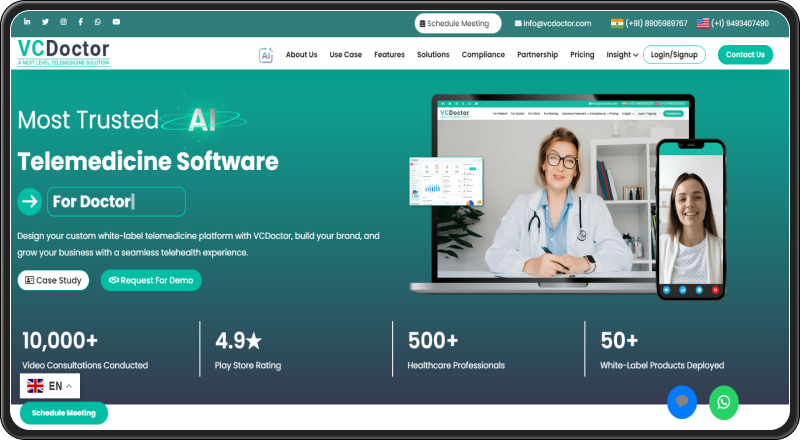
VCDoctor is a white‑label telemedicine software platform that lets healthcare practices and consultation businesses launch branded virtual consultation platforms. It provides secure video consultations, appointment booking, and integrated payments, ideal for businesses that want to offer professional, branded consulting services rather than join an existing marketplace.
Key Features
- Built‑in video calls for face‑to‑face consultations.
- Clients can view appointments, records, and consultation history.
- Built‑in booking and calendar management.
- Integrated payment processing for consultations.
- Mobile‑friendly access for consultants and clients.
Cons
- Healthcare‑Focused: Primarily designed for medical/telehealth contexts; may need customization for business or non‑medical consulting.
- Compliance Burden: Requires appropriate privacy/security compliance (e.g., HIPAA) depending on region.
- White‑Label Complexity: Setting up a fully branded platform may require developer or vendor support.
- Marketplace Limitations: Not optimized for multi-consultant marketplace models.
Looking for the Best Software to Launch Your Consulting Marketplace?
9. Healee
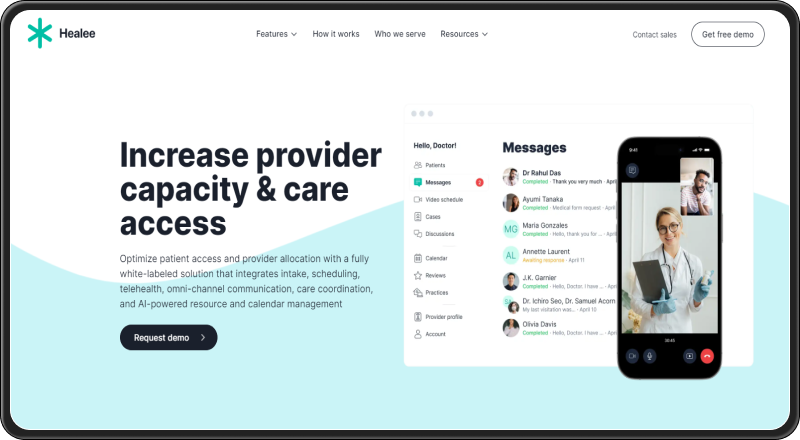
Healee is a white‑label teleconsultation solution that enables clinics, practices, and consulting businesses to host branded virtual consultations with clients. It combines video calls, messaging, and scheduling to deliver a professional consultation experience under your own brand, without building from scratch.
Key Features
- Offer consultations under your own business name.
- Multiple consultation channels for flexibility.
- Built‑in booking and calendar tools.
- Client profiles, history, and session notes.
Cons
- Medical/Health Origin: Tailored toward healthcare consults; may require adjustments for general consulting markets.
- Pricing Complexity: White‑label licensing can be more expensive than generic SaaS.
- Feature Gaps: May not include marketplace‑specific features like multi‑consultant onboarding by default.
- Less Flexible Workflows: Not designed for open expert marketplaces.
10. Mighty Networks
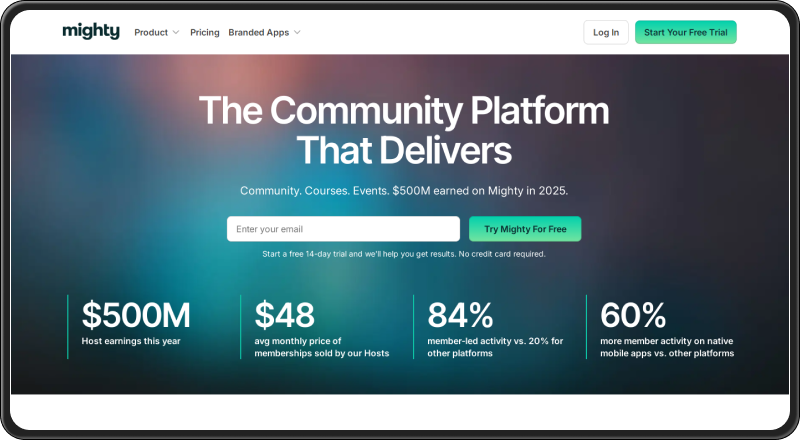
Mighty Networks is a community‑centric platform that helps creators and businesses to build branded online communities, membership programs, courses, live events, and interactive spaces, all in one place. While not a consulting marketplace solution, it can support group coaching and expert-led programs within a community model.
Key Features
- Community-driven spaces with member profiles and discussion feeds
- Courses, challenges, and structured learning programs
- Native live events, workshops, and livestreaming
- Membership and subscription-based monetization in multiple currencies
Cons
- Not Consultation-Native: Lacks built-in one-to-one consulting workflows
- Community-First Model: Focuses more on engagement than transactional consulting
- Limited Workflow Customization: Advanced consulting automation requires integrations
- Subscription Costs: Higher-tier plans can be expensive at scale
Side-by-Side Comparison of Consulting Marketplace Platforms
Each solution differs in consulting focus, deployment model, consultation delivery methods, customization depth, and ideal use cases. The comparison table below helps entrepreneurs and businesses quickly evaluate which platform best aligns with your marketplace goals, technical requirements, and long-term growth strategy. Let’s have a look:
| Software | Consulting-Focused | Deployment Model | Consultation Delivery | Best For |
| Yo!Coach | Yes | Self-hosted, White-label | Built-in Video, Audio & Chat | Full-scale consulting marketplaces, legal/financial advisory, career coaching, niche expert marketplaces |
| Pinlearn | Partial (Tutoring + Consulting) | Self-hosted | Via integrations (Zoom, etc.) | Education + consulting hybrid platforms |
| Jungleworks Panther | Partial | SaaS | Built-in Video & Chat | Fast SaaS consultation launch |
| ByteArbor Template | Partial | Self-hosted | Basic booking & chat tools | Startup marketplaces, minimal viable launch |
| Sharetribe | Not Configurable, not consulting-native | SaaS/Self-hosted | External integrations needed | MVP consulting marketplaces |
| Arcadier | Not Configurable, not consulting-native | SaaS | External integrations needed | Simple consulting platforms |
| Kreezalid | Generic marketplace builder | SaaS | External integrations needed | Lightweight expert marketplaces |
| VCDoctor | Partial (Healthcare-focused) | Self-hosted/SaaS | Built-in Video consultations | Teleconsultation & branded expert consultations |
| Healee | Partial (Healthcare-focused) | Self-hosted/SaaS | Video, Audio & Messaging | Branded virtual consultation apps |
| Mighty Networks | Not consultation-native | SaaS | Community, Live Events, Courses | Expert communities, group coaching, cohort-based consulting |
Suggested Read: 56 Reasons To Choose Yo!Coach Over any other Software
Conclusion
Launching a consulting marketplace takes more than a strong idea. It requires a technology foundation that can support growth, flexibility, and long-term sustainability. While many platforms can be adapted to fit consulting use cases, only a limited number are built specifically to handle the complexities of expert-led marketplaces.
Yo!Coach emerges as a comprehensive, purpose-built solution designed for consultation-driven business models. It offers full ownership, native consultation tools, and the scalability needed for long-term growth. Other solutions can work for MVPs or hybrid setups, but they often come with trade-offs in customization, control, and future expansion.
Turn Your Consulting Marketplace Idea Into Reality
FAQs: Consulting Marketplace Software
Q 1. What is consulting marketplace software?
Ans. Consulting marketplace software is a specialized platform that allows businesses to connect clients with multiple expert consultants through a single platform. These platforms typically include features like consultant onboarding, scheduling, virtual consultations, payments, and commission management to support scalable, service-based marketplaces.
Q 2. Can I build a niche consulting platform with Yo!Coach?
Ans. Yes, you can build a niche consulting platform with Yo!Coach. It supports niche platforms across industries such as legal, finance, career coaching, wellness, and business strategy. You can onboard specialized consultants, manage availability, run virtual sessions, and monetize consultations efficiently within a focused market.
Q 3. Is self-hosted software better than SaaS for a consulting marketplace?
Ans. Self-hosted software offers significant advantages for businesses that plan to scale, maintain full control, and customize their marketplace experience. On the other hand, SaaS platforms prioritize ease of use but may limit flexibility, ownership, and advanced marketplace customization.
Q 4. How long does it take to launch a consulting marketplace?
Ans. The time to launch a consulting marketplace depends on the software, level of customization, and feature requirements. Using a ready-made, purpose-built solution like Yo!Coach, marketplaces can often be launched in a few weeks instead of several months, as core functionality like consultant onboarding, appointment scheduling, and payment systems is already built in.
Q 5. Can I manage payments and commissions easily on a consulting marketplace?
Ans. Yes, you can manage payments and commissions easily on a consulting marketplace. Most consulting marketplace platforms support secure multi-currency payments and flexible commission models. Automated payouts, transaction tracking, and revenue reporting simplify financial management while ensuring transparency for both consultants and platform owners.
Q 6. Do I need technical expertise to run a consulting marketplace?
Ans. No, you do not need to be a tech expert to run a consulting marketplace. Readymade solutions like Yo!Coach is designed for non-technical entrepreneurs and businesses, providing intuitive dashboards, ready-made workflows, and managed features.
Build Your Own Expert Consulting Marketplace Platform
Get In Touch