The eLearning industry has shifted from a convenient digital add-on to a dominant, multi-billion-dollar ecosystem shaping how people learn, upskill, and reinvent their careers. In this shift, Skillshare has emerged as a defining force. Frequently compared to the Netflix of learning, it revolutionized how we consume knowledge, turning education into an addictive, community-driven subscription experience.
This momentum is fueled by the rapid rise of the Creator Economy. Modern learners are moving away from rigid institutions and gravitating toward real-world experts they already trust and follow online. Moreover, subscription-based access has replaced one-off course purchases, micro-learning has made education fit seamlessly into busy schedules, and the focus has shifted from credentials to immediately usable, skill-driven outcomes.
In this guide, we will walk you through the core mechanics behind Skillshare’s success and translate them into a practical blueprint. You will learn how to build a creator-led learning platform that aligns with modern learner expectations and scales effectively in today’s competitive eLearning landscape.
Table of Contents
What is Skillshare & Why is it So Popular?
At its core, Skillshare is a peer-to-peer learning marketplace built around a simple idea of making learning accessible, practical, and engaging. Unlike Udemy, where learners purchase individual courses, Skillshare operates on a membership model. Once the subscription is paid, the entire content library is available for you to explore without hesitation.
Why does it work?
- Lower Barrier to Entry: For a modest monthly fee, learners gain access to unlimited knowledge. This removes the pressure of committing to a single expensive course and eliminates the buyer’s remorse that often comes with one-time purchases.
- Low Friction for Teachers: Teaching on Skillshare does not require formal credentials. If you have real-world expertise, whether in illustration, photography, marketing, or SEO, the platform gives you the tools to monetize that expertise quickly and efficiently.
- Community & Projects: Every class includes a hands-on project, pushing learners to apply what they want. This approach transforms passive viewing into active participation, helping students build tangible portfolios while fostering a strong sense of progress and community.
Overview of Skillshare’s Revenue Model
Building a platform like Skillshare requires an understanding of how value is monetized across learners, creators, and businesses. Skillshare operates on a subscription-based revenue model, but the true differentiator is its Teacher Royalty Pool. This structure aligns platform growth with creator success, ensuring that quality and engagement directly translate into earnings. Further, let’s explore some of the key revenue streams of Skillshare:
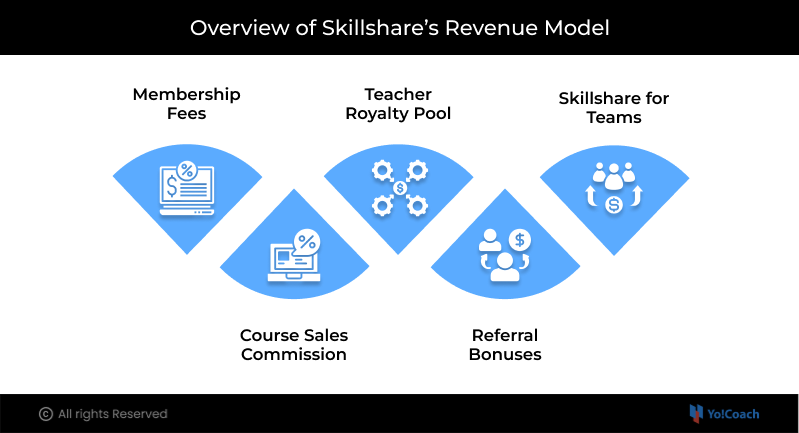
- Membership Fees: This is the primary revenue source. Learners pay monthly or annually for Premium access, unlocking the full course library along with features like offline viewing. The predictable nature of subscriptions helps maintain consistent recurring revenue.
- Course Sales Commission (Pay-Per-Course Add-Ons): While the core library remains subscription-based, select premium or advanced courses can be offered as one-time purchases. The platform earns a fixed percentage commission (e.g., 20–40%) from each transaction, while creators retain the remaining share. This is particularly effective for certification programs, masterclasses, or niche skill tracks.
- Teacher Royalty Pool: Each month, Skillshare puts a percentage of its revenue into a shared royalty pool. This is distributed to instructors/teachers based on the total minutes watched by premium learners. This performance-based approach rewards engaging, high-quality content and motivates creators to continuously improve.
- Referral Bonuses: To accelerate growth, teachers are encouraged to promote their classes using affiliate links. For every new subscriber they bring in, they earn a fixed referral bonus. This turns instructors into brand advocates while reducing customer acquisition costs for the platform.
- Skillshare for Teams: Beyond individual learners, Skillshare taps into the B2B market by offering bulk subscriptions to companies. Organizations purchase licenses for their employees to upskill, providing a stable, high-volume revenue stream to the platform that helps stabilize monthly recurring revenue (MRR).
Turn Creator Knowledge into a Scalable Revenue Model
Steps To Build an Online Learning Platform Like Skillshare
Launching a Skillshare-style learning platform is not about copying an existing model but about designing a differentiated, creator-first ecosystem. The most successful platforms are built on clear positioning, learner-centric experiences, and tools that empower instructors to grow alongside the business. Given below is 5 step guide to help you launch an online learning platform like Skillshare:
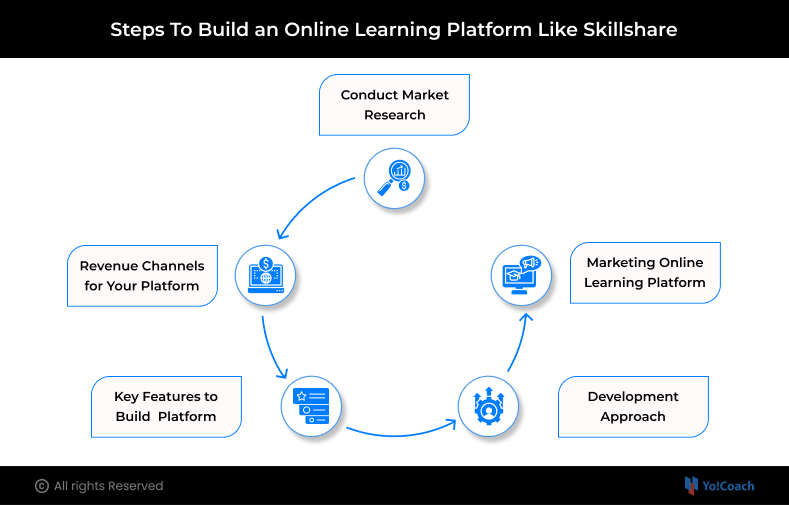
Step 1: Conduct Market Research and Finalize the USPs for Your Platform
The aim is not to copy Skillshare, but to serve learners where existing platforms fall short. Conduct market research by analyzing competitors, reviewing user feedback, and tracking discussions across communities and social channels. These insights help uncover unmet needs, high-demand niches, and willingness to pay.
Additionally, your Unique Selling Proposition is what convinces a visitor to subscribe rather than browse. Strong USPs are specific, outcome-driven, and easy to communicate.
Step 2: Revenue Channels for Your Platform
Beyond the standard subscription, consider these diverse revenue streams to maximize your ROI. Some of the popular revenue channels include:
- Tiered Memberships
Offer multiple plans, such as a Basic tier for on-demand course access and a Pro tier that includes live monthly workshops, certifications, downloadable resources, and private community access. Tiered pricing helps increase average revenue per user while catering to different learner needs.
- Instructor Commission
Charge a platform commission on instructor earnings generated through subscriptions, premium courses, live workshops, or one-on-one sessions. This commission covers hosting, payments, marketing, and platform maintenance, while ensuring instructors benefit from your platform’s reach and tools.
- Corporate/Team Packages
Sell bulk subscriptions to companies and HR departments looking to upskill employees. These packages can include role-based f paths, progress tracking dashboards, and dedicated support, making them a high-value and recurring revenue stream.
- Course Sponsorships
Allow brands to sponsor specific course categories or featured Masterclasses led by high-profile industry experts. Sponsored content offers brands targeted exposure while helping keep learning affordable for users.
- Digital Marketplace
Introduce a shop section where learners can purchase tools, templates, or software recommended in courses, such as design assets, plugins, or learning resources. Revenue can be generated through direct sales, listing fees, or affiliate commissions.
Step 3: Key Features to Build a Platform Like Skillshare
To compete in the learning economy, your platform must provide a seamless experience for all three user types: learners, instructors, and admins. A comprehensive feature set should include:
For Learners (The Students)
- Smart Search & Filters: Allow users to find what they need by filtering courses based on skill level, class duration, and instructor rating. This ensures students engage with content that matches their current proficiency and time constraints.
- Interactive Video Player: Power the learning experience with features like playback speed control, bookmarks, and auto-continue. Smooth, high-quality streaming keeps learners engaged and improves course completion rates.
- Project Upload Gallery: A dedicated space where students can showcase the work they’ve created during the course for peer feedback and instructor critique. This reinforces practical learning and builds a strong sense of community and achievement.
- Personalized Recommendations: An AI-driven engine that suggests new courses based on the user’s viewing history and expressed interests. Relevant suggestions keep users engaged and significantly reduce subscription churn.
- Offline Viewing Mode: Enables learners to download lessons on mobile devices to continue their education without an active internet connection. This feature is essential for commuters or travelers who want to utilize their dead time for self-improvement.
For Instructors (The Teachers)
- Course Builder Tool: Provide a simple, drag-and-drop interface for creating courses, uploading videos, and organizing lessons. Lowering the technical barrier attracts skilled creators who want to focus on teaching, not tooling.
- Analytics Dashboard: Provides real-time insights into enrollments, watch time, and earnings. These metrics help instructors understand what resonates and optimize their content for better engagement and income.
- Payout Management: Ensure transparent and secure earnings management with support for multiple payout methods such as PayPal, Stripe, and bank transfers. Trust in payouts is critical for long-term creator retention.
- Direct Messaging & Q&A: Facilitates a direct line of communication between the expert and the student. Personalized interaction turns passive video consumption into an active mentorship experience with higher perceived value.
- Marketing Toolkit: Built-in tools equip instructors with referral links, conversion tracking, and discount tools. When creators promote their own courses, your platform benefits from authentic, low-cost organic growth.
For Admin (The Owner)
- Commission & Subscription Manager: A centralized hub control membership pricing, instructor revenue shares, and subscription plans. This gives you the flexibility to adapt your monetization strategy as the platform scales.
- Content Moderation Suite: Allows admins to review and approve classes/courses before publication to maintain quality standards and protect your brand reputation from low-quality or non-compliant content.
- User Management Dashboard: A comprehensive log of all learners and teachers, with the ability to handle disputes, issue refunds, and take action against policy violations. Strong governance ensures a safe and trusted learning environment.
- SEO & Marketing Tools: Built-in SEO controls, sitemap generation, and promotional coupon management help drive organic traffic and convert visitors into paying subscribers.
- Reports and Business Intelligence: Access detailed insights into user acquisition costs, lifetime value, retention trends, and emerging categories. Data-driven decisions help you invest wisely and stay ahead of market shifts.
Discuss The Right Set Of Features For Your Online Learning Platform
Step 4: Development Approach: Custom vs. Readymade
This is the most critical decision in your journey. How you build your platform determines your time-to-market and your initial burn rate. Two popular options include:
Option 1: Custom Development
Custom development involves hiring a team of UX designers, front-end, back-end, and QA to build the platform from scratch using a tech stack like the MERN (MongoDB, Express, React, Node.js).
- Pros: Total flexibility to build unique, proprietary features.
- Cons:
- Extremely high costs often exceeding $100k for a stable MVP
- Long development timelines often exceeding 6-12 months.
- Carry the risk of feature creep and technical debt that can stall your launch.
Option 2: Readymade Software (The Superior Choice)
Readymade, white-label software provides the core infrastructure of Skillshare in a pre-packaged format that you simply brand and launch.
- Pros:
- Speed: Launch in weeks instead of waiting months or years.
- Cost: Significantly reduces the cost compared to custom development.
- Stability: Use code that has already been tested by hundreds of other businesses.
- Focus: Instead of worrying about server architecture, you can focus on what actually makes money: Marketing and Content.
- Cons: Slightly less flexible for hyper-niche features, although modern solutions like Yo!Coach are highly customizable.
What Makes Yo!Coach The Best White-Label Tutoring Software?
When it comes to building a platform like Skillshare, Yo!Coach stands out above generic LMS plugins or SaaS builders. It is a purpose-built solution designed for scaling learning marketplaces.
Why Yo!Coach Stands Out:
- Complete Ownership: Unlike SaaS models, where you pay a success tax or monthly rent forever, Yo!Coach is a one-time purchase. You own the code and the data.
- Multi-Model Learning: While Skillshare is mostly pre-recorded, the market is moving toward hybrid learning. Yo!Coach supports pre-recorded courses and live 1-on-1 or group sessions, allowing you to offer a more premium service.
- Zero Transaction Fees: Most platforms take a cut of your sales. Yo!Coach takes 0%. Your profits stay in your pocket, which is crucial during the early growth phase.
- White-Label Excellence: It is 100% customizable. From the user interface to the specific business workflows, it is designed to be molded into your unique brand identity.
- Global Ready: With multi-language and multi-currency support, you can launch in New York and scale to Tokyo without changing your software.
Request a Live Demo of Yo!Coach
Step 5: Market Your Online Learning Platform
Marketing an eLearning platform requires a blend of community building, trust, habit, and data-driven advertising.
The 3-Phase Marketing Blueprint
- Phase 1: The Seed Phase (Pre-Launch)
Onboard 10 to 20 founding instructors before launch. Offer them a higher royalty rate or a stake in the platform to bring their existing social media following. Their presence gives your platform immediate credibility.
- Phase 2: The Hook Phase (Launch Month)
Introduce a low-friction offer such as a free first month or $1 for three months. The goal here is not immediate profit, but user acquisition. In the subscription world, once a user builds a learning habit, they are likely to stay for years.
- Phase 3: The Scale Phase (Ongoing)
- YouTube SEO: Create Value-Add videos, e.g., 5 Minutes to Better UI Design that link back to full courses on your site.
- Content Partnerships: Partner with creative tool companies like Adobe or Figma to offer your subscribers exclusive discounts, creating a Lifestyle brand around your platform.
- Affiliate Marketing: Turn your students into your sales team. Offer them a free month of subscription for every friend they refer.
Conclusion
Building a platform like Skillshare is no longer a task reserved for tech giants with massive capital. In today’s digital era, the subscription-driven, creator-led learning model has proven to be one of the most sustainable ways to enter the EdTech market. With the right strategy, launching a Skillshare-like learning platform is both achievable and commercially viable.
Moreover, by focusing on a specific niche, providing high-value features for both students and instructors, and leveraging a robust, cost-effective foundation like Yo!Coach, you can avoid the technical complexities and focus on building a community of lifelong learners.
The demand for knowledge is infinite, and the barriers to entry have never been lower. Hence, this is the time to turn your vision into a digital reality and create an ecosystem where learning never stops.
FAQs
Q 1. How long does it take to build a learning platform like Skillshare?
Ans. The timeline to build a learning platform like Skillshare depends on your development approach. With custom development, it can take 6-12 months to build a stable platform. However, using a readymade white-label tutoring solution like Yo!Coach, you can launch within a few weeks, as the core features, subscriptions, course management, instructor payouts, and video learning, are already built and tested.
Q 2. How much does it cost to build a Skillshare-like platform?
Ans. A fully custom Skillshare-style platform can cost $50,000+, excluding ongoing maintenance and scaling costs. However, with Yo!Coach, you significantly reduce upfront investment by opting for a one-time license model, making it a cost-effective and scalable alternative for startups and entrepreneurs.
Q 3. What is the best business model for a Skillshare-like learning platform?
Ans. The most successful model for a Skillshare-like learning platform is subscription-based learning, where users pay monthly or annually for unlimited course access.
Moreover, by leveraging Yo!Coach you can also include other business/revenue models, such as:
- Tiered memberships
- Instructor commissions
- Corporate learning packages
- Live classes and 1-on-1 sessions
This flexibility allows you to maximize revenue while catering to different learner segments.
Q 4. Can I build a niche learning platform instead of a general marketplace like Skillshare?
Ans. Yes, you can build a niche learning platform instead of a general marketplace like Skillshare. In fact, niche platforms often perform better due to focused audiences and higher engagement. Additionally, solutions like Yo!Coach allows you to build platforms dedicated to niches, including design, coding, fitness, language learning, music, or professional upskilling, without any technical limitations.
Q 5. How do instructors earn money on a Skillshare-like platform?
Ans. Instructors typically earn through:
- Watch-time-based royalties
- Commissions from subscriptions
- Live session fees
- One-on-one tutoring
Yo!Coach offers flexible commission and payout management, allowing you to configure instructor earnings in a way that attracts and retains high-quality educators.
Q 6. Does Yo!Coach support both pre-recorded and live classes?
Ans. Yes, unlike many platforms that only support video-on-demand, Yo!Coach enables hybrid learning. Thus, you can offer:
- Pre-recorded courses
- Live group classes
- Live 1-on-1 tutoring
This allows you to create a more premium and interactive learning experience compared to traditional Skillshare-style platforms.
Launch Your Own Subscription-Based Learning Platform
Get In Touch