
The online education industry has undergone a massive transformation over the past few years. As digital adoption surged post-pandemic, both learners and educators embraced online platforms. What started as a temporary shift has now become a long-term trend, with eLearning emerging as a preferred mode of education worldwide.
One of the fastest-growing segments within eLearning is coding education. With technology becoming an integral part of every industry, coding is no longer limited to developers. It has become a foundational skill for problem-solving, logical thinking, and innovation. This shift has driven massive demand among parents, students, and professionals seeking effective, engaging ways to learn.
The demand is especially strong for kids and beginners, where early exposure to programming can shape future career opportunities. Platforms that offer interactive learning and structured curricula are thriving. A great example is Geekedu, known for its engaging and personalized approach.
If you’re planning to enter this booming market, this guide will walk you through everything needed to build an online coding learning platform like Geekedu.
Table of Contents
What is Geekedu & Why It’s Successful?
Geekedu is an online learning platform focused on teaching coding to children and beginners through structured and interactive learning methods. It blends live instruction, project-based learning, and gamification to make coding both fun and effective. This balanced approach helps learners stay motivated while building practical, real-world skills from an early stage.
1. Target Audience
Geekedu primarily targets a well-defined audience segment, allowing it to deliver a more personalized and effective learning experience:
- Kids (6-16 years): Young learners who are just beginning to explore coding and need simplified, engaging content.
- Beginners: Individuals starting their coding journey and looking for guided, easy-to-follow learning paths.
2. Core Offerings
- Live coding classes: Real-time sessions that enable direct interaction between students and instructors
- Structured curriculum: Step-by-step learning paths that gradually build skills and confidence
- Project-based learning: Hands-on assignments that allow learners to apply concepts in practical scenarios
Key Success Factors
Several strategic elements contribute to Geekedu’s growing popularity and effectiveness, such as:
1. Gamified Learning Approach
Gamification uses rewards, badges, and progress milestones to boost motivation, encourage consistency, and make learning more engaging and enjoyable.
2. Interactive Live Sessions
Live sessions provide real-time feedback, instant doubt resolution, and personalized attention, improving understanding and overall learning outcomes.
3. Personalized Learning Paths
Adaptive learning allows students to progress at their own pace, ensuring a comfortable, personalized, and more effective learning experience.
4. Focus on STEM Education
STEM-focused courses build future-ready skills, ensuring learners gain relevant knowledge that supports long-term academic and career growth.
Build Your Own Coding Learning Platform on a Proven Success Model
Step-by-Step Process to Build a Coding Learning Platform
Building a coding learning platform requires careful planning, the right feature set, and a clear execution strategy. From defining your business model to choosing development and marketing approaches, each step plays a vital role in creating a scalable and engaging learning experience.
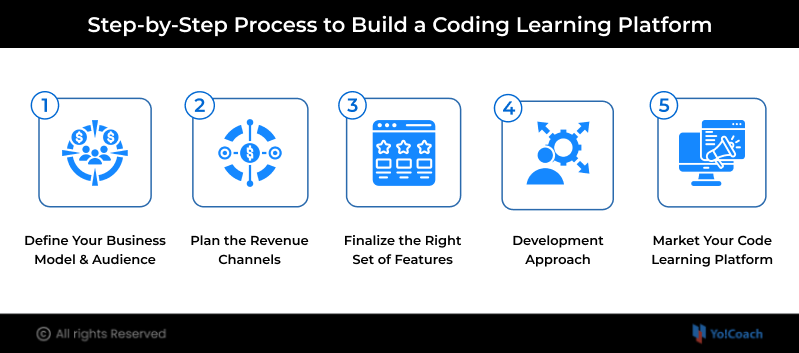
Step 1: Define Your Business Model & Target Audience
Before you begin building your coding learning platform, it’s important to lay a strong foundation. This begins with clearly defining your business model and identifying your target audience. These decisions play a critical role in shaping your platform’s structure, features, pricing strategy, and overall user experience.
Business Models
Your business model determines how your platform delivers value and how users interact with it. Some of the popular and common business models include:
1. Live 1-on-1 Tutoring Platform: This model focuses on personalized learning by connecting students directly with tutors for one-on-one sessions. It is especially useful for beginners who need guidance and individual attention. Each learner gets a customized learning path, allowing tutors to adjust teaching methods based on the student’s pace, strengths, and weaknesses.
2. Recorded Course Marketplace: In this model, instructors create and upload pre-recorded courses that users can purchase and access anytime. It is one of the most scalable models since content can be reused for thousands of learners. However, it lacks real-time interaction, which can affect engagement for some users.
3. Hybrid Model (Like Geekedu): The hybrid model combines the best of both worlds, live interactive sessions and self-paced recorded content. This approach is highly effective because it caters to different learning preferences while maintaining scalability.
Target Audience
Defining your audience is just as important as choosing your business model. It influences everything from course design to UI/UX and marketing strategies. Moreover, understanding whether your platform targets beginners or advanced learners helps define the depth and complexity of your content.
- Beginners: Require simplified explanations, guided learning paths, and interactive guidance to stay engaged.
- Advanced Learners: Prefer in-depth content, real-world projects, and the flexibility of self-paced learning.
Step 2: Plan the Revenue Channels
Once your platform structure is defined, the next step is to establish how your business will generate revenue. Choosing the right monetization strategy ensures sustainability and long-term growth. Most successful coding learning platforms use a mix of revenue models to maximize earnings while catering to different user preferences.
- Pay-Per-Course Model
In this model, users pay a one-time fee to access individual courses. It works well for learners who prefer flexibility and want to purchase specific skills without long-term commitments. This approach allows you to generate immediate revenue while offering clear value for each course.
- Freemium Model
The freemium model allows users to access basic content for free while charging for premium features or advanced courses. It helps lower the entry barrier, attract a larger audience, and gradually convert free users into paying customers through upselling.
- Subscription-Based Model
A subscription model provides users with ongoing access to courses and features for a monthly or yearly fee. It ensures consistent revenue, improves user retention, and encourages continuous learning, making it ideal for platforms offering regularly updated or extensive content libraries.
Step 3: Finalize the Right Set of Features
Once your foundation is in place, the next step is defining the features that will power your platform. Features are not just functionalities, they directly impact user experience, engagement, and long-term retention. A successful coding learning platform must cater to three key stakeholders: students, tutors, and admins. Each group requires a dedicated set of features to ensure smooth and efficient operations.
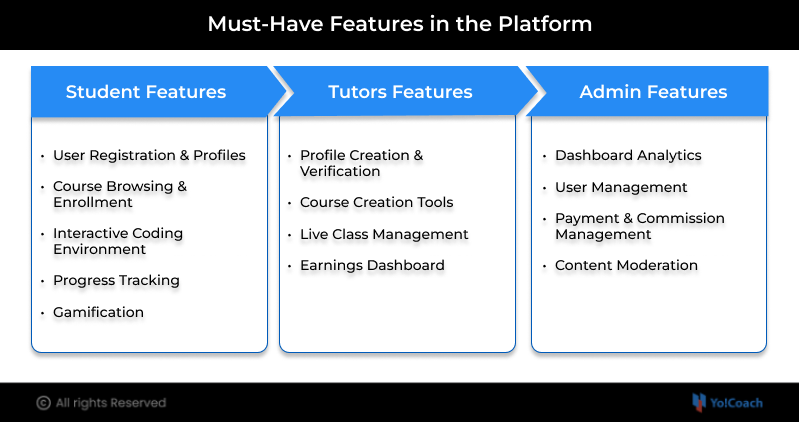
For Students
Student features are the backbone of your platform as they directly influence the learning experience, engagement, and long-term retention. A well-designed student interface ensures that users can easily navigate, learn, and stay motivated throughout their journey.
- User Registration & Profiles: A seamless registration process using email, social login, or OTP reduces friction and boosts sign-ups. Personalized profiles help learners track courses, manage preferences, and monitor progress, while secure data handling builds trust and ensures a safe user experience.
- Course Browsing & Enrollment: Advanced filters, detailed course descriptions, previews, and reviews help learners quickly find relevant courses. A simple enrollment process ensures users can start learning instantly, improving accessibility and reducing drop-offs during the discovery and decision-making stages.
- Interactive Coding Environment: An in-platform coding environment allows learners to write, compile, and run code in real time. Instant feedback, error detection, and hands-on exercises help users understand concepts better and strengthen their problem-solving skills effectively.
- Progress Tracking: Progress tracking offers visual indicators like completion bars and milestones to keep learners motivated. Performance insights highlight strengths and gaps, while personalized recommendations guide users toward the next steps, improving consistency and overall learning efficiency.
- Gamification: Gamification uses badges, rewards, and leaderboards to make learning engaging and goal-driven. It encourages consistent participation through friendly competition, challenges, and achievements, helping users stay motivated and actively involved throughout their learning journey.
For Tutors
Tutor features are crucial for maintaining content quality and ensuring a reliable learning experience. A well-equipped tutor panel empowers instructors to deliver effective lessons while managing their workflow efficiently.
- Profile Creation & Verification: Detailed tutor profiles showcasing skills, experience, and certifications help build trust. Verification systems, along with ratings and reviews, ensure authenticity and transparency, enabling learners to confidently choose the right instructor for their needs.
- Course Creation Tools: These tools allow tutors to design structured courses using videos, assignments, and additional resources. Modules, quizzes, and easy editing options help instructors continuously improve content and deliver a more engaging and effective learning experience.
- Live Class Management: Tutors can schedule sessions, conduct interactive classes, and engage directly with students. Features like session recording ensure learners can revisit lessons later. Attendance tracking and session management tools help maintain organization and efficiency.
- Earnings Dashboard: An earnings dashboard gives tutors clear visibility into their income, including session-wise earnings and payout history in a clear manner. It also highlights incentives and performance metrics, helping tutors stay motivated, track growth, and manage their financial performance effectively.
Discuss The Right Set Of Features For Your Coding Learning Platform
For Admin
Admin features act as the control center of your platform, enabling smooth operations, monitoring, and scalability. A powerful admin panel ensures that all aspects of the platform function efficiently.
- Dashboard Analytics: Admins get real-time insights into user activity, engagement levels, and revenue trends. These analytics help identify popular courses, track performance, and make informed, data-driven decisions to improve platform growth and overall business strategy.
- User Management: Admins can manage student and tutor accounts, approve registrations, and handle profile verifications. It also helps in resolving disputes, addressing support queries, and monitoring user activity while maintaining platform security and ensuring a smooth experience for all users.
- Payment & Commission Management: This feature manages transactions, subscriptions, and commission structures efficiently. It ensures accurate payouts to tutors, supports flexible pricing models, and provides detailed financial reports to maintain transparency and track business performance effectively.
- Content Moderation: Content moderation allows admins to review and manage all course materials. It ensures quality, removes inappropriate content, and maintains platform credibility, delivering a consistent and reliable learning experience for users.
Step 4: Development Approach
Choosing the right development approach is one of the most important decisions when building your coding learning platform. It directly influences how quickly you can launch, how much you need to invest, and how easily your platform can scale as your business grows. Making the right choice early on can save both time and resources in the long run.
Typically, edupreneurs have two choices:
1. Custom Development
Custom development involves building your coding learning platform entirely from the ground up, tailored specifically to your business requirements. This approach gives you complete control over every aspect of the platform, including its design, features, integrations, and overall user experience. It allows you to create a highly unique and differentiated product that aligns perfectly with your brand vision and long-term goals.
However, this level of flexibility comes with added complexity. Custom development requires significant time, technical expertise, and ongoing effort to maintain and upgrade the platform as your business evolves.
Pros:
- Delivers a fully customized and unique platform experience
- Offers complete control over design, features, and functionality
- Enables flexible integrations with third-party tools and services
Cons:
- Requires a longer development timeline before launch
- Involves higher upfront investment and ongoing maintenance costs
- Demands a skilled technical team for development and support
- Continuous updates and improvements are needed over time
2. Readymade Software
Readymade software offers a pre-built solution that comes equipped with all the essential features required to launch a coding learning platform. Instead of starting from scratch, you can leverage an already developed and tested system, allowing you to enter the market much faster and with fewer technical challenges.
This approach significantly reduces development time, cost, and complexities while still providing a strong and scalable foundation for your business. It is especially suitable for startups and entrepreneurs who want to focus more on growth, user acquisition, and content rather than technical development.
Pros:
- Enables faster deployment and quicker time to market
- More cost-effective compared to custom development
- Comes with pre-tested and reliable features
- Offers a scalable architecture to support business growth
Cons:
- Initial learning curve when getting familiar with platform features and workflows
Why Readymade Software is a Better Choice?
For most startups and growing businesses, readymade software offers a practical and efficient way to get started without the complexities of building a platform from scratch. Instead of spending months on development, you can launch quickly, reduce development costs, and focus on what truly drives success, i.e, acquiring users, improving content quality, and scaling your business.
With pre-tested features and a ready-to-use framework, you can enter the market faster and operate with greater efficiency from day one, without getting caught up in technical complexities.
Key Advantages:
- Faster time-to-market compared to custom development
- Lower upfront investment and reduced risk
- Pre-tested, reliable, and scalable feature set
- Minimal technical complexities and maintenance effort
- More focus on marketing, growth, and user acquisition
How Yo!Coach Can Help?
Building a coding learning platform from scratch can be complex, time-consuming, and resource-intensive. This is where a solution like Yo!Coach simplifies the journey. It offers a ready-to-deploy solution tailored for online education businesses, allowing you to launch faster without dealing with complex development or integrations.
Instead of focusing on technical challenges, you can concentrate on growing your platform, improving your offerings, and acquiring users. Yo!Coach provides a complete ecosystem that helps you manage and scale your platform efficiently from day one.
Designed to support both live learning and structured course delivery, it works well for platforms targeting kids, beginners, and professionals. It also ensures a seamless experience for all stakeholders, students, tutors, and administrators, through its well-structured interfaces and powerful backend capabilities.
Key Capabilities of Yo!Coach
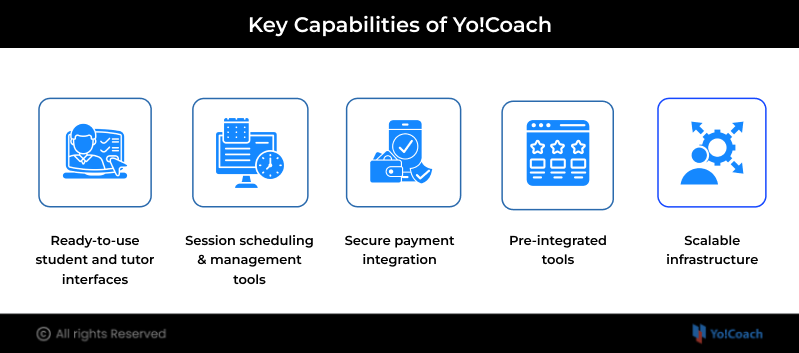
- Ready-to-use student and tutor interfaces: Yo!Coach comes with dedicated dashboards for both students and tutors, making navigation simple and intuitive. Students can explore courses, attend sessions, and track progress, while tutors can manage classes, create content, and monitor performance from a centralized interface.
- Session scheduling and management tools: Built-in scheduling features allow users to book, reschedule, and manage sessions effortlessly. Tutors can organize their availability, conduct sessions, and handle multiple classes efficiently, ensuring a smooth and well-structured learning experience.
- Secure payment integration: Yo!Coach supports secure and flexible payment options, enabling seamless transactions between students and tutors. It also helps manage subscriptions, commissions, and payouts efficiently while maintaining transparency and data security.
- Pre-integrated tools: Yo!Coach comes with pre-integrated tools like Lessonspace, AtomChat, and Zoom, enabling real-time communication, collaboration, and live classes. This eliminates the need for additional development for interaction features.
- Scalable infrastructure: As your platform grows, Yo!Coach scales with you. Whether you’re starting with a small user base or expanding globally, it can handle increasing traffic, users, and content without compromising performance or user experience.
Experience Yo!Coach Through a Personalized Demo
Step 5: Market Your Code Learning Platform
Building your platform is only half the journey; its success largely depends on how effectively you market it. A well-planned marketing strategy helps you gain initial traction, build brand awareness, and consistently attract new users. To scale your coding learning platform effectively, you need a mix of organic growth strategies, paid campaigns, and partnership-driven expansion.
a. SEO & Content Marketing
Search engine optimization helps you attract users actively searching for coding courses. Publishing blogs, tutorials, and beginner guides improves visibility, drives consistent traffic, and positions your platform as a trusted authority in the coding education space.
b. Social Media Marketing
Social media platforms play a crucial role in engaging your target audience and building a community around your brand. Platforms like YouTube and Instagram help you connect with your audience through tutorials, reels, and live sessions. Consistent, engaging content builds trust, strengthens your brand, and drives traffic by showcasing the value of your platform.
c. Referral Programs
Referral marketing turns your existing users into promoters. By offering rewards like discounts or free classes, you encourage users to invite friends and peers, helping you grow organically while improving engagement, retention, and overall platform activity.
d. Partnerships
Collaborating with schools, educational institutions, and training centers helps you reach a wider audience and build trust faster. These partnerships create consistent demand, strengthen your brand presence, and position your platform as a credible learning solution.
Conclusion
Building a platform like Geekedu presents a significant opportunity in today’s rapidly expanding eLearning space. As coding becomes a must-have skill, learners are actively seeking platforms that offer engaging, flexible, and personalized learning experiences.
However, success doesn’t come from just having an idea. It depends on making the right choices, from your business model and feature set to your development approach and marketing strategy. Each decision directly impacts how well your platform performs and scales.
Rather than spending months building everything from scratch, using a ready solution like Yo!Coach can simplify the process. It helps you launch faster, reduce costs, and lets you focus on scaling your business.
FAQs
Q 1. What is a coding learning platform like Geekedu?
Ans. A coding learning platform like Geekedu is an online education system designed to teach programming skills through structured courses, live classes, and interactive tools. It focuses on making coding simple, engaging, and accessible, especially for kids and beginners, by combining guided learning paths with hands-on practice and real-time support.
Q 2. Who should build an online coding learning platform?
Ans. Online coding platforms are ideal for edtech startups, coaching institutes, entrepreneurs, and educators who want to deliver coding education at scale. They are especially valuable for those targeting kids, beginners, or professionals looking to upskill, build digital competencies, and create new learning opportunities in a growing market.
Q 3. What features are essential for a coding learning platform?
Ans. A successful platform should include features like
- User registration
- Course management
- Interactive coding environments
- Progress tracking
- Gamification
- Live class management
- Secure payment systems
These features ensure a smooth learning experience for students and efficient operations for tutors and admins.
Q 4. How much does it cost to build a coding learning platform?
Ans. The cost to build a coding learning platform depends largely on your development approach. Custom development can require a significant investment due to design, development, and maintenance costs. In contrast, using a readymade solution like Yo!Coach can significantly reduce costs and provide a faster go-to-market.
Q 5. How long does it take to develop a platform like Geekedu?
Ans. Building a platform from the ground up can take several months, depending on complexity, features, and testing requirements. However, with a readymade solution, you can significantly shorten this timeline and launch within a few weeks, allowing you to enter the market faster and start attracting users much earlier.
Q 6. Why should I choose a readymade solution over custom development?
Ans. Readymade solutions simplify the entire development process by offering pre-built, tested features that are ready to use. They help you save time, reduce costs, and avoid technical complexities. This allows you to focus more on content creation, marketing strategies, and scaling your business instead of managing development challenges.
Q 7. How does Yo!Coach help in building a coding learning platform?
Ans. Yo!Coach provides a complete, ready-to-deploy solution for launching coding learning platforms. It includes dedicated student and tutor dashboards, session scheduling tools, secure payment integration, and admin controls. With pre-integrated tools like Lessonspace, AtomChat, and Zoom, it enables you to deliver interactive and scalable coding education without heavy development effort.
Ready to Build an Online Coding Learning Platform Like Geekedu?
Get In Touch