
The online education space is no longer just expanding; it i’s becoming a highly competitive, experience-driven market. In 2026, simply offering virtual classes is not enough. To stand out in a crowded ecosystem where learners expect personalization, convenience, and seamless interaction, educators and entrepreneurs need online tutoring software that goes beyond teaching to deliver value while managing and scaling their operations.
Modern online tutoring software has evolved into a complete business enabler. From AI-powered tutor matching to automated scheduling and multi-vendor marketplace capabilities, modern tutoring platforms are redefining how online education businesses operate and grow. What once required multiple disconnected tools can now be managed through a single, streamlined system.
Whether you are an independent tutor, a coaching institute, or an entrepreneur planning to launch the next big tutoring marketplace, choosing the right software will directly impact your scalability, user experience, and long-term profitability. Thus, in this blog, we explore the best online tutoring software in 2026 based on how effectively they help you launch, manage, and scale a successful tutoring business.
Table of Contents
What Makes Online Tutoring Software Best in 2026?
Choosing the best online tutoring software in 2026 is no longer about picking a tool with the most features. It’s about finding a platform that aligns with your business model, scalability goals, and user expectations. As EdTech evolves, tutoring software is expected to simplify operations, automate workflows, and help you grow sustainably.
Here are the key factors that truly define the best solutions today:
1. Business Model Compatibility
Not all online tutoring software is built for the same purpose, and choosing the wrong fit can slow you down from the beginning. Individual tutors need simplicity, coaching institutes need structured management, and entrepreneurs need marketplace capabilities. The best platforms are those that adapt to your business, not the other way around.
2. Scalability & Future-Readiness
A platform that works for 50 students may not work for 5,000. Scalability is one of the most overlooked factors when selecting online tutoring software. A robust solution should support high user volumes, global access, and expansion into new markets. The goal is to scale your business without requiring a complete overhaul later.
3. Ownership vs Platform Dependency
One of the biggest decisions in 2026 is whether to choose a SaaS-based tool or a self-hosted solution. SaaS platforms offer convenience but limit control, whereas self-hosted solutions provide ownership, flexibility, and long-term cost efficiency. Hence, if your goal is long-term growth, choose a software that avoids vendor lock-in and ensures you have complete control over features, data, and revenue streams.
4. Built-in Monetization Capabilities
Modern tutoring softwares are not just for teaching, they are built for a sustainable revenue model. Look for software that supports multiple monetization strategies, such as pay-per-session, subscriptions, commissions, and learning packages. Flexible monetization options allow businesses to experiment, optimize, and maximize revenue over time.
5. Advanced Virtual Classroom Experience
A strong virtual classroom is the backbone of any tutoring platform. A reliable software should offer features like interactive whiteboards, screen sharing, session recording, and real-time chat that make sessions more engaging and effective.
6. Automation & AI Integration
- Automation and AI integration offer a competitive advantage. From smart tutor matching to automated scheduling and reminders, AI helps reduce manual work while improving user experience. It allows you to scale without increasing operational complexity.
7. Customization & Branding
Your platform should reflect your brand, not the software provider’s identity. Hence, select a software that offers white-label capabilities, custom UI/UX options, and flexible workflows. This is especially important for businesses aiming to build brand authority and trust in a competitive market.
8. Data, Analytics & Performance Tracking
Data-driven decision-making is key to growth in 2026. The right solution provides data on student engagement, tutor performance, revenue, and sessions. These insights help businesses continuously optimize operations and improve learning outcomes.
Top 10 Online Tutoring Software in 2026
Choosing the right online tutoring software in 2026 comes down to your goals, whether you’re an individual tutor, a coaching institute, or planning to build a scalable tutoring platform. Today’s solutions go beyond basic video tools and offer features like virtual classrooms, automated scheduling, payments, and analytics.
While cloud-based platforms are quick to launch, self-hosted solutions provide better control, customization, and long-term scalability. Many modern tools also integrate AI and automation to improve tutor matching, streamline operations, and enhance the overall learning experience.
Below, we’ve curated the top 10 online tutoring software based on features, scalability, ease of use, and business suitability. Let’s have a look at them:
1. Yo!Coach
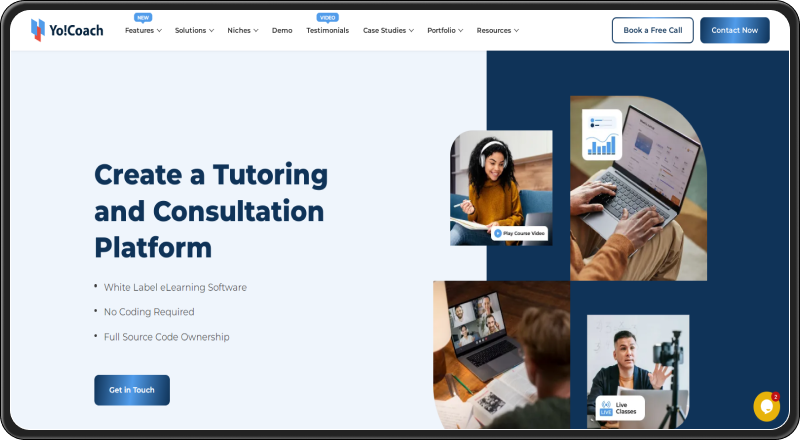
Yo!Coach is a dedicated, purpose-built online tutoring software built for entrepreneurs and organizations looking to launch scalable tutoring platforms. Unlike generic tools, it offers a marketplace-ready architecture with complete control over operations and revenue. With white-label capabilities and a self-hosted architecture, Yo!Coach gives businesses complete control over branding, data, and revenue while ensuring long-term scalability and operational efficiency.
Key Highlights:
- Built-in virtual classroom (video, whiteboard, chat)
- Multi-tutor management system
- Advanced scheduling & booking system
- Multiple monetization options
- Fully white-label & self-hosted
- One-time license model
Pros:
- Complete ownership and customization
- Designed specifically for tutoring use cases
- Highly scalable for global operations
- No recurring costs
- Supports multiple niches
Cons:
- Requires initial setup, however, Yo!Coach’s team helps in the installation process.
Overall Rating: 4.8 / 5
Portfolio:
Yo!Coach has been used to build a wide range of online tutoring platforms across different niches and regions. From language learning marketplaces to skill-based coaching platforms, it demonstrates flexibility and real-world scalability.
Highlights from client implementations:
- Diverse tutoring platforms across industries and geographies
- Support for both one-on-one and group learning models
- Custom branding and unique business workflows
- Scalable solutions handling growing user bases
Explore tutoring marketplaces launched with Yo!Coach
Request a Demo to See How Yo!Coach Works
2. WizIQ
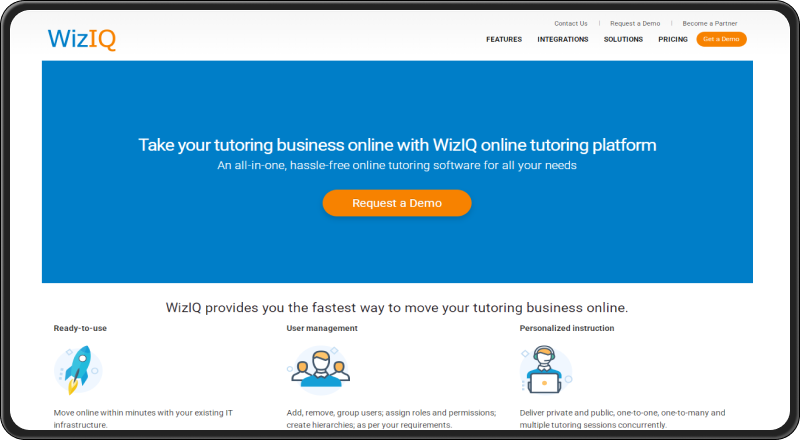
WizIQ is a cloud-based tutoring platform offering virtual classroom features combined with LMS capabilities. It is designed for educators and institutions looking for a quick and easy way to deliver online classes, manage courses, and track learner progress. WizIQ is ideal for small to mid-sized organizations aiming to start their online teaching platform.
Key Highlights:
- HD virtual classrooms
- Course management tools
- Mobile compatibility
- Assessments and reporting
Pros:
- Easy to set up and use
- Quick deployment with minimal technical effort
- Supports both live classes and self-paced learning
Cons:
- Limited customization and branding flexibility
- Recurring subscription cost
- Less control over platform features
- Not suitable for large-scale marketplace models
Overall Rating: 4.2 / 5
3. TutorCruncher
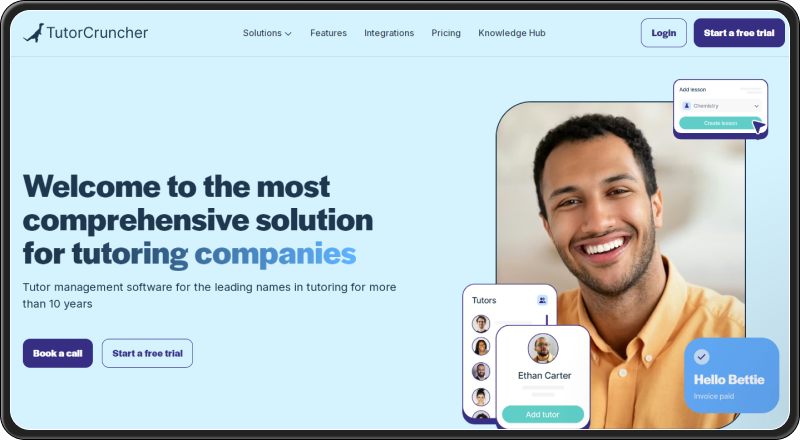
TutorCruncher is a comprehensive tutoring software designed for agencies and tutoring companies. It focuses more on backend efficiency than classroom delivery, offering tools for CRM, scheduling, invoicing, and payroll. TutorCruncher helps streamline administrative workflows and tutor-student network efficiently, making it a strong choice for businesses prioritizing operational efficiency.
Key Highlights:
- CRM and tutor management
- Automated invoicing and payroll
- Lesson scheduling
- Reporting dashboard
Pros:
- Strong operational and management tools
- Scalable for tutoring agencies
- Advanced automation
Cons:
- Not beginner-friendly
- Limited built-in virtual classroom features
- Requires integration with third-party tools for teaching
- Learning curve for setup and usage
Overall Rating: 4.4 / 5
4. LearnCube
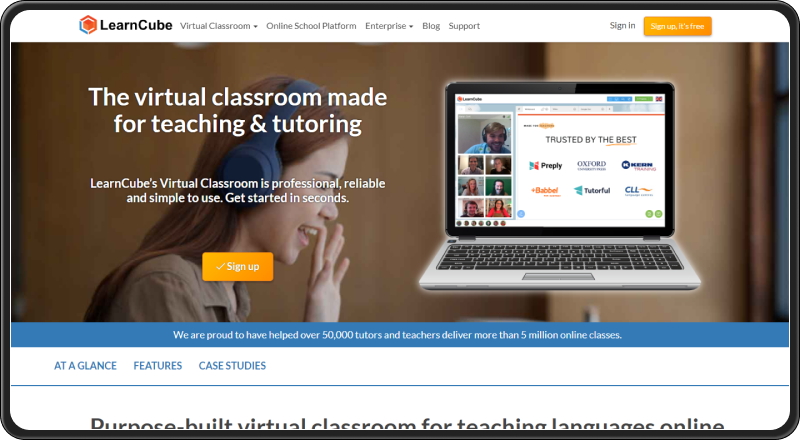
LearnCube is a virtual classroom software specifically built for language schools and online tutoring businesses. It offers a browser-based teaching environment, eliminating the need for downloads while delivering interactive sessions. With strong customization options and API integrations, LearnCube is ideal for businesses that prioritize engaging live classes along with a seamless user experience.
Key Highlights:
- Browser-based virtual classroom
- Interactive whiteboard
- Custom branding
- API integrations
Pros:
- No downloads required for tutors or students
- High-quality live teaching tools
- Good customization and integrations
Cons:
- Limited support for marketplace features
- Premium pricing, which may not suit all budgets
- Less focus on operational management tools
- Requires integrations for full business functionality
Overall Rating: 4.3 / 5
5. Teachworks
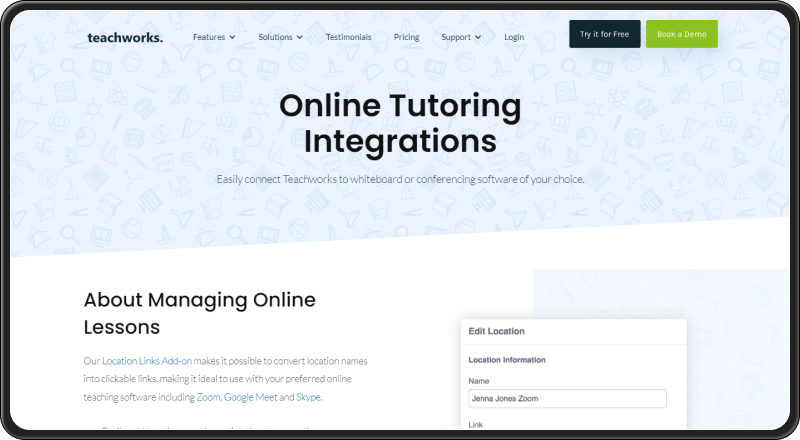
Teachworks is a tutor management software designed to simplify the administrative side of running a tutoring business. It focuses on scheduling, student management, billing, and reporting, making it a practical choice for coaching centers and tutoring companies that need strong backend organization. Additionally, it helps streamline daily operations and reduces manual workload for growing education businesses.
Key Highlights:
- Scheduling automation
- Student management
- Billing & invoicing
- Reporting tools
Pros:
- Strong backend and administrative management
- Ideal for coaching centers and tutoring businesses
- Helps automate scheduling and billing processes
Cons:
- Outdated user interface compared to modern platforms
- No built-in virtual classroom
- Requires third-party tools for live teaching
- Limited customization options
Overall Rating: 4.1 / 5
6. BigBlueButton
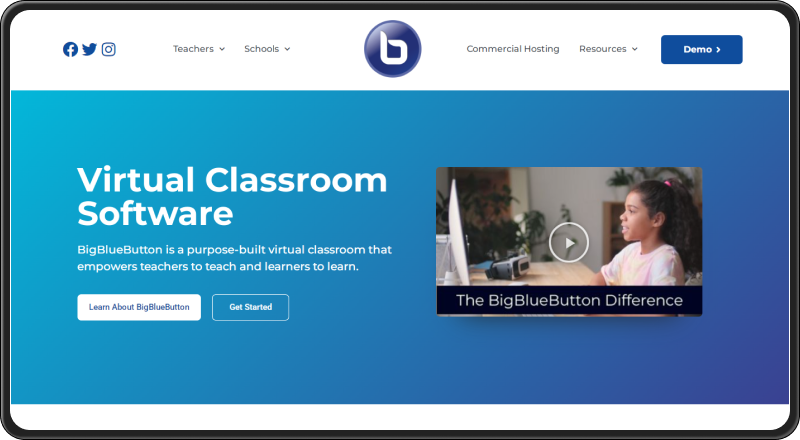
BigBlueButton is an open-source virtual classroom software designed for online learning. It offers real-time video conferencing, interactive whiteboards, and breakout rooms, making it ideal for institutions and developers who want full control over their teaching environment.
Key Highlights
- Real-time video conferencing
- Whiteboard and screen sharing
- Breakout rooms
- LMS integrations
Pros:
- Free and open-source with no licensing
- Highly customizable for specific use cases
- Strong community support
Cons:
- Requires technical expertise for setup and maintenance
- Hosting and server management needed
- Initial deployment can be complex
- Not ideal for non-technical users
Overall Rating: 4.3 / 5
7. Vedamo
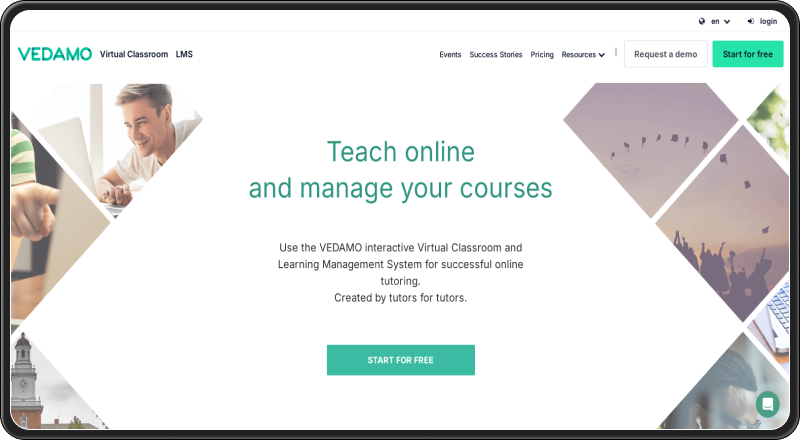
Vedamo is a virtual classroom and LMS platform tailored for online tutoring and remote education. It combines interactive teaching tools with course management features, making it suitable for educators and institutions that want an all-in-one teaching solution. With an intuitive interface and engagement-focused features, it helps deliver structured and interactive online learning experiences.
Key Highlights:
- Interactive whiteboard
- Content sharing
- Session recording
- LMS features
Pros:
- Easy to use with a clean interface
- Good engagement tools
- Combines virtual classroom with LMS capabilities
Cons:
- Limited scalability for large marketplaces
- Subscription-based pricing model
- Less flexibility in customization
- Not ideal for complex business models
Overall Rating: 4.2 / 5
8. Electa Live
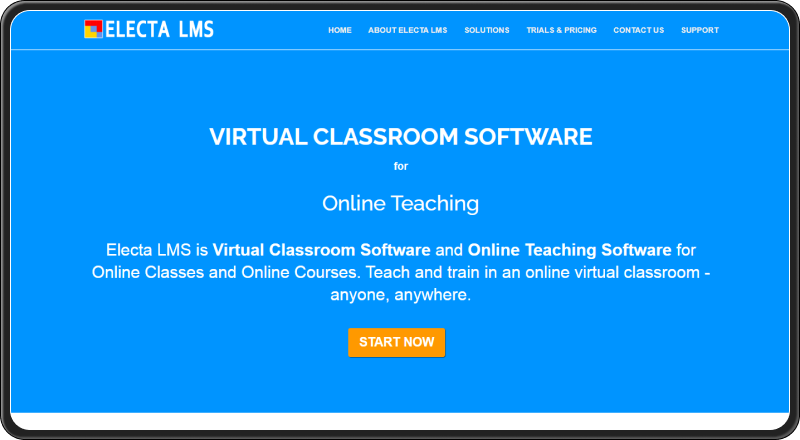
Electa Live is a virtual classroom solution designed for live online teaching and training. It focuses on core teaching functionalities like video conferencing, whiteboards, and file sharing, making it suitable for small businesses and individual tutors. While it may not offer advanced features, it delivers a stable and easy-to-use environment for everyday online teaching needs.
Key Highlights
- Video conferencing
- Whiteboard tools
- File sharing
- Session recording
Pros:
- Simple and intuitive interface
- Reliable performance for live sessions
- Quick setup with minimal learning curve
Cons:
- Limited advanced features and automation
- Less popular ecosystem
- Minimal customization options
- Not ideal for scaling large tutoring businesses
Overall Rating: 4.0 / 5
Looking for a Reliable Tutoring Software for Your Tutoring Business?
9. ClassIn
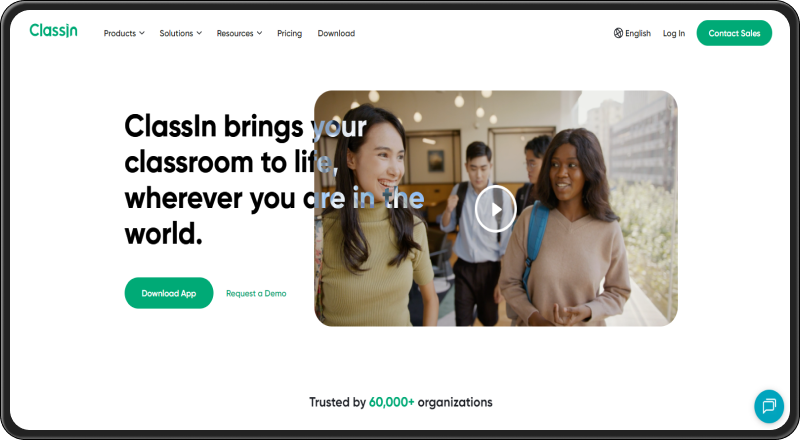
ClassIn is a modern online teaching platform known for its interactive classroom environment and engagement tools.
Key Highlights
- Interactive teaching tools
- Multi-user classroom
- Real-time collaboration
- Mobile support
Pros:
- Highly engaging and interactive interface
- Suitable for K-12
- Robust collaboration and classroom control features
Cons:
- Limited customization for branding and workflows
- Pricing varies by region and usage
- May feel complex for first-time users
- Less suited for marketplace-based models
Overall Rating: 4.3 / 5
10. eTutor World
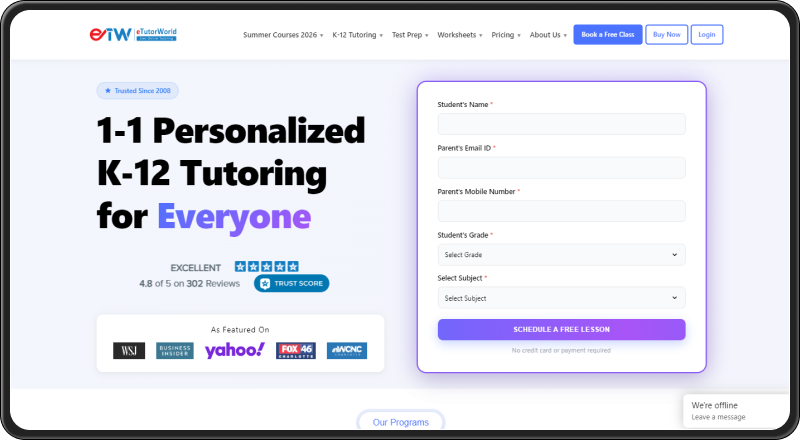
eTutor World is a lightweight tutoring platform focused on simple online teaching and session management. It provides essential tools like virtual classrooms, scheduling, and student management, making it a practical choice for individual tutors or small-scale operations. Moreover, it offers a cost-effective solution for those looking to start online teaching without complexity.
Key Highlights
- Basic virtual classroom
- Scheduling tools
- Student management
Pros:
- Easy to use and set up
- Budget-friendly for beginners
- Suitable for individual tutors or small teams
Cons:
- Limited scalability for growing businesses
- Fewer advanced features and integrations
- Minimal customization options
- Not ideal for complex or multi-tutor platforms
Overall Rating: 3.9 / 5
Portfolio:
eTutor World is typically used by independent tutors and small education providers who need a simple platform to manage sessions.
Client use cases include:
- Individual tutors offering one-on-one sessions
- Small coaching setups managing a limited number of students
- Beginners starting their online teaching journey
Comparison Table: Best Online Tutoring Software (2026)
Before making a final decision, it is important to compare the solutions side by side. Each online tutoring software differs in terms of pricing model, customization, scalability, and core features like virtual classrooms and automation.
The table below provides a quick overview to help you evaluate which solution aligns best with your specific teaching or business requirements.
| Software | Best For | Pricing Model | Customization | Virtual Classroom | Scalability |
| Yo!Coach | Entrepreneurs & startups | One-time | High | Built-in | Very High |
| WizIQ | Educators & institutes | Subscription | Medium | Built-in | Medium |
| TutorCruncher | Agencies | Subscription | Medium | Limited | High |
| LearnCube | Language schools | Subscription | Medium | Built-in | High |
| Teachworks | Coaching centers | Subscription | Low | No | Medium |
| BigBlueButton | Developers & institutions | Open-source | Medium | Built-in | High |
| Vedamo | Schools | Subscription | Medium | Built-in | Medium |
| Electa Live | Small businesses | Subscription | Low | Built-in | Low |
| ClassIn | K-12 education | Subscription | Medium | Built-in | Medium |
| eTutor | Individual tutors | Low-cost | Low | Basic | Low |
Which One is the Best Online Tutoring Software?
The best online tutoring software is the one that helps you achieve your end goal, whether that’s teaching efficiently or building a full-scale business. The ideal solution is the one that aligns with your teaching style, operational needs, and long-term growth plans.
If you are an individual tutor or small coaching business, a simple software with easy setup and built-in classroom features may be sufficient to get started quickly. However, if your goal is to build a scalable tutoring business or launch your own platform, you need software that goes beyond teaching and supports:
- Multi-tutor management
- Flexible monetization models
- Advanced scheduling and automation
- Customization and branding
In such cases, solutions like Yo!Coach stands out by offering a more comprehensive, business-focused ecosystem, helping you move beyond basic teaching and build a sustainable, growth-ready tutoring platform.
Build and Manage Your Tutoring Business Seamlessly
Conclusion
The demand for digital learning is growing rapidly, but succeeding in this space requires more than just moving classes online. It comes down to choosing the right online tutoring software that aligns with your goals and supports how you want to grow. Not all platforms are built the same, some are designed for quick and easy teaching, while others are designed to support end-to-end business operations, scalability, and long-term growth.
If your goal is simply to conduct online classes, a lightweight solution may be enough. However, if you’re planning to build, scale, and monetize a tutoring business, investing in a feature-rich and flexible platform becomes essential.
Solutions like Yo!Coach stands out in this regard by offering a complete ecosystem, combining virtual classrooms, automation, monetization, and customization within a single platform. This makes it a strong choice for those looking to move beyond basic tutoring and create a sustainable online education business.
FAQs
Q 1. What is online tutoring software?
Ans. Online tutoring software is a digital solution that enables educators to deliver live classes while managing studentschedulingule sessions, ahandlingdle payments in one place. It simplifies teaching operations and creates a seamless learning experience, allowing tutors and businesses to run and grow their online education services efficiently.
Q 2. Which is the best online tutoring software in 2026?
Ans. The best online tutoring software in 2026 depends on your specific needs and goals. If you want to build a scalable tutoring business, solutions like Yo!Coach are ideal. For individual educators and small institutes, tools like WizIQ or Vedamo can offer a quicker and easier start.
Q 3. Can I create my own online tutoring platform?
Ans. Yes, you can create your own online tutoring platform using the right software. Many solutions allow you to onboard tutors, manage sessions, accept payments, and conduct live classes. Self-hosted solutions are especially useful if you want more control, customization, and the ability to scale your business over time.
Q 4. What features should I look for in online tutoring software?
Ans. When choosing online tutoring software, look for essential features, such as:
- Virtual classroom with video, whiteboard, chat)
- Scheduling and calendar management
- Payment integration
- Student and tutor management
- Analytics and reporting
These features are important to track performance, improve learning outcomes, and make better business decisions.
Q 5. How does online tutoring software help in scaling a business?
Ans. Online tutoring software helps scale your business by automating repetitive tasks like scheduling, payments, and communication. It also enables you to manage multiple tutors and students efficiently, making it easier to grow without increasing operational complexity.
Q 6. Does online tutoring software support monetization?
Ans. Yes, most modern online tutoring software supports multiple revenue models, such as:
- Pay-per-session
- Subscription plans
- Package-based learning
These flexible models startegies attract different types of learners, and allow businesses to diversify their income streams.
Enter the EdTech Market with a Fully Functional Tutoring Platform
Get Started