
The online tutoring industry has experienced rapid growth in recent years. Driven by increasing internet penetration, flexible learning preferences, and a rising global demand for personalized education, tutoring businesses are no longer confined by location. Entrepreneurs today are launching tutoring platforms that connect tutors and students across subjects, skill levels, and regions.
As these tutoring platforms expand, operational complexity increases. Managing tutors, students, sessions, payments, and service quality through manual processes or disconnected tools often results in inefficiencies, errors, and inconsistent user experiences. This is where choosing the right tutoring management software becomes critical.
The right software not only streamlines day-to-day operations. It also plays a vital role in determining how efficiently a tutoring business can scale, generate revenue, and stay competitive in an increasingly crowded online education market.
Table of Contents
What Is Tutoring Management Software?
Tutoring management software is a comprehensive platform designed to simplify and streamline the operations of a tutoring business. It enables business owners to manage tutors, students, tutoring sessions, scheduling, payments, and overall platform activities from a centralized system, eliminating the need to rely on multiple tools.
Key capabilities include:
- Centralized management of tutors, students, and tutoring sessions
- Automated scheduling, bookings, and calendar management
- Integrated payment processing and payout handling
- Tutor onboarding, profile management, and availability control
- Student booking, session history, and learning record management
- Performance tracking, reports, and platform insights
By bringing all essential functions under one system, tutoring management software ensures operational consistency, reduces manual effort, and improves the experience for both tutors and students. Ultimately, it supports the complete lifecycle of an online tutoring business, helping edupreneurs manage day-to-day operations efficiently while building a scalable and sustainable online tutoring platform.
Why Tutoring Businesses Need Tutoring Management Software
Running a tutoring business requires more than delivering quality education. As student demand and tutor networks grow, managing operations manually becomes inefficient and unsustainable. Tutoring management software provides the structure, automation, and control needed to run daily operations smoothly while supporting long-term growth and scalability.
1. Centralized Management of Tutors and Students
As a tutoring business expands, keeping track of tutors and students across spreadsheets or multiple tools becomes challenging. Tutoring management software provides a centralized system where tutor profiles, student accounts, session histories, and interactions are stored and managed efficiently. This ensures accurate data access, better coordination, and complete operational visibility.
2. Automation of Bookings, Sessions, and Payments
Manual booking, scheduling, and payment processes are prone to errors and delays. Tutoring management software automates session scheduling, booking confirmations, reminders, and payment processing. Automation reduces administrative workload while delivering a reliable and convenient experience for both tutors and students.
3. Improved Operational Efficiency
By automating repetitive tasks and centralizing workflows, tutoring management software significantly improves operational efficiency. This enables business owners to focus more on growth, tutor acquisition, and marketing strategies rather than day-to-day administrative issues.
4. Better Scalability for Growing Tutoring Businesses
Scalability is one of the biggest challenges for tutoring businesses. As the number of tutors and students increases, operational complexity grows exponentially. Tutoring management software is built to handle this expansion smoothly, ensuring consistent performance, stable operations, and a seamless user experience as the business scales.
Build a Smarter Tutoring Management Platform
Mistakes to Avoid When Choosing Tutoring Management Software
Selecting tutoring management software is a long-term decision that affects daily operations, growth potential, and profitability. Many businesses make avoidable mistakes by focusing on immediate needs rather than future requirements. Understanding these common pitfalls can help you choose a solution that supports sustainable growth and operational stability. Let’s have a look at them:
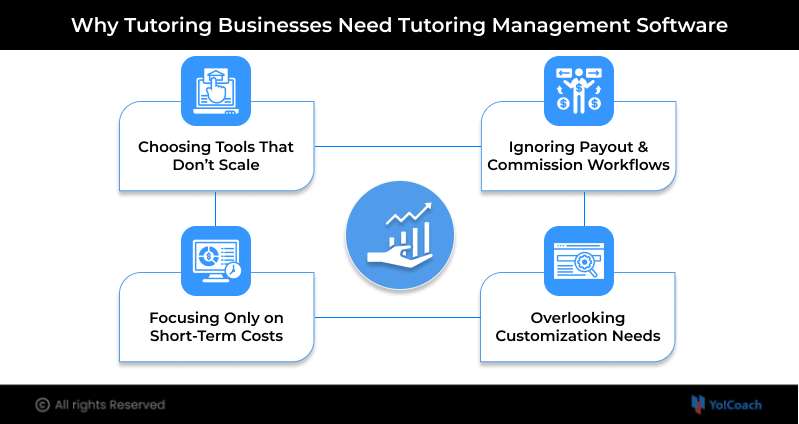
1. Choosing Tools That Don’t Scale
Many tutoring businesses begin with basic tools that seem sufficient at a small scale but struggle to support as the platform grows. Choosing software that cannot handle increasing users, sessions, or features often leads to expensive and disruptive platform migrations later.
2. Ignoring Payout and Commission Workflows
Payments are the backbone of any tutoring business. Overlooking how tutor payouts, commissions, and revenue distribution are managed can lead to disputes, payment delays, and user dissatisfaction, ultimately affecting platform credibility and retention.
3. Focusing Only on Short-Term Costs
While upfront cost matters, selecting software based solely on initial pricing can increase long-term expenses. Recurring subscription fees, hidden add-on costs, and limited flexibility can significantly reduce profitability as the business scales.
4. Overlooking Customization Needs
Every tutoring business operates differently and has unique requirements. Software that lacks customization options may restrict workflow and growth, forcing businesses to adapt their model to the software rather than using a system that adapts to evolving needs.
Key Factors to Consider When Choosing Tutoring Management Software
Choosing tutoring management software goes beyond feature comparison. The right software must align with your business model, operational needs, and long-term growth plans. Evaluating key factors such as scalability, flexibility, user experience, and cost structure ensures you select software that supports sustainable success and future expansion. Mentioned below are the key factors that you should consider when choosing a tutoring management software:
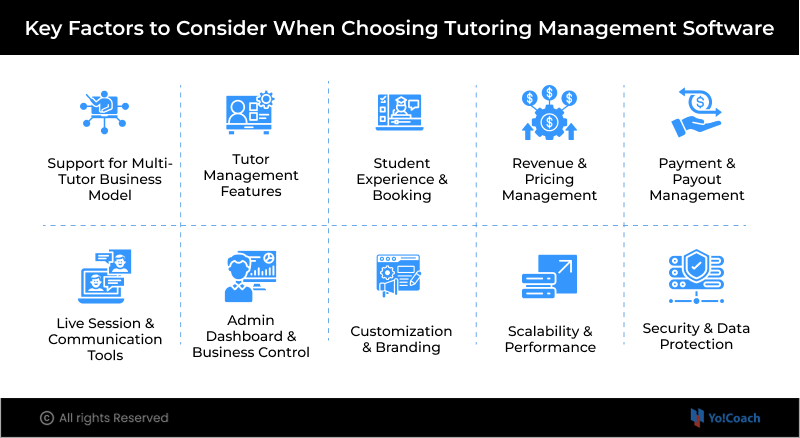
Support for Multi-Tutor Business Model
- Ability to Manage Multiple Tutors
A reliable tutoring management system should support multiple tutors with independent profiles, schedules, and subject expertise. Admin/s must be able to manage tutor accounts, assign categories, and monitor activity from a single dashboard. This centralized control ensures smooth coordination as the tutoring business grows. Moreover, the software should be able to handle a growing number of users efficiently.
- Tutor Profiles and Availability Management
Tutors should be able to create detailed profiles showcasing their qualifications, experience, subjects, and teaching preferences. Availability management enables tutors to define working hours and time slots accurately. This minimizes scheduling conflicts, improves booking accuracy, and helps students make confident tutor selections.
- Subject and Category-Based Tutoring Setup
The software should organize tutoring services by subjects, categories, and skill levels. This structured setup makes it easier for students to browse and discover relevant tutors. Proper categorization also improves search accuracy, user experience, and supports future expansion as new tutoring areas are added.
Tutor Management Features
- Tutor Onboarding and Approval Workflows
Tutoring management software should offer a structured onboarding process for tutor registration and profile submission. Admins must be able to review, verify, and approve tutor applications efficiently. This helps maintain platform quality while offering tutors a smooth and professional onboarding experience.
- Profile, Schedule, and Performance Management
Admin/s need tools to manage tutor profiles, update schedules, and track session activity. Performance insights, such as completed sessions and student feedback, help maintain service quality. These tools make it easier to recognize top tutors and address performance issues early.
- Ratings and Feedback System
A built-in rating and feedback system allows students to share their learning experience openly. Ratings help future students make informed decisions while encouraging tutors to maintain high standards. Additionally, feedback also provides actionable insights for platform improvement and help system build long-term trust.
Student Experience & Booking Management
- Easy Tutor Discovery and Filtering
Students should be able to easily search and filter tutors based on subjects, availability, experience, pricing, and ratings. Intuitive discovery tools reduce effort and improve conversion rates. A smooth search experience also encourages repeat usage and higher engagement.
- Seamless Booking, Rescheduling, and Cancellations
The booking process should be simple, fast, transparent, and user-friendly. Students must be able to book, reschedule, or cancel sessions early with automated confirmations and updates. A hassle-free booking flow reduces support dependency and improves overall satisfaction.
- Session History and Learning Records
Students should have access to their session history and learning records. This helps them track progress and maintain continuity in their learning journey. Stored records also enable tutors to personalize future sessions, leading to better outcomes and improved student retention.
Build a Student-Friendly Tutoring Platform
Revenue & Pricing Management
- Commission-Based Pricing Support
The software should support configurable commission settings for tutors based on your business strategy. Admins must be able to set and adjust commission percentages easily. This ensures transparent revenue sharing and flexibility across different tutor engagement models.
- Flexible Session and Package Pricing
Tutoring businesses should be able to offer hourly sessions, bundled packages, or custom pricing options. Flexible pricing helps meet diverse student needs while allowing businesses to test and refine monetization strategies for better revenue growth.
- Discounts and Promotional Tools
Built-in promotional tools allow businesses to offer discounts, referral offers, and special deals. These tools help attract new students, retain existing ones, and support marketing efforts. Timely promotion can significantly increase platform activity.
Payment & Payout Management
- Secure Payment Processing
Secure payment handling is essential for protecting financial data and building user trust. The software should support encrypted transactions and reliable payment gateways to ensure safe and reliable payments for both students and tutors.
- Automated Payout Handling
Automated payout management ensures tutors are paid accurately and on time. It reduces manual effort, minimizes payout errors, and improves financial transparency. Timely and consistent payments play a key role in maintaining tutor trust and long-term retention.
- Support for Multiple Payment Methods and Currencies
The software should support multiple payment options and currencies to serve a global audience. Multi-currency functionality support simplifies international transactions and enables tutoring businesses to expand into new regions with ease.
Live Session & Communication Tools
- One-on-One and Group Session Support
The software should support both individual and group tutoring sessions. This flexibility allows businesses to offer diverse learning formats. Other than that, group sessions also help increase revenue per session and improve scalability without compromising learning quality.
- Integrated Communication Features
In-built communication tools reduce dependency on external apps and tools. Tutors and students should be able to interact easily before and after sessions. Moreover, integrated messaging improves coordination and creates a more connected learning experience.
- Notifications and Reminders
Automated notifications and reminders keep users informed about upcoming sessions. This reduces no-shows, improves attendance, and reduces missed classes. They also reduce administrative follow-ups, making operations more efficient.
Admin Dashboard & Business Control
- Centralized Admin Panel
A centralized admin panel provides complete control over platform operations and allows admin/s to manage users, sessions, and payments efficiently. Real-time access to platform data improves decision-making. Furthermore, a strong dashboard simplifies daily management and reduces operational complexity.
- Tutor Approvals and Activity Monitoring
Admin/s should be able to review, approve, and monitor tutor profiles easily. Activity tracking helps ensure platform policies are followed, and service quality remains consistent. Monitoring tools also make issue identification and resolution faster.
- Reports on Bookings, Revenue, and Performance
Detailed reports provide clear insights into bookings, revenue, and tutor performance. These data-driven insights support strategic planning and help businesses identify growth opportunities, optimize operations, and improve overall platform performance.
Customization & Branding
- White-Label Branding Options
White-label branding enables tutoring businesses to operate under their own brand identity. Control over logos, colors, and visual elements builds trust and strengthens brand recognition. Custom branding improves credibility and professional appeal.
- Workflow and Feature Customization
Customizable workflows help align the software with business processes. Businesses can adjust features based on operational needs, ensuring flexibility and efficiency. This adaptability supports unique tutoring concepts and prevents operational limitations.
- Ability to Adapt Platform as Business Evolves
As tutoring businesses grow, platform requirements change. The software should support ongoing feature upgrades and enhancements without disruption. This eliminates the need for platform replacement and ensures long-term success.
Scalability & Performance
- Handling Increasing Tutors and Students
The platform should maintain stable performance as user numbers grow. It must handle increased traffic and activity without downtime or slowdowns. Stable performance builds user trust and supports sustainable business growth.
- Expansion into New Subjects or Regions
The software should allow easy addition of new subjects, categories, and tutoring services. It should also support regional expansion, enabling businesses to enter new markets smoothly. Expansion-ready software helps future-proof tutoring businesses.
- Multi-Language Readiness
Multi-language support allows tutoring businesses to serve diverse users. It improves accessibility for global audiences and supports international growth.
Expand Your Tutoring Business Without Limits
Security & Data Protection
- Secure Data Handling
User data must be stored and processed using strong security practices. Secure data handling protects sensitive personal and financial information, helping build long-term trust with tutors and students.
- User Access Control
Role-based access control ensures that system access is limited to authorized users only. This protects data integrity, prevents unauthorized access, and strengthens operational safety.
- Compliance with Data Protection Standards
The software should comply with applicable data protection regulations and industry standards. Compliance reduces the risk of data breaches, ensures legal readiness, and enhances platform credibility.
One-Time License vs Subscription-Based Tutoring Management Software
- Cost Comparison Over Time
Subscription-based software typically involves ongoing costs that grow over time or with the increasing number of users. Whereas, one-time license models provide predictable expenses, whichhelps control long-term budgets and provide cost clarity.
- Ownership and Control Considerations
One-time license solutions offer full platform ownership. This means businesses retain complete control over data, customization, and future enhancements, without relying on recurring fees or third-party restrictions.
- Long-Term Scalability Impact
For growing tutoring businesses, scalability is essential. Ownership-based software allows platforms to scale without rising subscription costs. This makes it suitable for long-term growth, supporting sustainable business expansion without ongoing financial pressure.
Yo!Coach: Best Tutoring Management Software
Yo!Coach is a purpose-built tutoring management software built to help entrepreneurs launch, manage, and scale tutoring businesses efficiently. It connects tutors, students, sessions, and payments into a single, unified platform, making daily operations easier to manage and control.
Designed for scalability and flexibility in mind, Yo!Coach supports a wide range of tutoring business models and enables business owners to retain full control over their platform. This allows tutoring businesses to grow without operational limitations or recurring platform dependencies.
Reasons Why Yo!Coach Is the Best Tutoring Management Software
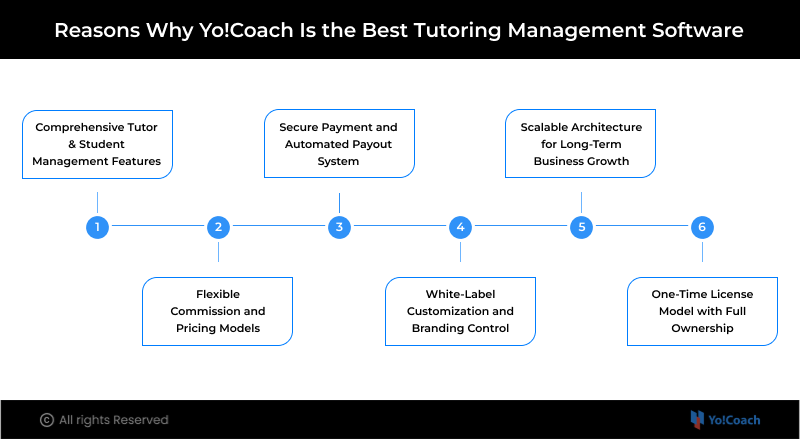
- Comprehensive Tutor and Student Management Features
Yo!Coach provides end-to-end tools for managing tutors and students from one dashboard. It simplifies tutor onboarding, profile approvals, scheduling, and performance tracking. For students, it simplifies bookings, session history, and communication management. This centralized approach streamlines daily operations efficiently.
- Flexible Commission and Pricing Models
The platform supports multiple commission structures and pricing models. Businesses can offer hourly sessions, bundled packages, or custom pricing based on their strategy. This flexibility allows tutoring businesses to adapt to different market needs, while maintaining fair and transparent tutor compensation.
- Secure Payment and Automated Payout System
Yo!Coach comes integrated with secure payment gateways to ensure safe transactions. Automated payout handling reduces manual effort and ensures timely tutor payments. Further, this improves financial transparency and builds long-term trust among platform users.
- White-Label Customization and Branding Control
Yo!Coach offers full white-label capabilities, allowing businesses to operate under their own brand. Platform elements such as logos, colors, and interface design can be customized to match brand identity. Strong branding helps build trust and recognition. Moreover, it also supports long-term brand consistency.
- Scalable Architecture for Long-Term Business Growth
The software is designed to handle growing numbers of tutors, students, and sessions, without compromising performance. Additionally, Yo!Coach supports the addition of new subjects and regions easily. This scalability ensures the platform grows smoothly alongside your business.
- One-Time License Model with Full Ownership
Yo!Coach is available with a one-time license model, eliminating recurring subscription costs. Businesses gain full ownership and control over the platform and data, making it a cost-effective choice. Hence, making it ideal for tutoring businesses focused on sustainable growth and operational growth.
Suggested Read: 56 Reasons To Choose Yo!Coach Over any other Tutoring Software
Yo!Coach empowers tutoring businesses to operate efficiently, maintain control, and adapt quickly in an increasingly competitive education landscape.
Discover How Yo!Coach can Help Manage Tutoring Business Efficiently
Final Thoughts
Choosing the right tutoring management software is a strategic decision that shapes both the day-to-day operations and long-term success of a tutoring business. From managing tutors and students to handling payments and ensuring platform security, the software serves as the foundation of the entire operation.
By carefully evaluating essential features, scalability, customization options, and cost structures, tutoring businesses can select a solution that aligns with their long-term goals. Investing in the right tutoring management software not only simplifies operations but also creates a strong foundation for sustainable growth in an increasingly competitive online education landscape.
FAQs
Q1. Can tutoring management software support different tutoring business models?
Ans. Yes, a reliable tutoring management software supports different business models, including one-on-one tutoring, group sessions, and subject-based marketplaces. Additionally, it should also allow multiple pricing and commission structures. This flexibility ensures the software adapts to your business model rather than restricting it.
Q 2. What should I check before investing in a one-time license tutoring software?
Ans. Before investing in a one-time license tutoring software, evaluate customization options, scalability, and technical support availability. Ensure you retain ownership of the customizable source code and data. A well-built one-time license solution offers long-term cost control and operational freedom.
Q 3. How important is customization when choosing tutoring management software?
Ans. Customization plays a key role in aligning the platform with your brand and workflows. It allows you to modify user journeys, platform appearance, and business rules, helping your tutoring marketplace create a unique tutoring brand rather than a generic marketplace.
Q 4. What operational challenges can tutoring management software reduce?
Ans. Tutoring management software reduces manual workload related to scheduling, tutor coordination, and payment processing. Furthermore, it minimizes administrative errors and improves platform efficiency, allowing businesses to focus more on growth and quality improvement.
Q 5. How does tutoring management software support business scalability?
Ans. Scalable software can handle the increasing number of tutors, students, and sessions without performance issues. It also supports expansion into new subjects, languages, or regions. Scalability ensures your platform grows smoothly with demand.
Q 6. What factors affect the total cost of tutoring management software?
Ans. The total cost of tutoring management software depends on the pricing model, customization needs, and future scalability. Subscription-based tools may increase costs over time, while one-time license solutions offer predictable expenses. Therefore, evaluating long-term ROI is crucial before making a decision.
Q 7. Why is ownership important in tutoring management software?
Ans. Ownership gives businesses full control over platform data, features, and future enhancements. Additionally, it eliminates dependency on third-party restrictions and provides long-term flexibility, which is essential for building and scaling a sustainable tutoring business.
Power Your Tutoring Business With the Right Software
Reach Out