
The global online education market has evolved rapidly in the last decade. One of the most remarkable success stories in this space that one should be talking about is italki, a platform that connects language learners with tutors from around the world. What started as a small community-driven project has grown into one of the most recognized online language learning marketplaces.
Entrepreneurs looking to build platforms in the EdTech space often study successful companies to understand the strategies behind their growth. italki offers valuable insights into how a digital language learning platform can scale globally while maintaining a strong community of users.
From building a two-sided marketplace to creating trust between tutors and students, the journey of italki provides several lessons for entrepreneurs who want to launch similar platforms.
In this article, you will explore the key lessons entrepreneurs can learn from italki’s growth and how these insights can help build successful tutoring or consultation marketplaces.
Table of Contents
- Understanding the Success of italki
- Top 10 Lessons for Entrepreneurs to Learn from Italki
- How Entrepreneurs Can Build Platforms Similar to italki
- Traditional Approach: Building the Platform From Scratch
- Challenges of Building a Tutoring Platform From Scratch
- An Alternative: Launch Using Ready-Made Marketplace Software
- Choose Yo!Coach: A Readymade Solution to Build an Online Tutoring Marketplace
- Choosing the Right Path for Your Tutoring Platform
- Conclusion
- FAQs
Understanding the Success of italki
italki is a global language learning marketplace that connects students with professional teachers and community tutors. The platform allows learners to book one-on-one lessons, participate in group classes, and interact with tutors through an integrated virtual classroom.
The company’s growth can be attributed to several factors:
- A strong marketplace model
- Global tutor accessibility
- Flexible learning options
- Community-driven engagement
- Scalable technology infrastructure
These elements helped the platform grow from a niche startup to a widely used language learning marketplace.
Top 10 Lessons for Entrepreneurs to Learn from Italki
For entrepreneurs, the success of italki highlights how thoughtful strategy and the right technology foundation can help build a sustainable EdTech platform. Let’s get started with the top 10 lessons entrepreneurs can learn from italkin’s success.
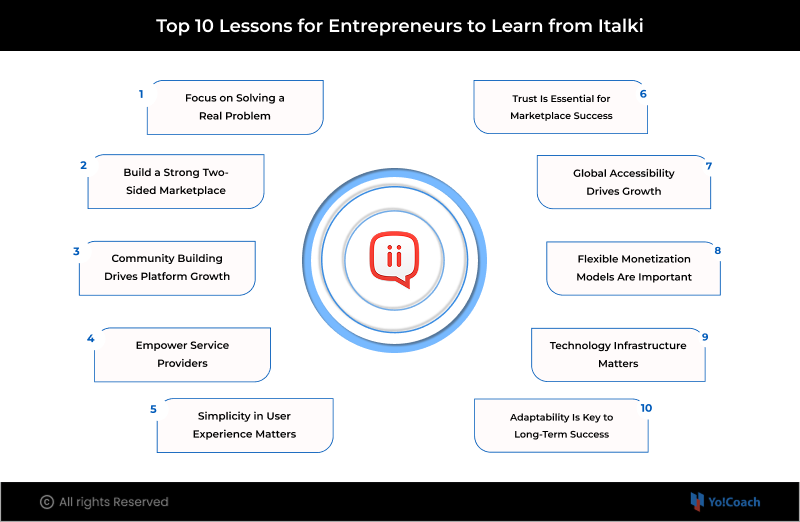
Lesson 1: Focus on Solving a Real Problem
Italki’s growth is known to everyone. However, the lesson you can learn is how they grow at such a large scale. You will find they focused on solving a real problem.
Language learners often struggle with:
- Finding native speakers to practice with
- accessing affordable tutors
- Scheduling lessons that match their time zones
- Receiving personalized feedback
italki addressed these challenges by creating a marketplace where students could easily connect with tutors worldwide. The platform connected native speakers with learners matching their time zones, resolving all the struggles highlighted above.
They closed a major gap in the traditional language-learning ecosystem with an online language-learning platform.
For entrepreneurs, the take away is clear:
Successful platforms are built around solving genuine problems for users. Instead of focusing only on technology, founders should prioritize understanding the needs of their target audience.
Lesson 2: Build a Strong Two-Sided Marketplace
Platforms like italki operate on a two-sided marketplace model, meaning they serve two groups simultaneously:
- Tutors who provide services
- Students who avail those services
The success of such platforms depends on maintaining a healthy balance between supply and demand.
italki focused heavily on attracting both tutors and students in the early stages. By onboarding qualified tutors and making it easy for students to discover them, the platform created a thriving learning ecosystem.
For entrepreneurs planning to build similar platforms, this balance is critical. Without enough tutors, students may not find the right instructors. Without enough students, tutors may lose interest in the platform.
Modern tutoring marketplace software solutions like Yo!Coach help address this challenge by offering built-in features that simplify tutor onboarding, profile creation, and student discovery. Further, the solution also enables the marketplace operator to reach the targeted audience via several marketing channels, organically or through paid promotions.
These features help entrepreneurs build a balanced marketplace more efficiently by attracting tutors and learners on the platform.
However, for entrepreneurs building an online language-learning platform, it’s advisable to strike a balance between demand and supply. They can utilize several marketing channels and sources to get the job done.
Want to Explore Out-of-the-Box Features of an Online Tutoring Platform
Lesson 3: Community Building Drives Platform Growth
Another key factor behind italki’s growth is its strong community.
Unlike traditional learning platforms that focus only on course delivery, italki built a vibrant learning community where users can:
- Ask language-related questions
- Participate in discussions
- Share learning experiences
- Connect with other learners
This community-driven approach encourages engagement and helps users stay connected to the platform.
For entrepreneurs, building a community around their platform can significantly improve retention and loyalty.
Community features such as:
- Discussion forums
- User interactions
- Peer learning opportunities
can transform a platform from a simple service provider into a thriving ecosystem.
Lesson 4: Empower Service Providers
italki’s success is also rooted in how it empowers tutors.
The platform gives tutors the flexibility to:
- Set their own prices
- Manage their availability
- Create personalized lesson structures
- Build their personal brand
By giving tutors control over their teaching services, the platform attracts passionate educators who want independence and flexibility.
Entrepreneurs building tutoring marketplaces should focus on creating an environment where service providers feel empowered rather than restricted.
Lesson 5: Simplicity in User Experience Matters
One of the reasons italki became popular among learners is its simple and intuitive user experience. The platform is simple and easy to access for users.
Students can easily:
- Browse tutors
- View detailed profiles
- Check tutor availability
- Book lessons within minutes
The platform avoids unnecessary complexity in the learning process.
For entrepreneurs, this highlights the importance of prioritizing user experience (UX) when building digital platforms.
A well-designed tutoring marketplace should provide:
- Seamless navigation
- Easy session booking
- Seamless video conferencing
- Clear pricing structures
Platforms built using specialized marketplace software solutions often include these features by default, making it easier for businesses to deliver an enhanced user experience.
Lesson 6: Trust Is Essential for Marketplace Success
Trust plays a major role in online service marketplaces.
Students must trust that tutors are qualified and reliable, while tutors must trust that they will receive payments for their services.
italki addressed this challenge through several mechanisms. The processes include:
- Tutor verification processes
- Student reviews and ratings
- Secure payment systems
- Transparent lesson policies
These elements help establish credibility and build trust between users.
Entrepreneurs launching similar platforms should ensure their technology supports trust-building mechanisms.
Modern tutoring marketplace software such as Yo!Coach integrates rating systems, verified profiles, and secure payment gateways to maintain transparency across the ecosystem.
Lesson 7: Global Accessibility Drives Growth
One of the biggest advantages of italki is its global accessibility. Students from different countries can connect with tutors regardless of geographical boundaries. This international reach allows the platform to attract a diverse user base and scale rapidly.
Entrepreneurs looking to build tutoring marketplaces should consider features that support global users, such as:
- Multi-language interfaces
- Multiple currency options
- Time zone synchronization
- Global payment gateway integrations
A feature-rich marketplace software helps entrepreneurs implement these capabilities without complex development processes.
Lesson 8: Flexible Monetization Models Are Important
italki generates revenue primarily through commissions on lessons booked through the platform.
However, its monetization approach remains flexible, allowing tutors to set their own prices while the platform earns a percentage.
Entrepreneurs building tutoring marketplaces should carefully consider their revenue models.
Common monetization strategies include:
- Commission on lessons
- Subscription plans for students
- Premium tutor listings
- Learning package sales
Using a ready-made marketplace solution can simplify monetization management by automatically handling commissions and payment distributions.
Lesson 9: Technology Infrastructure Matters
Behind every successful marketplace lies a robust technology infrastructure.
Online tutoring platforms require complex systems such as:
- Real-time video communication
- Scheduling engines
- Payment processing systems
- User management tools
Developing all these features from scratch can take years.
Many entrepreneurs today prefer using white-label tutoring marketplace solutions that already include these features.
White label Software like Yo!Coach provides pre-built infrastructure designed specifically for tutoring and consultation marketplaces, allowing businesses to launch their platforms much faster. This approach enables founders to focus on growth rather than technical development.
Looking for Readymade Language Learning Marketplace Software?
The EdTech industry continues to evolve rapidly. Emerging technology and trends are shaping the future of online learning.
New trends such as:
- AI-powered learning tools
- Immersive virtual classrooms
- Micro-learning formats
- Skill-based education
Successful platforms like italki remain adaptable and continuously improve their features to meet changing user expectations.
Entrepreneurs should adopt a similar mindset by choosing technology solutions that allow flexibility and customization.
A scalable platform ensures that businesses can add new features, expand services, and evolve alongside the market. Always look for a solution that is scalable.
How Entrepreneurs Can Build Platforms Similar to italki
The success of tutoring marketplaces like italki has encouraged many entrepreneurs to explore opportunities in the online education industry. Building a platform that connects students with tutors across the world can be a highly rewarding business model. However, building such a platform requires thoughtful planning, the right technological foundation, and a scalable marketplace strategy.
Entrepreneurs who want to build a tutoring marketplace similar to italki typically consider two main approaches:
1. Developing the platform from scratch
2. Using ready-made marketplace software
Understanding both approaches can help founders choose the most practical and efficient path for launching their tutoring platform.
Traditional Approach: Building the Platform From Scratch
For many years, startups built digital marketplaces entirely from the ground up. This approach involves designing and developing every aspect of the platform independently.
However, custom development provides full control over the platform; it also requires significant investment in time, resources, and technical expertise.
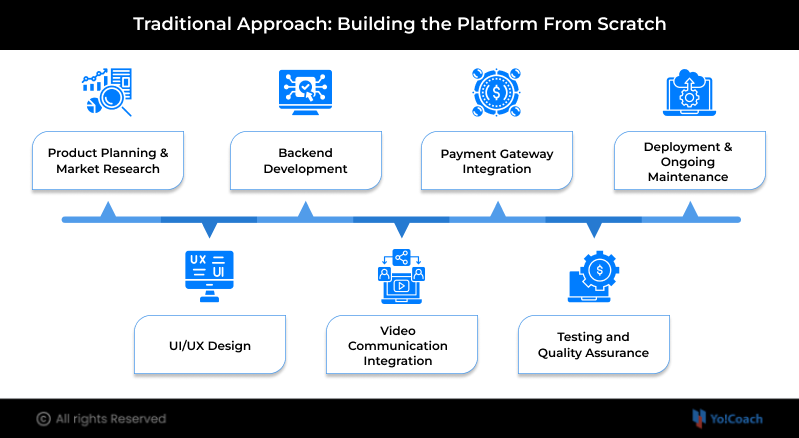
Key Stages in Custom Platform Development
Building a tutoring marketplace from scratch generally involves several stages.
1. Product Planning and Market Research
The first step is defining the platform’s business model and identifying the target audience.
Entrepreneurs must determine:
- The tutoring niche they want to focus on
- The types of lessons offered (language learning, academic tutoring, skills training, etc.)
- Monetization strategies
This stage also involves analyzing competitors such as italki and identifying opportunities for differentiation.
2. UI/UX Design
Once the concept is defined, designers begin creating the platform’s user interface and experience.
This includes designing:
- Student dashboards
- Tutor profiles
- Booking and scheduling interfaces
- Payment workflows
- Virtual classroom layouts
The goal is to create a user-friendly environment where students can easily discover tutors and book sessions.
3. Backend Development
The backend serves as the core infrastructure of the platform. Developers must build systems that manage:
- User registration and authentication
- Tutor onboarding and profile management
- Lesson scheduling engines
- Database architecture
- Notification systems
Backend development is one of the most technically complex aspects of building a tutoring marketplace.
4. Video Communication Integration
Since tutoring platforms rely heavily on real-time interaction, integrating video communication tools is essential.
Developers must implement:
- Video conferencing APIs
- Screen sharing capabilities
- Chat functionality
- Session recording features
Ensuring stable and high-quality video communication requires extensive testing and optimization.
5. Payment Gateway Integration
Another critical component of tutoring platforms is the payment system.
Developers must integrate secure payment gateways that support multiple payment options.
- Stripe
- PayPal
- Paytm
- Razorpay/PayU
- Braintree
Handling financial transactions securely is essential for building trust among users.
6. Testing and Quality Assurance
Before launching the platform, extensive testing is required to identify and fix bugs.
Quality assurance teams typically test:
- Booking systems
- Payment workflows
- Video sessions
- Security vulnerabilities
- Performance under high traffic
This phase ensures the platform features and functionality are performing as they were intended, offering an enhanced user experience.
7. Deployment and Ongoing Maintenance
After development and testing, the platform is deployed on servers and made available to users.
However, the work does not end after launch. Ongoing maintenance is required to:
- Fix bugs
- Improve performance
- Update features
- Maintain security
Continuous development often requires a dedicated technical team.
Challenges of Building a Tutoring Platform From Scratch
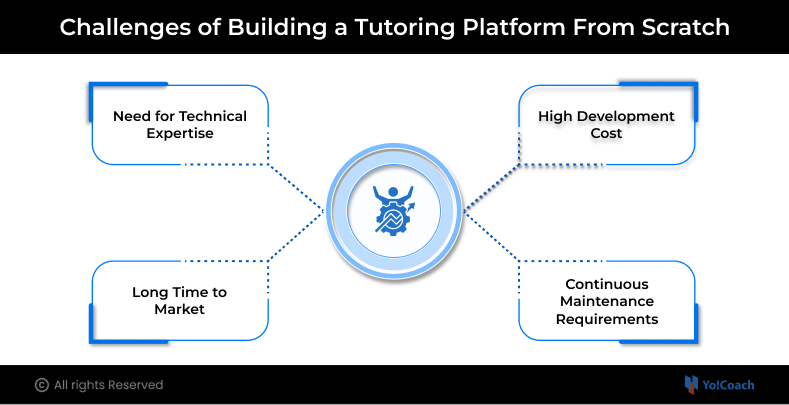
While custom development offers flexibility, it also presents several challenges that entrepreneurs must consider before they decide between a custom development approach and a readymade software.
1. Need for Technical Expertise
Building a tutoring marketplace requires hiring multiple specialists, including:
- frontend developers
- backend developers
- UI/UX designers
- DevOps engineers
- quality assurance testers
Tutoring marketplaces require several advanced systems working together simultaneously, including:
- Scheduling engines
- Real-time video communication
- Secure payment systems
- User management infrastructure
Managing these technologies can be overwhelming for non-technical founders.
2. High Development Cost
The overall development cost can be substantial, especially for startups with limited budgets. From initial planning to final deployment, the process is lengthy and complex. Therefore, it necessitates custom development for:
- Research and planning
- Front-end and back-end development
- APIs and third-party tools integrations
- Testing and iteration
- Data and security/
3. Long Time to Market
Developing a fully functional tutoring platform can take 8–18 months or more, depending on the complexity of features.
During this period, competitors may enter the market or capture potential users using a readymade online language learning platform.
Launch Your Own Language Learning Marketplace Quickly and Affordably
4. Continuous Maintenance Requirements
After launching the platform, businesses must continue investing in development to maintain and upgrade the system.
Without ongoing technical support, the platform may face performance issues or security risks. Sometimes, if you haven’t decided on the right development partner, you may encounter several unexpected challenges.
An Alternative: Launch Using Ready-Made Marketplace Software
Many entrepreneurs today choose a more efficient approach and launch their online language learning marketplaces using ready-made marketplace software.
The software solutions provide pre-built technology frameworks designed specifically for platforms like tutoring marketplaces.
Instead of spending months developing the platform from scratch, entrepreneurs can launch their marketplace quickly using existing infrastructure.
Benefits of Using Ready-Made Tutoring Marketplace Software
1. Faster Time to Market
Ready-made platforms significantly reduce development timelines. Entrepreneurs can launch their tutoring marketplaces in weeks rather than months, allowing them to start attracting tutors and students much faster.
2. Reduced Development Costs
Since the core platform is already built, businesses can avoid the high costs associated with custom development teams. This makes it easier for startups and small businesses to enter the EdTech industry.
3. Built-In Marketplace Features
Most ready-made tutoring marketplace solutions already include essential features such as:
- tutor profile management
- advanced tutor discovery
- booking and scheduling systems
- integrated virtual classrooms
- secure payment processing
- review and rating systems
These features are essential to operate a platform similar to italki.
4. Proven and Tested Technology
Ready-made solutions are typically tested across multiple implementations, making them more reliable than newly developed custom systems. This reduces the risk of technical failures and ensures smoother platform performance.
Choose Yo!Coach: A Readymade Solution to Build an Online Tutoring Marketplace
Among the available tutoring marketplace solutions, Yo!Coach has emerged as a powerful platform designed specifically for launching online tutoring and consultation marketplaces.
Instead of building complex systems from scratch, entrepreneurs can use Yo!Coach to quickly create platforms similar to italki. In addition, the solution brings several more advantages that one often expects when developing an online tutoring platform from scratch, such as complete control, scalability, customization flexibility and much more. Also, the one-time payment model makes Yo!Coach a preferred and cost-effective solution. Moreover, the software provides several built-in capabilities that simplify online language learning and tutoring, offering enhanced user experiences. Let’s explore a few features offered by Yo!Coach:.
Tutor and Student Management
The platform allows easy onboarding of tutors and students, complete with profile management and skill listings.
Advanced Booking and Scheduling
Students can book sessions based on tutor availability, while tutors can manage their schedules efficiently.
Integrated Virtual Classroom
Yo!Coach includes built-in communication tools that enable tutors and students to conduct lessons directly on the platform using audio/video conferencing. Moreover, its instant messaging also enables them to communicate seamlessly.
Secure Payment Systems
The platform supports secure transactions. It integrates multiple payment gateways and enables wider payment options, allowing learners to make payments using their preferred payment method.
Custom Branding
Entrepreneurs can fully customize the platform’s branding, interface, and functionality to match their business identity.
Because of these features, businesses can focus more on growing their marketplace rather than building technology from the ground up.
Overall, Yo!Coach can be the best readymade language learning software to build a thriving online tutoring platform.
Looking for a Fully Customizable and Scalable Readymade Language Learning Software?
Choosing the Right Path for Your Tutoring Platform
Entrepreneurs inspired by the success of platforms like italki have multiple paths to launch their tutoring marketplaces.
Custom development may be suitable for organizations with large budgets and dedicated technical teams. However, for many startups and growing businesses, ready-made solution like Yo!Coach provides a faster and more practical route.
Using specialized tutoring marketplace software allows founders to:
- Launch platforms quickly
- Reduce development risks
- Focus on user acquisition and marketing
- Scale their platforms efficiently
With the right strategy and technology foundation, entrepreneurs can create thriving online learning ecosystems that connect tutors and students across the globe.
Conclusion
The growth journey of italki offers valuable insights for entrepreneurs looking to build successful tutoring or consultation marketplaces. From focusing on a clear niche and building a strong two-sided marketplace to prioritizing user experience and trust, the platform demonstrates how thoughtful strategy and community-driven growth can create a thriving learning ecosystem.
However, transforming such an idea into a fully functional platform requires the right technological approach. Traditionally, building a tutoring marketplace from scratch involved extensive development cycles, large technical teams, and significant investment in infrastructure such as scheduling systems, video communication tools, payment gateways, and user management features.
While custom development provides flexibility, it often comes with long timelines and ongoing maintenance challenges. For many entrepreneurs and startups, this approach can slow down time-to-market and increase overall costs.
This is why many businesses today prefer using ready-made solutions instead of developing complex platforms from the ground up. Solutions like Yo!Coach are specifically designed to support tutoring and consultation marketplaces. By offering built-in features such as tutor discovery, booking and scheduling systems, integrated virtual classrooms, and secure payment management, such platforms make it significantly easier to launch and scale a marketplace similar to italki.
FAQs
Q 1. What made italki successful as a tutoring marketplace?
Ans. italki’s success comes from its strong marketplace model that connects language learners with tutors worldwide. The platform focuses on personalized learning, flexible scheduling, community engagement, and a user-friendly interface that makes it easy for students to discover and book tutors.
Q 2. What lessons can entrepreneurs learn from italki’s growth?
Ans. Entrepreneurs can learn several key lessons from italki’s growth, including focusing on solving real user problems, building a strong two-sided marketplace, empowering service providers, prioritizing user experience, and creating trust through reviews and transparent systems.
Q 3. Is it better to build a tutoring platform from scratch?
Ans. Building a tutoring platform from scratch offers full customization but requires significant time, technical expertise, and financial investment. Many entrepreneurs prefer ready-made solutions because they reduce development complexity and allow faster platform launch.
Q 4. How can ready-made software help launch tutoring platforms faster?
Ans. Ready-made tutoring marketplace software provides pre-built features such as tutor management, scheduling systems, video communication, and payment processing. This eliminates the need for long development cycles and allows businesses to launch their platforms much more quickly.
Explore the Best Readymade Tutoring Software
Q 5. How does Yo!Coach help entrepreneurs build tutoring marketplaces?
Ans. Yo!Coach is a tutoring and consultation marketplace software that provides ready-made infrastructure for launching platforms similar to italki. It includes features like tutor onboarding, booking and scheduling systems, integrated virtual classrooms, secure payments, and customizable branding, enabling entrepreneurs to build and scale their platforms efficiently.
Build an Online Language Learning Platform
Get Started