The global education technology landscape is undergoing a profound transformation. In 2026, the demand for flexible and personalized learning continues to rise across all segments, including K-12 education, higher studies, language learning, and professional upskilling. Learners increasingly prefer on-demand access to qualified tutors over rigid, location-based models.
According to a report by Grand View Research, the global online tutoring services market size is projected to reach $23.73 billion by 2030, growing at a CAGR of 14.5% from 2025 to 2030. At the same time, technology like video conferencing, collaborative learning tools, and secure payment systems is now reliable and widely adopted. Thus, this makes launching an online tutoring marketplace easier.
Further, this blog explains how to build an online tutoring marketplace in 2026, covering key operational requirements, must-have features, technology choices, revenue models, and practical strategies to launch, scale, and succeed in a competitive global market.
Table of Contents
What is an Online Tutoring Marketplace Platform?
An online tutoring marketplace is a two-sided digital platform that connects students seeking academic or skill-based instruction with independent tutors who offer their expertise online. The platform acts as an intermediary, enabling scheduling, communication, and secure payments while ensuring a structured and reliable learning experience.
Three User Types
An effective marketplace must cater distinctly to three user groups: Students, Tutors, and the Admin.
- Students: These users primarily search tutors by subject, expertise, price, and ratings. They are responsible for booking 1-on-1 or group lessons, making online payments, and using a dashboard to track their learning progress.
- Tutors: Tutors’ core activities revolve around managing their professional presence. This involves creating detailed teaching profiles, setting their pricing and availability, delivering classes through the integrated platform, and managing their earnings and schedules.
- Admin: The Admin is the operational center of the marketplace. They manage tutors, students, and subjects, handle all aspects of payments, commissions, and disputes, and control platform content, discounts, and generate critical business reports.
This model allows online tutoring businesses ideas to scale efficiently by offering flexible, on-demand learning without being limited by geography.
How the Tutoring Marketplace Workflow Operates
A well-defined and seamless workflow is essential to the success of an online tutoring marketplace. A structured workflow not only improves the learning experience for students and simplifies tutor operations but also ensures smooth platform management and consistent revenue generation for the marketplace owner. Hence, the process must be seamless and intuitive:
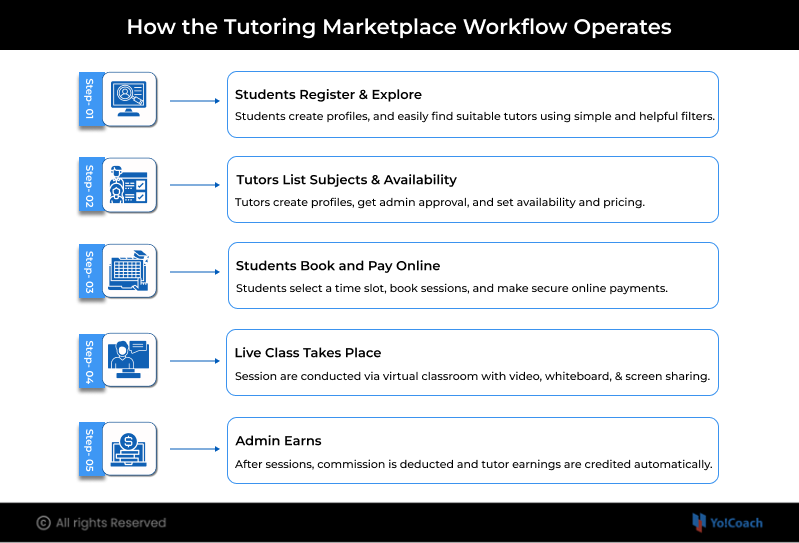
- Students Register & Explore: Students sign up and utilize advanced filters, such as subject, price, language, and rating, to efficiently find suitable tutors.
- Tutors List Subjects & Availability: Tutors create profiles, get evaluated and approved by the admin. After that, they set up their live calendar availability and pricing structure.
- Students Book and Pay Online: The student selects a preferred time slot, books the session, and makes a secure, pre-session payment through the platform’s integrated gateway.
- Live Class Takes Place: The session is delivered through the platform’s integrated virtual classroom, which must feature HD video, a collaborative whiteboard, and screen sharing capabilities.
- Admin Earns: Upon successful completion of the lesson, the Admin’s system automatically deducts a pre-defined commission from the payment, and the remaining amount is credited to the tutor’s platform wallet, ready for payout.
By streamlining discovery, booking, delivery, and payments, a well-structured workflow ensures efficient operations, positive user experiences, and reliable revenue for all stakeholders within the tutoring marketplace.
Popular Online Tutoring Platforms in 2026
To understand market expectations and potential competition, it’s vital to benchmark leading platforms. The analysis of the leading platforms helps understand the market dynamics, ongoing trends, and more. Hence, a list of some popular online tutoring platforms is given below:
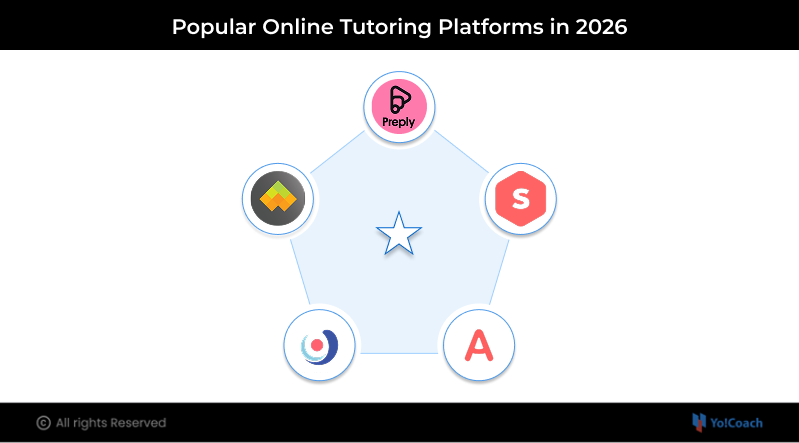
1. Preply: Preply is widely known for its extensive global tutor network, with a strong focus on language learning. The platform emphasizes detailed tutor profiles, flexible pricing, and trial lessons, making it easy for learners to compare options and find tutors that match their goals, budgets, and learning preferences.
Suggested Read: How Does Preply Make Money?
2. Wyzant: Wyzant is a leading tutoring marketplace in the United States, primarily serving K-12 and college students. It offers subject-focused tutoring with flexible learning formats, allowing students to choose between online sessions and in-person tutoring where available, supported by transparent pricing and tutor vetting.
3. Superprof: Superprof operates as a global tutoring marketplace offering an exceptionally broad range of subjects. Beyond academics and languages, it supports creative and practical skills such as music, sports, and arts, making it suitable for learners seeking both educational and hobby-based instruction.
4. AmazingTalker: AmazingTalker is a language-focused tutoring platform built around personalized learning. It uses intelligent matching algorithms to connect students with suitable tutors based on goals, proficiency level, and availability, while fostering a strong tutor community that supports engagement and long-term learning outcomes.
5. Varsity Tutors: Varsity Tutors is a comprehensive tutoring platform offering structured private lessons, instant on-demand tutoring, and specialized test preparation programs. It serves a wide academic range, from school-level subjects to competitive exams, positioning itself as a premium solution for guided, outcome-driven learning.
These platforms highlight how online tutoring marketplaces have evolved to serve diverse learning needs through specialization, scale, and technology. They set clear benchmarks for functionality, user experience, and business models that new tutoring marketplaces must consider when entering the market.
Want to Build Your Own Preply-Like Tutoring Platform
Step-by-Step Guide to Build an Online Tutoring Marketplace Platform in 2026
Building a successful online tutoring marketplace platform in 2026 requires a clear, structured approach. Thus, this step-by-step guide outlines the key decisions, features, and strategies needed to launch, operate, and scale a competitive tutoring platform.
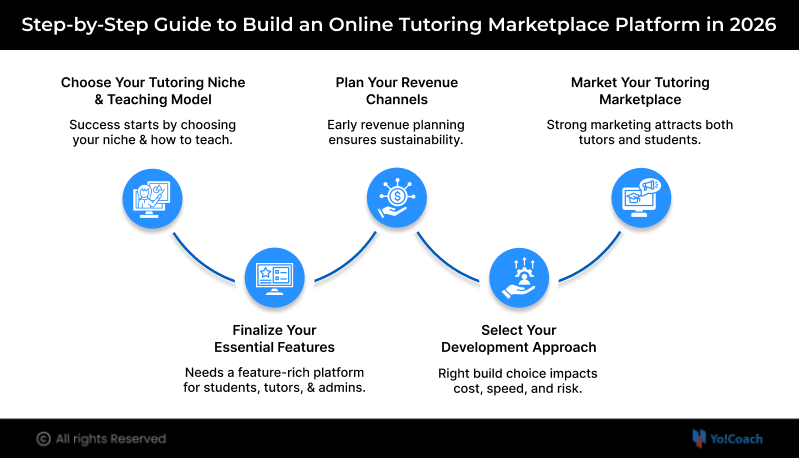
Step 1: Choose Your Tutoring Niche & Teaching Model
Success in a competitive market hinges on strategic focus. Defining a clear niche and teaching model is the foundational first step. Hence, to make it easier for you, some popular niches and teaching models are given below:
Popular Niches
Targeting a specific area allows for more focused marketing and easier quality control over your tutor base:
- K-12 Tutoring: Core academic subjects, such as Math, Science, and English, and highly demanded standardized test prep, including SAT, ACT.
- College Subjects: Advanced topics like Differential Calculus, Organic Chemistry, or specialized Computer Science and Economics courses.
- Languages: High-demand languages like English (ESL), Spanish, or Mandarin, as well as niche, high-value languages.
- Professional Skills: Coding & technology topics, e.g., Python programming, Data Science, UX/UI design, or specialized software proficiency.
- Competitive Exams: GMAT, GRE, LSAT, or professional certification exams relevant to specific global industries.
Teaching Models
- 1-on-1 Tutoring: The traditional, high-value model that provides fully personalized, dedicated instruction tailored to the student’s needs.
- Small Group Classes: A scalable model that allows tutors to serve multiple students simultaneously, offering higher revenue per hour for them and a more affordable price point for students, often ideal for group exam preparation.
- Package-Based Learning: Selling blocks of lessons, e.g., 5, 10, or 20 sessions, upfront helps ensure student commitment, provides a structured learning path, and improves the marketplace’s immediate cash flow.
- Combination of Live Classes + Assignments: A modern blended approach where synchronous live sessions are supplemented with automated quizzes, structured homework, and ongoing file exchange for a holistic learning experience.
Step 2: Finalize Your Essential Features
A feature-rich platform is a requirement for competitive success in 2026, ensuring satisfaction for both sides of the marketplace. Thus, your marketplace must include the following feature-set:
Student Features
- Browse/Search Tutors: Must include robust filtering by subject, price range, specific availability, tutor language, and user ratings.
- Ratings & Reviews: A mandatory and transparent feedback system to build trust and ensure accountability across the platform.
- Lesson Scheduling: An intuitive, real-time calendar view with seamless re-scheduling and cancellation processes.
- Wallet & Multi-Currency Support: An in-platform eWallet for secure pre-loading of funds, crucial for supporting a global, multi-currency user base.
- Free Trial Booking: A short, often free or discounted, initial session that is vital for ensuring compatibility between the tutor and the student.
- Learning Dashboard: A centralized, visual hub for students to track their progress, view upcoming lessons, review past session history, and manage their wallet.
Tutor Features
- Email/Social Login: Simple and quick profile creation and access.
- Availability Calendar: An intuitive interface to set complex, recurring, and one-off availability, ideally with integration for popular personal calendars like Google Calendar.
- Set Hourly Rate/Package Price: Full, flexible control for tutors to determine their pricing for different types of offerings, such as 1-on-1 versus Group.
- Lesson Plan Creation: Tools to easily prepare, store, and share lesson materials and structured plans with students.
- Booking & Earning Management: A clear, detailed dashboard to track accepted bookings, review session history, and manage payout requests for net earnings after commission.
Admin Features
- Manage Students, Tutors & Subjects: Comprehensive tools for efficient user vetting, approval workflows, and subject taxonomy management.
- Payment Management & Commission Setup: The capability to set flexible, often variable, commission rates, including flat or percentage, and efficiently manage all payouts to tutors.
- CMS for Pages/Blogs: Easy-to-use content management system for rapidly deploying SEO-rich marketing content, landing pages, and educational guides.
- Create Promo Codes/Offers: In-built tools to run marketing promotions, issue discounts, and manage referral bonuses.
- Reporting & Analytics: A key dashboard providing insights into total revenue, active users, hourly session volume, conversion rates, and the performance of top-performing tutors or subjects.
Collaboration Tools (The Virtual Classroom)
The integrated virtual classroom is the core service delivery point and must offer best-in-class features, including:
- HD Video & Audio Classes: Essential low-latency, high-quality streaming for a smooth teaching experience.
- Interactive Whiteboard: A shared, collaborative digital canvas for drawing, writing, typing, and seamlessly explaining concepts.
- Screen Sharing: Allows the tutor to walk students through complex documents, presentations, or software applications.
- Text Chat & File Exchange: For real-time supplemental communication and the secure sharing of assignments, PDFs, and study materials.
- Group Class Functionality: Necessary tools for managing multiple participants, organizing breakout rooms, and sophisticated session moderation controls.
Create a Feature-Packed Online Tutoring Marketplace
Step 3: Plan Your Revenue Channels
After deciding on the features, the next crucial step is to plan your revenue model. Monetization must be defined early, ensuring long-term scalability and sustainability for the platform. Some of the popular revenue models include:
1. Commission on Every Booking: This is the primary and most consistent revenue stream, where the platform takes a set percentage (typically ranging from 10% to 30%) of the tutor’s hourly fee for facilitating the transaction and providing the necessary tools.
2. Subscription Plans: Charge students a monthly or yearly fee for premium privileges, such as early access to top tutors, exclusive content, or slight discounts on session rates.
3. Featured Tutor Listings: A pay-to-play model allowing approved, high-rated tutors to pay a fee to have their profile prominently promoted on the homepage or prioritized at the top of subject search results.
4. Sale of Learning Packages: Develop and sell your platform’s own standardized, high-quality, pre-recorded, or structured course material alongside the live tutoring services.
5. Corporate/College Training Partnerships: Generate significant B2B revenue by selling group tutoring or specialized training services directly to large institutions for their employees or student body.
6. Advertisements (Optional): While often disruptive, contextually relevant, non-intrusive ads from EdTech tool providers can be a supplemental income source.
Step 4: Select Your Development Approach
The choice of how to build the platform is the most critical decision impacting time-to-market, cost, and risk profile. You have two popular options to choose from: Custom development and Readymade solutions. Let’s explore both of them for a better understanding:
Option 1: Custom Development
Custom development involves building an online tutoring marketplace entirely from the ground up, giving businesses complete control over platform architecture, design, and functionality. This approach is typically chosen by organizations with highly specific requirements or long-term technical roadmaps that cannot be supported by existing solutions.
Pros:
- Full customization and unique platform architecture.
Cons :
- Long development cycles (typically 6-12+ months for a Minimum Viable Product – MVP).
- Demands a very high initial investment.
- Results in expensive and complex ongoing maintenance and bug fixes.
- Creates a heavy technical dependency on the original development team.
- Every new feature or update must be built from scratch at additional cost.
Option 2: Readymade Software: Pros & Cons
Readymade software provides a faster and more cost-efficient approach to launching an online tutoring marketplace platform. Instead of building from scratch, businesses start with a proven platform that already includes essential features and workflows. Moreover, this approach significantly reduces development time, lowers technical risk, and allows entrepreneurs to focus on market entry, user acquisition, and scaling rather than ongoing engineering challenges.
Pros
- Fastest Time to Market: Offers the ability to launch in days or weeks, significantly accelerating your business timeline.
- Affordability: Far more affordable than a tailored custom development project.
- Proven Reliability: Features are already tried & tested in live environments, reducing the risk of launch failure.
- Low Technical Overhead: Requires minimal technical management from the entrepreneur.
- Future-Proof: Includes guaranteed future upgrades and technical support.
Cons:
- Some advanced features may require add-ons. However, it allows businesses to control costs and activate capabilities when needed.
Yo!Coach – The Best Readymade Software
Yo!Coach is a highly optimized, ready-to-launch online tutoring software that comes equipped with all necessary features for students, tutors, and admins. Hence, it enables entrepreneurs to launch a tutoring business with confidence, bypassing the complexity and expense of traditional custom coding.
Why Yo!Coach is the Ideal Choice for Building a Tutoring Marketplace Platform in 2026?
Yo!Coach is an ideal choice for building a tutoring marketplace in 2026 because it offers a fully white-label platform with built-in scheduling, secure payments, and virtual classroom tools. It enables rapid deployment, global scalability, and cost-effective growth without the complexity of custom development. Furthermore, it offers some other advantages as well. Let’s have a look at them:
- White-Label Solution: The platform is fully white-labeled (100% branded as your own).
- Rapid Launch: You can launch in a few days instead of waiting months.
- All-in-One Tools: Includes all in-built scheduling, payments & collaboration tools, such as video conferencing, whiteboard, etc.
- Comprehensive Dashboards: Offers native student, tutor & admin dashboards for immediate user management.
- Global Readiness: Supports multi-language & multi-currency operations for international scaling.
- Cost Structure: Utilizes a one-time license fee.
- Scalability: Architected to be robust and scalable for extensive global tutoring operations.
- Pre-Integrated Classroom Features: It provides a seamless virtual classroom experience, including HD Video calls, real-time text chat, a shared interactive whiteboard, screen sharing, file sharing, and comprehensive support for both 1-on-1 & group classes.
Who Yo!Coach is Perfect For: New entrepreneurs launching a tutoring marketplace, existing tutoring institutes looking to rapidly shift their operations online, EdTech startups focused on speed, and training centers seeking a robust digital solution.
Schedule a One-on-One Personalized Demo of Yo!Coach
Step 5: Market Your Tutoring Marketplace
A marketplace requires dual-sided marketing, attracting both the supply (tutors) and the demand (students).
Effective Marketing Strategies for 2026
- SEO Targeting: Develop content targeting specific subjects and learning needs using long-tail keywords to capture high-intent organic traffic.
- Blog Articles & Content: Publish high-quality educational guides, study tips, and helpful content to establish authority and drive organic traffic.
- YouTube & Short-Form Videos: Leverage visual platforms to showcase the best tutors and offer free educational snippets, driving traffic to the full paid sessions.
- Tutor Acquisition Campaigns: Actively recruit specialized, high-quality tutors through targeted campaigns on platforms like LinkedIn and educational forums, highlighting platform benefits and low commission rates.
- Paid Ads (Google, Meta, TikTok): Run highly segmented advertising campaigns targeted by subject interest, demographic, and educational level.
- Backlinks through Educational Communities: Engage with and earn mentions/links from reputable educational blogs, news sites, and community forums.
- Referral Programs: Create generous, incentivized programs for both students and tutors to expand the user base organically.
- Collaborations: Form strategic partnerships with local high schools, universities, or training organizations to offer group-tutoring services directly to their student or employee base.
Conclusion
The online tutoring market is no longer a temporary solution but a fundamental component of modern supplementary education, with strong and sustained growth expected well beyond 2026. As learners increasingly seek flexible, personalized, and on-demand education, the opportunity to build a successful tutoring marketplace platform has become both viable and compelling.
However, long-term success depends on strategic execution. Choosing the right tutoring niche, aligned with clear learner demand, provides a strong foundation, while a comprehensive and user-focused feature set ensures engagement and retention for both students and tutors. From an execution standpoint, adopting a readymade solution like Yo!Coach significantly reduces development time, upfront costs, and technical risk.
Moreover, this approach allows entrepreneurs and education businesses to redirect their resources toward the most critical success drivers, i.e., recruiting high-quality tutors, delivering reliable learning experiences, and executing effective user acquisition strategies at scale.
Build a Scalable EdTech Marketplace
Get In Touch