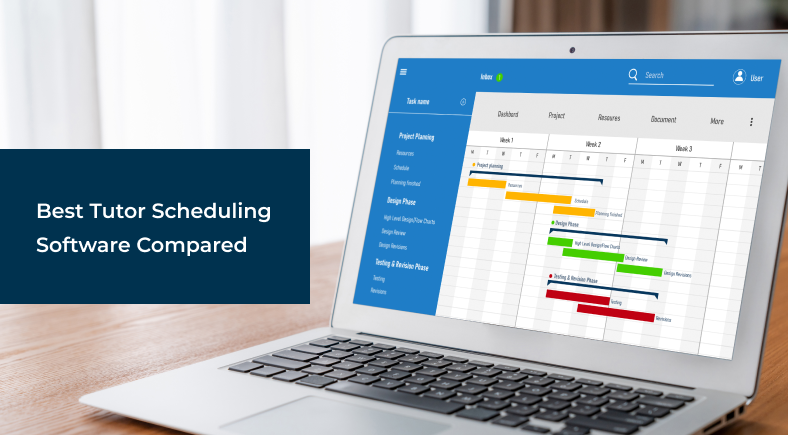
The global online tutoring market is expanding at an unprecedented pace, driven by digital learning, remote education, and flexible teaching models. As tutoring moves online and becomes more competitive, technology plays a defining role in shaping successful platforms. At the core of every successful tutoring business lies one crucial component: reliable tutor scheduling software.
Whether you are an independent tutor, manage your own tutoring center, or are an entrepreneur building a full-fledged tutoring marketplace, choosing the right scheduling software can directly impact student satisfaction, tutor productivity, and revenue growth.
Hence, in this blog, we compare the best tutor scheduling software available and help you identify the ideal solution based on your business goals.
Table of Contents
- What is Tutor Scheduling Software?
- Key Functions of Tutor Scheduling Software
- Why Tutor Scheduling Software Is Essential?
- Best Tutor Scheduling Software Compared: Top Solutions Ranked for 2026
- Tutor Scheduling Software Comparison Table
- How to Choose the Right Tutor Scheduling Software
- Why Yo!Coach Is a Smart Choice for 2026 and Beyond
- Conclusion
- FAQs
What is Tutor Scheduling Software?
Tutor scheduling software is a digital solution that automates and manages the booking of tutoring sessions between tutors and students. It eliminates manual coordination via emails, calls, or spreadsheets by offering a centralized system where availability, bookings, payments, and session management are handled seamlessly.
At its core, tutor scheduling software allows:
- Tutors to set their availability and preferred time slots
- Students to browse schedules and book sessions instantly
- Platforms to avoid double bookings and scheduling conflicts
Modern tutor scheduling software goes beyond basic calendar functionality. Advanced solutions, like Yo!Coach, combine scheduling with tutor discovery, payments, video conferencing, and marketplace management, making them ideal for tutoring businesses that aim to scale efficiently and operate professionally.
Key Functions of Tutor Scheduling Software
Tutor scheduling software serves as the operational backbone of an online tutoring business. It streamlines how tutors, students, and administrators interact by automating repetitive tasks and ensuring schedules, payments, and sessions remain organized and conflict-free.
Key functions include:
- Automated session booking with real-time availability
- Calendar synchronization across time zones
- Self-service booking for students
- Online payment integration
- Session reminders and notifications
- Admin control and reporting
Together, these functions reduce administrative workload, improve scheduling accuracy, and create a smoother experience for both tutors and learners. As tutoring businesses scale, these capabilities become essential for maintaining efficiency, reliability, and long-term growth.
Why Tutor Scheduling Software Is Essential?
As the online tutoring industry continues to grow, managing schedules manually is no longer viable. Relying on emails, spreadsheets, and back-and-forth messages often results in missed sessions, double bookings, and frustrated learners. This is where tutor scheduling software becomes essential, not optional.
Tutor scheduling software acts as the operational backbone of an online modern tutoring business. It ensures that tutors, students, and administrators stay aligned while significantly reducing human errors and day-to-day administrative effort.
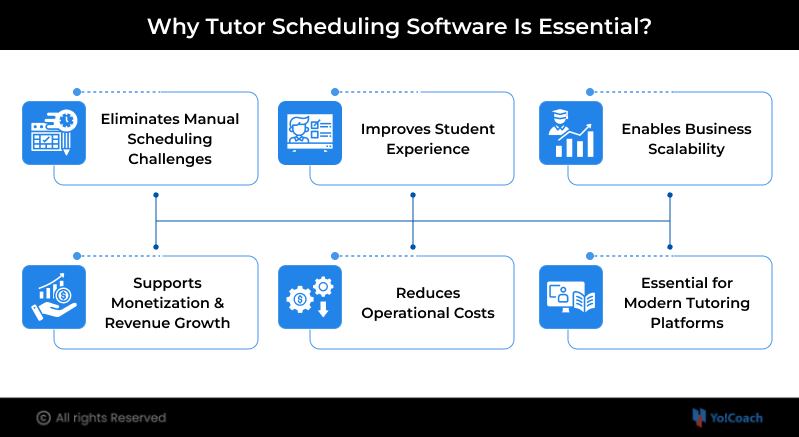
1. Eliminates Manual Scheduling Challenges
Without automation, coordinating tutor availability across multiple students and time zones quickly becomes complex and time-consuming. Tutor scheduling software:
- Automatically updates tutor availability in real time
- Prevents double bookings and scheduling conflicts
This allows tutors to focus more on teaching and less on administrative tasks.
2. Improves Student Experience
Today’s learners expect convenience, speed, and transparency. Tutor scheduling software enables:
- Self-service booking at any time
- Clear visibility into tutor availability
- Automated reminders for upcoming sessions
A smooth and intuitive booking experience directly improves student satisfaction and increases retention.
3. Enables Business Scalability
As tutoring businesses expand, managing more tutors, students, and sessions becomes exponentially harder without the right tools. Tutor scheduling software:
- Supports multiple tutors and subjects
- Handles increasing booking volumes effortlessly
- Standardizes operations across the platform
Scalable solutions like Yo!Coach goes a step further by supporting marketplace models where hundreds or thousands of tutors can manage their schedules independently.
Launch A Scalable Tutoring Marketplace Without Operational Bottlenecks
4. Supports Monetization and Revenue Growth
Advanced tutor scheduling software integrates scheduling with payments, enabling:
- Automated fee collection
- Flexible pricing models (hourly, packages, subscriptions)
- Accurate revenue tracking and reporting
This allows businesses to grow revenue without adding operational complexity.
5. Reduces Operational Costs
By automating scheduling, notifications, and session management, tutor scheduling software significantly reduces the need for manual coordination and additional support staff, helping lower overall operating costs.
6. Essential for Modern Tutoring Platforms
For tutoring marketplaces and edtech startups, scheduling is only one part of a larger ecosystem. Purpose-built solutions like Yo!Coach combine scheduling with tutor discovery, video sessions, payments, and admin controls, making them essential for businesses planning long-term, scalable growth.
Best Tutor Scheduling Software Compared: Top Solutions Ranked for 2026
Choosing the right tutor scheduling software can directly influence how efficiently your tutoring business operates and how learners experience your platform. From managing tutor availability to enabling seamless student bookings and payments, the right software simplifies operations while improving learning experiences. Below are some of the best tutor scheduling software:
1. Yo!Coach
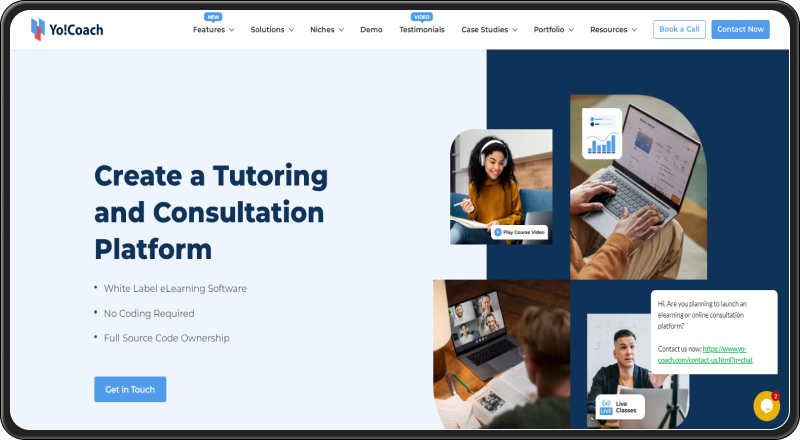
Yo!Coach ranks #1 because it goes far beyond basic scheduling. It is a purpose-built tutor scheduling and marketplace software designed specifically for online tutoring businesses that want to scale. Instead of focusing only on bookings, it supports the complete tutoring workflow from discovery to session delivery and payments.
Key Scheduling & Booking Features
- Advanced tutor availability and time-slot management
- Real-time student self-booking
- 1-on-1, group classes, and instant tutoring support
- Automated session reminders and notifications
- Time-zone-friendly scheduling
Marketplace & Monetization Capabilities
- Tutor discovery with profiles, ratings, and filters
- Multiple pricing models: hourly, subscription, and packages
- Commission management for platform owners
- Secure payment gateways and automated payouts
Why Yo!Coach Is #1
- Built exclusively for tutoring businesses
- Combines scheduling, video conferencing, and payments in one system
- Highly customizable and self-hosted
- Scales from a startup to a global tutoring marketplace
Why it stands out:
Unlike generic scheduling tools, Yo!Coach supports the entire tutoring lifecycle, making it the best long-term investment for 2026 and beyond.
Schedule a Personalized Demo of Yo!Coach
2. TutorCruncher: Best for Tutoring Agencies
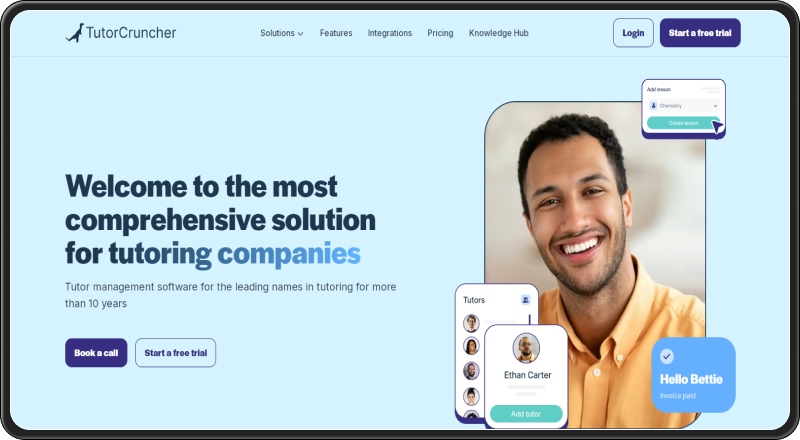
TutorCruncher is designed primarily for traditional tutoring agencies that manage a fixed pool of tutors and students. It offers structured scheduling, invoicing, and administrative controls suited for agency-style operations rather than open marketplaces.
Pros
- Centralized tutor and student management
- Lesson scheduling with integrated invoicing
Limitations
- Limited customization options
- Not designed for open tutor marketplaces
- Scaling costs increase as tutor and student volumes grow
TutorCruncher works well for agencies with defined workflows but offers less flexibility for businesses aiming to evolve into platform-based or marketplace models.
3. Acuity Scheduling: Best for Appointment-Based Tutoring
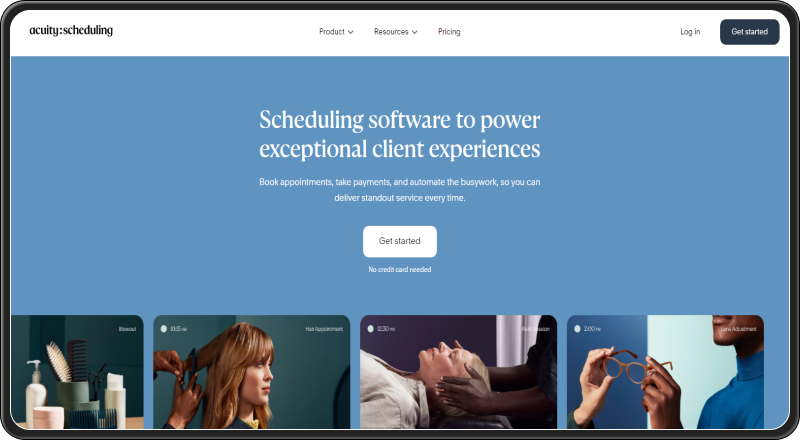
Acuity Scheduling is a general-purpose appointment scheduling tool often used by tutors offering paid sessions. It is best suited for straightforward booking needs rather than full tutoring platforms.
Pros
- Flexible availability and scheduling rules
- Multiple appointment types and durations
- Payment integrations
Limitations
- No tutor discovery or profiles
- Requires third-party tools for full tutoring workflows
- Lacks the tutoring-specific features needed for scaling or multi-tutor operations
4. Setmore: Best for Small Tutoring Teams

Setmore supports basic multi-tutor scheduling and works well for small teams offering tutoring services under a single brand. It focuses on ease of use rather than advanced platform capabilities.
Pros
- Supports team scheduling
- Online payments
- Email and SMS reminders
Limitations
- Limited scalability as tutor numbers increase
- No marketplace or advanced monetization features
- May require migration as operational complexity grows
5. Calendly: Best for Solo Tutors
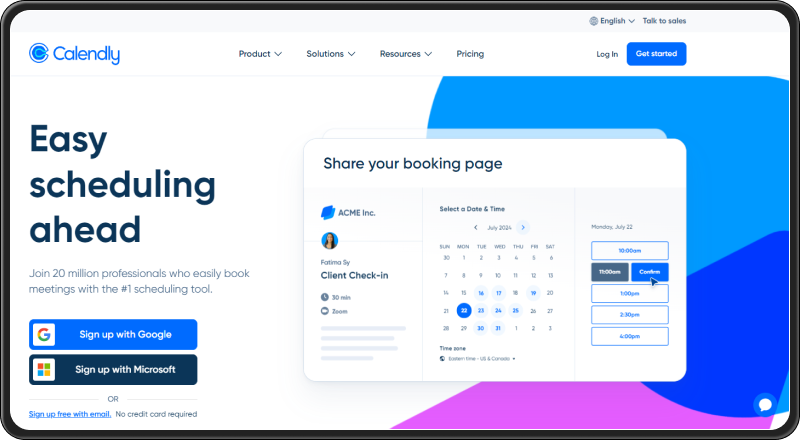
Calendly is a lightweight scheduling tool designed for individuals who need quick and simple booking functionality. It is not built specifically for tutoring but is often used by solo educators.
Pros
- Easy and quick setup
- Calendar integrations
Limitations
- No tutoring-specific features
- No payments, tutor management, or scaling capabilities
- Basic scheduling features and limited growth plans
Tutor Scheduling Software Comparison Table
With dozens of scheduling tools available, comparing features side by side makes it easier to identify which solution truly fits your tutoring business model. The table below compares the leading tutor scheduling software based on critical factors such as scheduling depth, payment support, marketplace readiness, and scalability.
| Parameter | Yo!Coach | TutorCruncher | Acuity Scheduling | Setmore | Calendly |
| Best Suited For | Tutoring marketplaces and startups | Tutoring agencies | Appointment-based tutoring | Small tutoring teams | Independent tutors |
| 1-on-1 Sessions | Supported | Supported | Supported | Supported | Supported |
| Group Classes | Supported | Supported | Not supported | Not supported | Not supported |
| Tutor Availability Management | Advanced controls | Standard controls | Standard controls | Basic controls | Basic controls |
| Student Self-Booking | Available | Available | Available | Available | Available |
| Multi-Time Zone Support | Available | Available | Available | Available | Available |
| Integrated Payments | Built-in payments | Supported | Supported | Supported | Not available |
| Automated Tutor Payouts | Available | Available | Not available | Not available | Not available |
| Video Conferencing | Native integration | Limited support | Not available | Not available | Not available |
| Tutor Profiles and Search | Full support | Limited support | Not available | Not available | Not available |
| Ratings and Reviews | Supported | Limited support | Not available | Not available | Not available |
| Marketplace Model Support | Full marketplace support | Limited support | Not available | Not available | Not available |
| Pricing Models | Hourly, packages, subscriptions | Hourly and packages | Hourly | Hourly | Hourly |
| Admin Dashboard and Reports | Advanced analytics | Standard reports | Limited reports | Limited reports | Not available |
| Customization and Branding | High | Medium | Low | Low | Low |
| Scalability | High | Medium | Medium | Medium | Low |
Turn Your Tutoring Business Vision Into A Scalable Online Marketplace
How to Choose the Right Tutor Scheduling Software
Choosing the right tutor scheduling software is not just about managing bookings; it’s about selecting a solution that aligns with your current operations and future growth plans. The ideal solution should handle day-to-day scheduling smoothly while supporting scalability, monetization, and automation as your tutoring business evolves.
Here are the key factors to consider before making a decision:
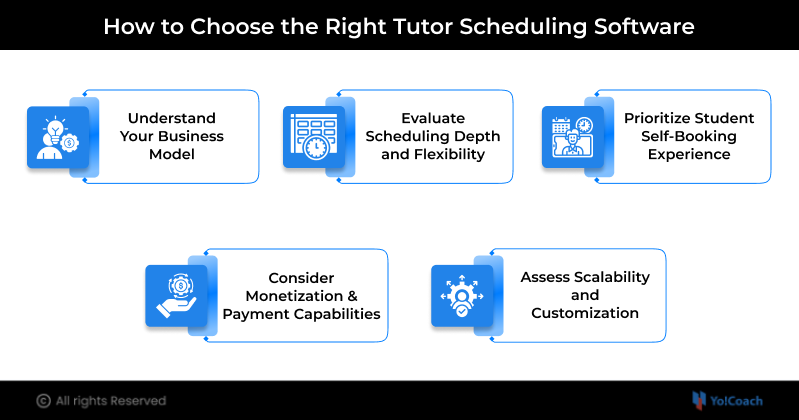
1. Understand Your Business Model
Start by clearly defining how your tutoring business operates today and how you plan to grow in the future.
- Independent tutors typically need simple scheduling with quick setup and minimal management.
- Small tutoring teams require multi-tutor calendars and shared administrative controls.
- Tutoring agencies need structured scheduling, billing, workflows, and reporting.g
- Tutoring marketplaces and edtech startups require open tutor onboarding, discovery, and self-managed scheduling.ng
2. Evaluate Scheduling Depth and Flexibility
Not all scheduling software offers the same level of control. Look for the software that provides:
- Real-time tutor availability management
- Support for 1-on-1 and group sessions
- Time-zone-aware scheduling for global learners
- Automated booking confirmations and session reminders
3. Prioritize Student Self-Booking Experience
A frictionless booking experience directly impacts conversions and learner retention. The right tutor scheduling software should enable:
- Easy tutor discovery
- Transparent availability visibility
- One-click session booking
Self-service booking reduces administrative efforts and meets modern learners’ expectations for convenience.
4. Consider Monetization and Payment Capabilities
Scheduling should be tightly integrated with secure payment gateways. Key capabilities include:
- Online payment processing
- Multiple pricing models, such as hourly, packages, and subscriptions
- Automated tutor payouts
- Commission management for platform owners
Strong monetization features help scale revenue without increasing operational complexity.
5. Assess Scalability and Customization
Your software should grow with your business. Hence, ask:
- Can it handle more tutors and students without performance issues?
- Does it support branding and customization?
- Can features be extended as requirements evolve?
Scalable and customizable software reduces the need for costly migrations later.
6. Review Admin Control and Reporting
Robust admin tools are essential for maintaining visibility and control. Look for features such as:
- Session and revenue reports
- Tutor performance tracking
- Booking and cancellation analytics
Advanced dashboards help platform owners make data-driven decisions and optimize operations as your tutoring business scales.
Why Yo!Coach Is a Smart Choice for 2026 and Beyond
The tutoring industry is rapidly evolving, shifting from simple one-on-one sessions to global, multi-tutor platforms offering flexible learning models. As learner expectations rise and competition increases, tutoring businesses need software that does more than manage schedules.
Yo!Coach is designed with this future in mind.
1. Built for the Evolving Tutoring Business Model
Modern tutoring platforms are no longer limited to fixed schedules or single pricing models. They operate across:
- Multiple subjects and skill levels
- Tutors from different regions and time zones
- Diverse session formats, including 1-on-1, group, and instant help
Yo!Coach supports these evolving requirements by combining scheduling, tutor management, payments, and session delivery into one cohesive platform.
2. Flexibility Without Platform Lock-In
Many tutoring businesses start small but later outgrow generic scheduling tools. Migrating systems mid-growth can be expensive and disruptive.
Yo!Coach provides flexibility from the start, allowing businesses to:
- Launch with a limited tutor base
- Gradually expand into a full marketplace
- Introduce new monetization models without rebuilding the platform
This adaptability makes it suitable not only for current needs, but also for long-term expansion.
3. Designed for Global Reach
As tutoring becomes increasingly borderless, platforms must support:
- Multi-time-zone scheduling
- Multi-currency payments
- Multi-language interfaces
Yo!Coach is built to support international operations, helping tutoring businesses expand beyond local markets without added technical complexity.
4. Operational Efficiency at Scale
As platforms grow, administrative workload often increases faster than revenue. Yo!Coach reduces this imbalance by:
- Automating scheduling and session management
- Enabling tutors to manage their own availability
- Centralizing reporting and platform oversight
This allows platform owners to focus on growth and quality rather than daily coordination.
5. A Platform, Not Just a Scheduling Tool
Unlike standalone scheduling software, Yo!Coach functions as a complete tutoring ecosystem. Scheduling is just one component, integrated with discovery, engagement, monetization, and analytics.
This holistic approach aligns well with how tutoring businesses are expected to operate in 2026 and beyond.
Want to Launch A Future-Ready Tutoring Platform
Conclusion
The best tutor scheduling software is not defined by the fewest clicks or the simplest interface. It is the solution that aligns closely with your business vision and long-term goals. While simple scheduling tools may be sufficient for independent tutors managing one-on-one sessions, growing businesses require more. Team-focused solutions support small tutoring teams, agency-oriented software enables structured internal operations, and marketplace-ready platforms are built to deliver scalability, flexibility, and sustainable growth as the business evolves.
As the tutoring industry continues to shift toward platform-based and global models, businesses need software that can evolve alongside changing demands. Purpose-built solutions that combine scheduling with payments, tutor management, and learner experience offer a more resilient foundation. For businesses planning long-term growth, investing in the right platform early helps avoid operational bottlenecks and unlock new revenue opportunities.
FAQs
Q 1. What is tutor scheduling software?
Ans. Tutor scheduling software is a digital system that automates the booking and session management for tutoring businesses. It allows tutors to set availability, students to book sessions, and businesses to manage payments, calendars, and session workflows from a centralized platform.
Q 2. Who should use tutor scheduling software?
Ans. Tutor scheduling software is ideal for:
- Independent tutors managing 1-on-1 sessions
- Tutoring centers coordinating multiple tutors
- Agencies handling scheduling and billing
- Entrepreneurs building online tutoring platforms
The complexity of the software should match the scale of the business.
Q 3. What features should I look for in tutor scheduling software?
Ans. A tutor scheduling software should have the following key features, such as:
- Automated availability and booking
- Student self-scheduling
- Payment integration
- Time-zone support
- Admin reporting and controls
For larger platforms, marketplace features and monetization flexibility become important.
Q 4. Can tutor scheduling software support online tutoring?
Ans. Yes, tutor scheduling software supports online tutoring. Many modern solutions come integrated with video conferencing tools or offer built-in virtual classrooms. These features enable seamless session delivery, real-time communication, automated reminders, and a unified learning experience for tutors and students across different locations.
Q 5. Is marketplace-ready scheduling software necessary from the start?
Ans. Yes, if your long-term vision includes scaling into a multi-tutor platform or marketplace, starting with marketplace-ready scheduling software is advisable. It reduces future migration costs, avoids operational disruption, and supports growth with built-in onboarding, monetization, and scalability as tutor and student volumes increase over time.
Build, Manage, and Scale Your Online Tutoring Platform
Get Started