
Published date 04th Aug, 2026
- Learn the complete process of building an online tutoring platform in the UK, from selecting a niche and business model to planning your launch strategy.
- Explore the essential features, monetization strategies, legal requirements, and technology stack needed to create a scalable tutoring marketplace.
- Compare custom development with white-label software to understand the differences in cost, development time, scalability, and speed to market.
- Discover why Yo!Coach is a practical choice for launching a branded online tutoring marketplace with built-in virtual classrooms, scheduling, secure payments, and marketplace management tools.
Introduction
The way people learn in the UK has changed dramatically. Whether it’s GCSE preparation, language learning, professional certifications, or corporate training, learners increasingly prefer the convenience and flexibility of online tutoring over traditional classroom-based instruction. As demand for digital learning continues to rise, entrepreneurs, educational institutions, and coaching businesses have a valuable opportunity to build online tutoring platforms that connect learners with qualified tutors through a seamless digital experience.
However, turning this opportunity into a successful business requires careful planning. From identifying a profitable niche and selecting the right business model to incorporating essential features, meeting UK compliance requirements, and deciding between custom development or white-label software, every decision influences your platform’s growth and long-term success. This guide explores the key considerations for building an online tutoring platform in the UK, helping you make informed decisions, avoid common mistakes, and launch a scalable marketplace that meets the evolving needs of modern learners and educators.
The UK education landscape has undergone a major digital transformation over the past few years. What began as a response to remote learning has evolved into a preferred way of accessing education, with learners increasingly choosing flexible, on-demand tutoring over traditional classroom instruction.
Today, online tutoring is no longer limited to academic subjects. Learners across the UK increasingly seek personalized instruction for:
- School curriculum support (GCSE, A-Level, SATs)
- University entrance preparation
- Professional certifications
- Language learning
- Music and arts
- Coding and STEM education
- Career coaching
- Business mentoring
- Corporate training
- Adult education
This growing demand presents a significant opportunity for entrepreneurs, educational institutions, tutoring agencies, and EdTech startups looking to build an online tutoring platform tailored to the UK market.
However, launching a successful tutoring marketplace requires more than simply connecting tutors with learners. Modern users expect secure payments, high-quality video sessions, intelligent scheduling, mobile accessibility, and personalized learning experiences. Businesses that can deliver these capabilities while ensuring scalability and a seamless user experience are better positioned to thrive in the UK’s rapidly growing online tutoring market.
Table of Contents
- The UK Online Tutoring Market is Growing Faster Than Ever
- Why Build an Online Tutoring Platform in the UK?
- What Is an Online Tutoring Platform?
- Different Types of Tutoring Platforms
- Who Can Build an Online Tutoring Platform?
- Why Many UK Businesses Prefer White-Label Tutoring Software
- Estimate the Cost to Build an Online Tutoring Platform in the UK
- Common Mistakes to Avoid While Launching an Online Tutoring Platform
- Why Yo!Coach Is a Practical Choice for Building an Online Tutoring Platform
- Conclusion
- Frequently Asked Questions
The UK Online Tutoring Market is Growing Faster Than Ever
The UK education landscape has undergone a major digital transformation over the past few years. What began as a response to remote learning has evolved into a preferred way of accessing education, with learners increasingly choosing flexible, on-demand tutoring over traditional classroom instruction.
Today, online tutoring is no longer limited to academic subjects. Learners across the UK increasingly seek personalized instruction for:
- School curriculum support (GCSE, A-Level, SATs)
- University entrance preparation
- Professional certifications
- Language learning
- Music and arts
- Coding and STEM education
- Career coaching
- Business mentoring
- Corporate training
- Adult education
This growing demand presents a significant opportunity for entrepreneurs, educational institutions, tutoring agencies, and EdTech startups looking to build an online tutoring platform tailored to the UK market.
However, launching a successful tutoring marketplace requires more than simply connecting tutors with learners. Modern users expect secure payments, high-quality video sessions, intelligent scheduling, mobile accessibility, and personalized learning experiences. Businesses that can deliver these capabilities while ensuring scalability and a seamless user experience are better positioned to thrive in the UK’s rapidly growing online tutoring market.
Why Build an Online Tutoring Platform in the UK?
The UK offers one of Europe’s most mature and digitally connected education ecosystems. Several factors make it an attractive market for launching an online tutoring business. From growing demand for personalized learning to widespread digital adoption, several factors continue to fuel the growth of online tutoring platforms.
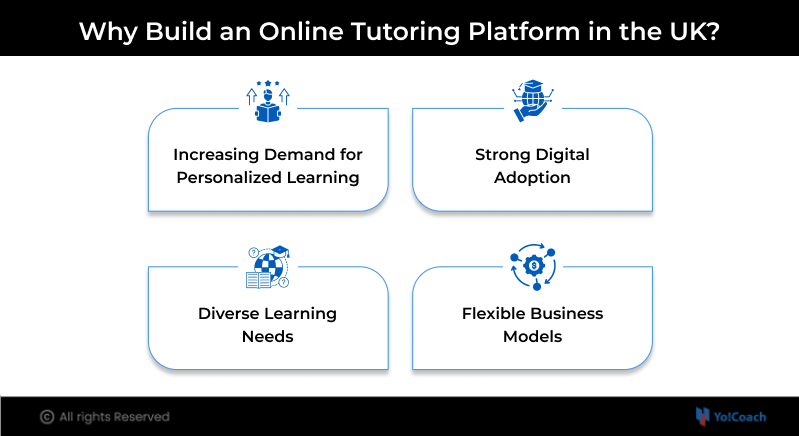
1. Increasing Demand for Personalized Learning
Traditional classroom learning cannot always meet the unique needs of every learner. As a result, parents, students, and professionals are increasingly turning to online tutoring for:
- Better academic outcomes
- Flexible schedules
- Personalized lesson plans
- Exam preparation
- Confidence building
Online tutoring platforms make it easier than ever to connect learners with qualified tutors who match their goals and learning preferences.
2. Strong Digital Adoption
The UK has a digitally savvy population that is comfortable purchasing educational services online. Today’s learners expect a seamless digital experience with features such as:
- Instant booking
- Online payments
- Live video sessions
- Mobile learning
- Digital resources
This strong digital adoption creates the perfect environment for launching and scaling an online tutoring marketplace.
3. Diverse Learning Needs
Online tutoring is no longer limited to school subjects. Learners now seek guidance across a wide range of educational and professional disciplines, including:
- GCSE Maths
- A-Level Physics
- IELTS preparation
- Spoken English
- French language
- Piano lessons
- Coding
- Graphic design
- Digital marketing
- Career coaching
- Accounting
- Fitness coaching
A marketplace model enables you to bring diverse learning categories together on a single platform, attracting a broader audience and unlocking multiple growth opportunities.
4. Flexible Business Models
One of the biggest advantages of launching an online tutoring platform is the ability to generate revenue from multiple sources.
Common monetization options include:
| Revenue Model | How It Generates Revenue |
| Commission | Charge a percentage on every lesson booked |
| Tutor Subscription | Monthly plans for tutors |
| Featured Listings | Promote tutors in search results |
| Premium Membership | Offer exclusive learner benefits |
| Group Classes | Sell sessions to multiple learners |
| Course Packages | Prepaid learning bundles |
| Corporate Training | Partner with businesses |
By combining multiple revenue streams, you can increase profitability, reduce business risk, and create a more sustainable tutoring marketplace over the long term.
Capitalize on the UK’s Booming Online Education Market
What is an Online Tutoring Platform?
An online tutoring platform is a digital marketplace that connects learners with tutors through a centralized website or mobile application. Unlike a basic tutoring website that simply showcases services, a tutoring marketplace streamlines the entire learning journey, from tutor discovery to session completion, all in one place.
A well-designed online tutoring platform typically includes:
- Tutor discovery
- Search and filtering
- Profile verification
- Session booking
- Secure payments
- Live video classes
- Calendar management
- Messaging
- Ratings and reviews
- Learning history
- Reports and analytics
In essence, it functions much like a service marketplace, allowing learners to easily search, compare, and book tutors based on their subject expertise, availability, pricing, and reviews. For tutors and platform owners, it also simplifies operations by centralizing scheduling, communication, payments, and platform management in a single ecosystem.
Different Types of Tutoring Platforms
Before you begin development, it’s important to identify the business model that aligns with your goals. The right model will influence your feature set, monetization strategy, and user experience.
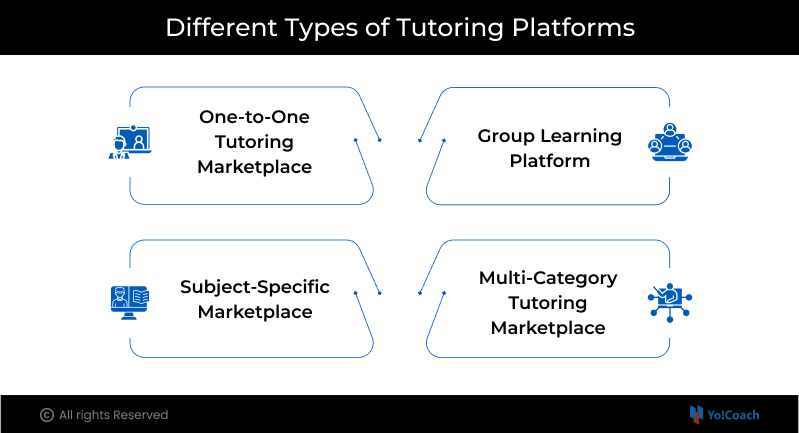
1. One-to-One Tutoring Marketplace
This is the most widely adopted tutoring model, where learners browse tutor profiles and book personalized one-on-one sessions based on their learning goals.
Suitable for:
- Academic tutoring
- Language learning
- Professional coaching
2. Group Learning Platform
A group learning platform enables tutors to teach multiple learners simultaneously through live virtual classes. This model improves tutor productivity while making learning more affordable for students.
Ideal for:
- Exam preparation
- Test series
- Corporate training
- Workshops
3. Subject-Specific Marketplace
This model focuses on a single subject or niche, allowing you to build authority and attract a highly targeted audience. Niche platforms often establish credibility faster than general-purpose marketplaces.
Examples include:
- Mathematics
- Coding
- Music
- IELTS
- Medical entrance exams
Specialized platforms often build authority faster.
4. Multi-Category Tutoring Marketplace
A multi-category marketplace brings together tutors across diverse subjects and skill areas on a single platform. It offers greater scalability, attracts a broader user base, and creates more opportunities for revenue diversification
Examples:
- School subjects
- Business coaching
- Art
- Fitness
- Languages
- Technology
- Soft skills
Who Can Build an Online Tutoring Platform?
The online tutoring industry is no longer limited to large EdTech companies. With the availability of scalable marketplace technologies, businesses of all sizes can launch and manage successful online tutoring platforms tailored to their target audience and business goals.
Common platform owners include:
- Education startups
- Schools
- Universities
- Coaching institutes
- Private tutoring agencies
- Corporate training providers
- Non-profit organizations
- Freelance education entrepreneurs
- Language academies
- Skill development companies
Regardless of your business type, building a successful tutoring platform starts with a clear strategy. From identifying your niche and understanding your audience to selecting the right technology and monetization model, every decision shapes your platform’s long-term success.
Turn Your Education Business into a Scalable Marketplace
How to Build an Online Tutoring Platform in the UK 2026
Let’s explore the step-by-step process of building an online tutoring platform in the UK.
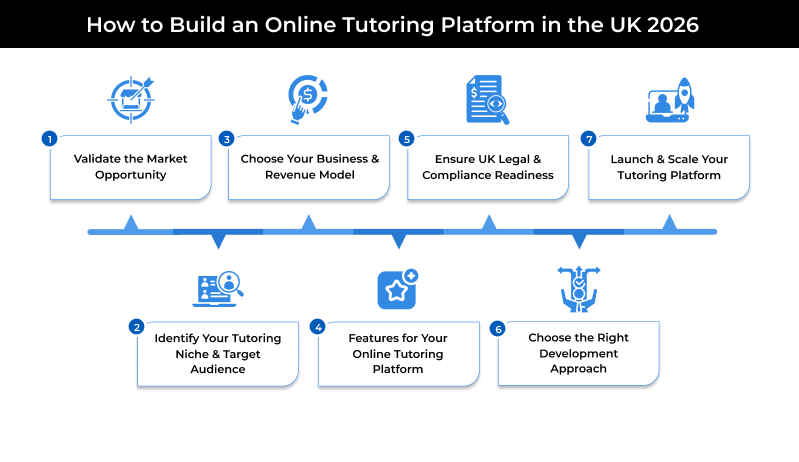
Step 1: Validate the Market Opportunity
Before investing in development, it’s important to validate your business idea and understand the competitive landscape. Market research helps you assess demand, identify opportunities, and determine how your platform can stand out in the UK’s growing online tutoring industry.
Start by analyzing existing online tutoring platforms operating in the UK. Instead of simply replicating their offerings, evaluate their strengths, identify their shortcomings, and uncover opportunities to deliver a better learning experience.
Pay attention to factors such as:
- Tutor onboarding process
- Booking experience
- Search functionality
- Pricing models
- Payment flow
- Mobile responsiveness
- Reviews and ratings
- User interface
- Video conferencing quality
- Customer support
This analysis will help you understand what learners and tutors expect from a modern tutoring marketplace. It also enables you to identify market gaps, refine your unique value proposition, and build a platform that better addresses user needs. Validating the market before development reduces business risks and lays the foundation for a more competitive and scalable online tutoring platform.
Step 2: Identify Your Tutoring Niche & Target Audience
Once you’ve validated the market opportunity, the next step is to define your tutoring niche and understand the audience you want to serve. While it may be tempting to cater to everyone, starting with a focused niche helps you establish your brand, attract the right tutors, and deliver a more personalized learning experience.
Before building your platform, ask yourself:
- Who is my target learner?
- Which subjects or skills will I offer?
- Will sessions be one-to-one or group-based?
- Will tutors work independently or through agencies?
- Which regions or countries will I serve?
Popular tutoring niches include:
- Academic Tutoring
- GCSE
- A-Level
- Primary Education
- Language Learning
- Professional Development
- Hobby Learning
Alongside selecting a niche, it’s equally important to understand your target audience. A successful tutoring platform is built around learner needs rather than technology alone. Creating detailed learner personas helps you prioritize features that improve user satisfaction, engagement, and retention.
Some common learner segments include:
| Target Audience | Key Expectations |
| Parents | Verified tutors, progress reports, safe payment methods, flexible scheduling |
| University Students | Affordable pricing, subject experts, fast bookings, mobile learning |
| Working Professionals | Evening sessions, weekend availability, recorded lessons, certification support |
Clearly defining your niche and audience enables you to design a tutoring marketplace that delivers relevant features, attracts qualified tutors, and creates a more engaging learning experience, ultimately improving user acquisition and long-term retention.
Step 3: Choose Your Business & Revenue Model
With your niche and target audience defined, the next step is to determine how your online tutoring platform will operate and generate revenue. Selecting the right business and monetization model early helps you build a sustainable marketplace while supporting long-term growth.
Choose Your Business Model
Your business model defines how tutors and learners interact on your platform. The most common options include:
- Marketplace Model
Independent tutors register on the platform, create their profiles, and offer tutoring services directly to learners. This model is ideal for startups looking to build a scalable multi-vendor tutoring marketplace.
- Agency Model
Tutors operate under a single organization or coaching institute. The platform manages tutor allocation, pricing, and learner interactions, making it suitable for coaching centers and educational institutions.
- Corporate Learning Platform
Designed for businesses that provide employee training, certification programs, or professional development courses. This model is best suited for enterprises and corporate training providers.
- Hybrid Model
A hybrid platform combines multiple business models by allowing independent tutors, coaching institutes, and organizations to operate on the same marketplace. It offers greater flexibility as your business grows.
Choose Your Revenue Model
Once you’ve finalized your business model, determine how your platform will generate revenue. Many successful tutoring marketplaces combine multiple monetization strategies to maximize profitability and create predictable income streams.
- Commission-Based Marketplace
In this model, the platform earns a percentage from every successful lesson booking. It is a popular choice for new marketplaces because tutors only pay when they generate revenue, making it easier to attract and onboard educators.
- Subscription Model
Tutors pay a recurring monthly or annual fee to access the platform and its features. This model works well for established marketplaces with consistent traffic and provides a steady source of recurring revenue.
- Freemium Model
A freemium approach allows tutors to join the platform for free while charging for premium features such as priority listings, advanced analytics, marketing tools, and enhanced profile customization. This encourages user acquisition while creating upselling opportunities.
- Hybrid Revenue Model
Many successful tutoring marketplaces combine multiple revenue streams, such as commissions, subscription plans, featured tutor placements, advertising opportunities, group class fees, premium memberships, course packages, and corporate training partnerships. A diversified monetization strategy helps improve profitability while reducing reliance on a single revenue source.
Choosing the right combination of business and revenue models ensures your tutoring platform remains scalable, profitable, and well-positioned for long-term growth.
Create a Tutoring Marketplace Designed for Sustainable Growth
Step 4: Define the Must-Have Features for Your Online Tutoring Platform
The success of your online tutoring platform depends on the experience it delivers to learners, tutors, and administrators. While an intuitive interface is important, features that simplify tutor discovery, lesson management, communication, and platform administration have a much greater impact on user satisfaction and retention.
| Learner Features | Tutor Features | Admin Features |
| Easy Registration & Login | Tutor Dashboard | User Management |
| Advanced Tutor Search & Filters | Calendar Management | Tutor Verification |
| Tutor Profiles | Earnings Dashboard | Commission Management |
| Instant Booking & Scheduling | Student Management | Analytics Dashboard |
| Secure Payment Processing | Session Management | Content Management System (CMS) |
| Integrated Virtual Classroom | Availability Management | Roles & Permissions |
| Ratings & Reviews | Messaging & Notifications | Payment Gateway Management |
| Notifications & Reminders | Resource & Assignment Sharing | Reports & Insights |
Why These Features Matter?
These features create a well-balanced tutoring marketplace that delivers a seamless learning experience for learners, equips tutors with the tools to manage their teaching efficiently, and enables administrators to oversee platform operations, drive engagement, and scale the business effectively.
Step 5: Ensure UK Legal & Compliance Readiness
Before launching your online tutoring platform, ensure it complies with the UK’s legal, security, and accessibility requirements. Meeting these standards not only helps you avoid regulatory issues but also builds trust among learners, tutors, and educational institutions.
Key compliance areas to consider include:
GDPR Compliance
Since your platform will collect and process personal data, it should comply with the UK’s General Data Protection Regulation (UK GDPR). Essential requirements include:
- Cookie consent
- Privacy policy
- Data access requests
- Data deletion requests
- Secure data storage
Secure Payment Processing
Integrate PCI DSS-compliant payment gateways to protect financial transactions and safeguard sensitive payment information.
Terms & Conditions
Clearly define your platform policies, including:
- Refund policy
- Cancellation policy
- Tutor responsibilities
- Learner obligations
- Platform liability
Well-documented terms help prevent disputes while ensuring transparency for all users.
Identity Verification
If your platform serves minors, implement appropriate identity verification and safeguarding measures. Depending on your business model, tutors may also require identity verification, academic credential validation, and enhanced background checks before joining the platform.
Accessibility Compliance
Design your tutoring platform following recognized accessibility standards such as WCAG. An accessible platform ensures learners with disabilities can easily navigate, book sessions, and participate in online classes while improving the overall user experience.
Prioritizing legal compliance from the outset helps create a secure, trustworthy, and inclusive tutoring marketplace while minimizing operational risks as your business grows.
Step 6: Choose the Right Development Approach
Once you’ve defined your platform’s features and ensured legal compliance, the next step is deciding how to build your online tutoring platform. Your development approach directly impacts your budget, time-to-market, scalability, and long-term maintenance.
Most businesses choose between custom development and white-label tutoring software, depending on their business goals and available resources.
| Factor | Custom Development | White-Label Software |
| Development Time | 9-18 Months | Few Days to Weeks |
| Initial Investment | High | Lower |
| Maintenance | Your Responsibility | Vendor Support Available |
| Scalability | Depends on Development | Built for Growth |
| Testing | Extensive | Already Market-Tested |
| Time-to-Market | Slow | Fast |
Custom development offers complete flexibility and is suitable for businesses with highly specific requirements and larger budgets. However, it often involves lengthy development cycles, extensive testing, ongoing maintenance, and higher implementation costs.
On the other hand, a white-label tutoring marketplace solution provides a faster and more cost-effective route to launch. It comes with pre-built marketplace functionality that can be customized to match your branding and business requirements, allowing you to focus on acquiring tutors, attracting learners, and growing your business instead of building the platform from scratch.
For startups, SMEs, and educational organizations aiming to validate their business idea and enter the market quickly, a white-label solution is often the preferred choice due to its shorter deployment time, lower upfront investment, and proven scalability.
Skip Lengthy Development Cycles and Start Growing Your Tutoring Business Sooner
Step 7: Launch & Scale Your Tutoring Platform
With your platform built, it’s time to launch your online tutoring marketplace and focus on sustainable growth. A successful launch is just the beginning. To remain competitive, you must continuously optimize your platform, expand your offerings, and adapt to evolving learner expectations.
Monitor Platform Performance
Track key performance indicators (KPIs) to measure your marketplace’s growth and identify areas for improvement. Some important metrics include:
- User registrations
- Tutor onboarding
- Lesson bookings
- Revenue growth
- Student and tutor retention
- Conversion rates
- Customer satisfaction
These insights enable you to make data-driven decisions that improve platform performance and user experience.
Enhance the Learning Experience
Regularly collect feedback from learners and tutors to identify pain points and introduce meaningful improvements. Updating features based on user needs helps increase engagement, satisfaction, and long-term retention.
Expand Your Marketplace
As your business grows, scale your platform by introducing new opportunities, such as:
- Adding new subjects and learning categories
- Expanding into new cities or countries
- Supporting multiple languages and currencies
- Launching Android and iOS mobile apps
- Partnering with schools, universities, and corporate training providers
Introducing AI-powered capabilities to improve personalization and operational efficiency
Continue Innovating
The online education industry continues to evolve with changing learner preferences and emerging technologies. Regularly updating your platform with new features, strengthening security, and refining your marketing strategy will help you stay competitive and support long-term business growth.
By continuously improving your platform and expanding your offerings, you can build a scalable online tutoring marketplace that delivers lasting value to learners, tutors, and your business.
Why Many UK Businesses Prefer White-Label Tutoring Software?
Building a tutoring marketplace from scratch can require significant investment in planning, development, testing, deployment, and ongoing maintenance. While this approach offers complete customization, it often extends development timelines, increases costs, and delays market entry.
As a result, many UK entrepreneurs, educational institutions, and tutoring businesses are turning to white-label tutoring software to accelerate their launch. A solution like Yo!Coach provides a ready-to-customize foundation, allowing businesses to launch a branded tutoring marketplace without building core functionality from the ground up. This significantly reduces development effort while enabling organizations to focus on acquiring tutors, attracting learners, and scaling their business.
Estimate the Cost to Build an Online Tutoring Platform in the UK
One of the first questions entrepreneurs ask is, “How much does it cost to build an online tutoring platform?” The answer depends on your chosen development approach, feature requirements, integrations, and scalability goals.
Below is a general comparison:
| Development Approach | Estimated Cost | Development Time |
| Basic MVP | £20,000-£50,000 | 3-6 Months |
| Custom Marketplace | £70,000-£200,000+ | 9-18 Months |
| Enterprise Platform | £200,000+ | 12-24 Months |
| White-Label Solution | Significantly Lower | Days to Weeks |
While custom development offers complete flexibility, it often requires substantial investment in planning, development, testing, deployment, and maintenance. For startups and SMEs aiming to validate their business model quickly, a white-label platform can provide a faster and more cost-effective route to market. It enables businesses to launch with essential marketplace features already in place while reducing development costs and accelerating time to market.
Looking for a Faster and More Affordable Way to Launch?
Future-Proof Your Tutoring Platform with AI
Artificial intelligence is transforming online education by making learning more personalized, efficient, and engaging. Rather than replacing human tutors, AI enhances the learning experience by automating routine tasks, improving decision-making, and helping learners find the right educational support faster.
Here are some AI-powered capabilities you can integrate into your online tutoring platform:
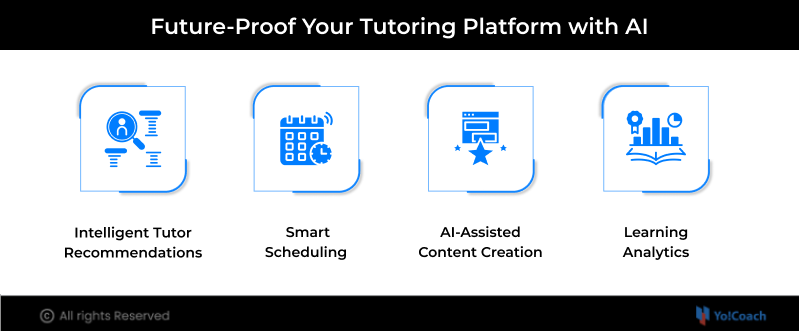
1. Intelligent Tutor Recommendations
Use AI to match learners with the most suitable tutors based on factors such as:
- Subject expertise
- Budget
- Availability
- Learning objectives
- Previous bookings
This helps learners discover the right tutor more quickly while improving booking conversions.
2. Smart Scheduling
AI can automatically recommend the most suitable class timings by analyzing tutor availability, learner preferences, and calendar schedules. This minimizes scheduling conflicts and streamlines the booking process.
3. AI-Assisted Content Creation
Support tutors with AI-generated teaching resources to reduce preparation time, including:
- Lesson outlines
- Practice questions
- Quizzes
- Homework assignments
- Session summaries
This allows tutors to focus more on teaching while maintaining content quality and consistency.
4. Learning Analytics
AI-powered analytics help tutors and administrators track learner performance through insights such as:
- Attendance trends
- Learning progress
- Completion rates
- Performance improvements
- Areas requiring additional support
These data-driven insights enable tutors to personalize lessons, identify learning gaps, and deliver more effective educational experiences.
Common Mistakes to Avoid While Launching an Online Tutoring Platform
Building a successful online tutoring platform involves more than adding features and launching quickly. Many startups encounter avoidable challenges that impact user experience, slow growth, and increase development costs. Here are some common mistakes to avoid:
- Trying to Build Everything at Once
Packing your platform with every possible feature from day one can significantly increase development costs and delay your launch. Instead, start with core marketplace functionality, validate your business model, and introduce new features based on user feedback and market demand.
- Ignoring Mobile Users
A large share of learners book sessions and attend classes using smartphones and tablets. Ensure your platform is fully responsive from the start, and consider launching dedicated Android and iOS apps as your user base grows.
- Complicated Tutor Onboarding
Lengthy registration and verification processes can discourage qualified tutors from joining your platform. Keep onboarding simple and intuitive while maintaining appropriate verification measures to build trust and platform credibility.
- Weak Search Experience
If learners struggle to find the right tutor, they’re less likely to complete a booking. Incorporate advanced search, smart filters, and intuitive navigation to help users quickly discover tutors based on subject, availability, pricing, ratings, and experience.
- Poor Video Quality
High-quality video sessions are essential for effective online learning. Choose a stable virtual classroom solution with features like HD video conferencing, screen sharing, interactive whiteboards, chat, and session recording to deliver a seamless learning experience.
- Neglecting Data Security
Handling personal and payment data requires robust security measures. Protect your platform with:
- Secure authentication
- Encrypted communication
- Regular security updates
- Secure payment processing
- GDPR-compliant data handling
Prioritizing security not only safeguards user information but also builds trust, strengthens your brand reputation, and encourages long-term platform adoption.
Why Yo!Coach is a Practical Choice for Building an Online Tutoring Platform
Choosing the right technology partner is one of the most important decisions when launching a tutoring marketplace. While custom development can provide complete flexibility, it also involves longer timelines, higher costs, and continuous maintenance.
For entrepreneurs, coaching institutes, universities, EdTech startups, and training organizations seeking a faster launch, Yo!Coach offers a practical alternative. Purpose-built for tutoring and coaching businesses, it comes equipped with the essential features needed to launch, manage, and grow a branded online tutoring platform.
Some reasons businesses choose Yo!Coach include:
- Purpose-built for tutoring and coaching marketplaces
- White-label solution with complete branding flexibility
- Integrated virtual classroom
- One-to-one and group learning support
- Secure payment integrations
- Tutor verification and profile management
- Calendar and scheduling system
- Multi-language and multi-currency capabilities
- Scalable architecture
- Self-hosted with lifetime ownership
- Optional Android and iOS mobile apps
Rather than spending months developing foundational marketplace features, organizations can focus on building their tutor network, attracting learners, and expanding their educational offerings while accelerating growth.
Schedule a One-on-One Demo to See Yo!Coach in Action
Conclusion
The UK’s online education sector continues to present significant opportunities for entrepreneurs, educational institutions, and training organizations. This creates strong opportunities for entrepreneurs, educational institutions, and training organizations to launch scalable tutoring businesses. However, success depends on more than just technology. Defining the right niche, understanding your audience, ensuring UK compliance, delivering a seamless learning experience, and adopting a sustainable monetization strategy are all essential for long-term growth.
When evaluating development options, it’s important to balance flexibility, cost, and speed to market. While custom software development may suit organizations with highly specialized requirements, many startups and established education businesses prefer ready-made solutions that allow them to launch faster without compromising scalability.
In contrast, Yo!Coach provides a faster, more cost-effective way to launch a branded online tutoring marketplace with built-in capabilities such as virtual classrooms, scheduling, payments, and marketplace management. With the right strategy and a scalable technology foundation, you can establish a competitive presence in the UK’s evolving EdTech landscape and create lasting value for both learners and educators.
Frequently Asked Questions
1. How long does it take to build an online tutoring platform?
The timeline depends on your development approach. A custom-built platform may take anywhere from 9 to 18 months, while a white-label solution can often be deployed in a matter of days or weeks. If speed and lower costs are priorities, ready-made software is usually the faster option.
2. What features should an online tutoring platform include?
A successful tutoring platform should include tutor profiles, learner registration, advanced search, booking and scheduling, secure payments, live video classes, messaging, ratings and reviews, notifications, analytics, and an administrative dashboard. These features help deliver a seamless experience for learners, tutors, and administrators.
3. Can I launch a tutoring marketplace without building software from scratch?
Yes, many businesses use white-label tutoring marketplace software to reduce development time, lower costs, and accelerate market entry. It provides essential marketplace functionality while allowing customization to match your brand and business requirements.
4. Is online tutoring profitable in the UK?
Yes, the UK continues to see growing demand for flexible and personalized online learning. A well-positioned tutoring marketplace with quality tutors, a strong user experience, and effective monetization can become a profitable and sustainable business.
5. How can I monetize an online tutoring platform?
Common monetization strategies include:
- Commission on bookings
- Tutor subscription plans
- Featured tutor listings
- Group class fees
- Premium memberships
- Corporate learning packages
- Advertising and promotional placements
Many successful platforms combine multiple revenue streams.
6. What is the fastest way to launch an online tutoring platform?
Using a white-label tutoring marketplace solution is generally the fastest approach. It includes core marketplace features helping you reduce development time, lower costs, and launch your branded platform much sooner than custom development.
Turn Your EdTech Idea into a Marketplace
Get In Touch