

Published 02 July, 2026
The best white-label mentoring software in 2026 enables organizations to launch fully branded mentoring platforms with features like mentor-mentee matching, scheduling, video conferencing, messaging, progress tracking, and analytics. Top solutions include Yo!Coach, MentorcliQ, Chronus, Together Platform, Qooper, Mentorloop, PushFar, Guider, MentorEase, and River. The ideal platform depends on your organization’s size, customization needs, budget, and scalability requirements.
Online mentoring has evolved far beyond being a “nice-to-have” phase. Today, professionals across industries, such as tech, leadership, career growth, wellness, and finance, increasingly seek personalized, one-on-one guidance instead of generic pre-recorded courses. For entrepreneurs, this growing demand presents a significant business opportunity. However, building a mentoring platform from the ground up can take 12 to 18 months, require substantial development resources, and delay your market entry.
That is where white-label mentoring software offers a smarter alternative. Instead of investing resources in custom development, you can launch a fully branded mentoring platform using a market-ready solution in just a few weeks. The challenge is that the category is crowded and inconsistent; some tools are genuine white-label marketplace software, while others are single-coach tools with a “custom domain” feature loosely marketed as white-labeling.
In this guide, we will break down the top 10 white-label mentoring software options in 2026, how each one stacks up, and what actually separates a platform you can build a real business on from one you’ll outgrow within a year.
Table of Contents
How We Ranked This List?
To help you make an informed decision, we evaluated each platform based on the features and capabilities that matter most when launching and scaling a white-label mentoring marketplace:
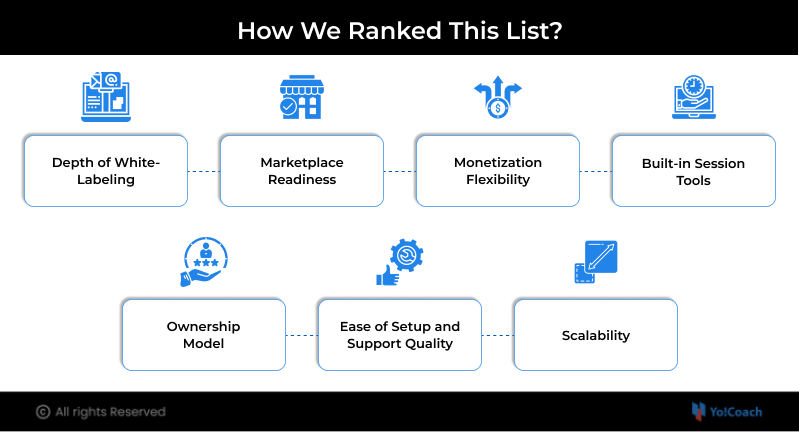
1. Depth of White-Labeling
We have assessed how extensively each platform supports branding, including custom domains, logo, color scheme, and extent to domains, emails, certificates, and workflow logic.
2. Marketplace Readiness
We evaluated whether the software is built for multi-mentor marketplaces with independent mentor onboarding and management, or if it is primarily designed to support a single coach or mentoring practice.
3. Monetization Flexibility
Solutions are compared based on the revenue models they support, including commissions, subscriptions, packages, and other flexible monetization options that help entrepreneurs build sustainable marketplace businesses.
4. Built-in Session Tools
We reviewed the availability of essential mentoring features such as video conferencing, scheduling, whiteboards, and recording, versus requiring third-party add-ons.
5. Ownership Model
We compared self-hosted with source code access with rented SaaS subscription platforms that operate on recurring subscriptions, helping founders understand the trade-offs between control, flexibility, and convenience.
6. Ease of Setup and Support Quality
Each solution was assessed based on publicly available user reviews, deployment simplicity, vendor documentation, customer support quality, and more.
7. Scalability
We considered each platform’s ability to support long-term growth, evaluating whether it can efficiently handle increasing numbers of mentors, mentees, bookings, and transactions without compromising performance.
Note: Platforms were excluded if they were built purely for internal corporate mentoring programs (like Qooper, Chronus, or Together), since that’s a fundamentally different category from a public-facing, entrepreneur-owned mentoring marketplace.
List of Top 10 White-Label Mentoring Software
Selecting the right white-label mentoring software can significantly impact your launch and long-term success. Below are the top solutions for 2026, each evaluated based on its strengths, ideal use cases, and marketplace capabilities to help you make an informed decision.
1. Yo!Coach
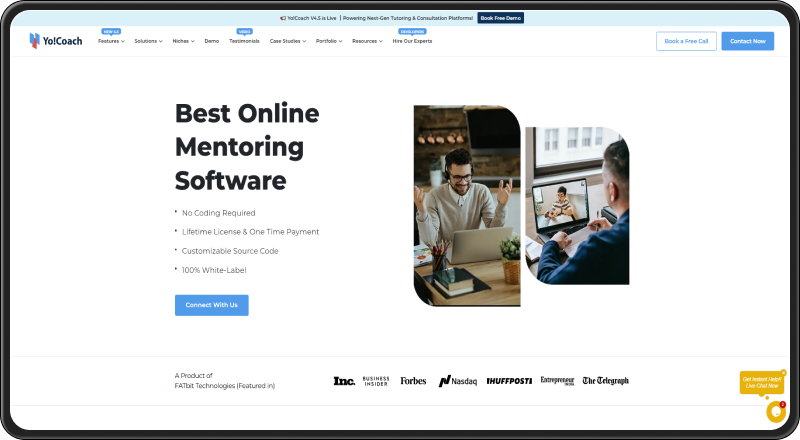
Yo!Coach is best for launching a full white-label mentoring marketplace. It is a purpose-built solution for entrepreneurs who want to run a multi-mentor, commission- or subscription-based business, with video conferencing, scheduling, and payments pre-integrated. Moreover, its self-hosted architecture makes it a strong choice for businesses planning long-term growth.
Pros:
- Purpose-built for multi-mentor marketplaces, not a repurposed course platform
- Full source-code ownership available on the self-hosted plan
- Pre-integrated video conferencing, virtual whiteboard, screen sharing, and session recording
- Supports commission, subscription, and package-based monetization simultaneously
- Multi-language and multi-currency support for global marketplaces
- Explicitly supports mentoring and consultation as a distinct niche, not just tutoring
Cons:
- Best suited to founders planning a real multi-mentor business rather than a single practitioner’s personal brand
See Yo!Coach in Action
2. Wise

Combining learning management, live classrooms, scheduling, analytics, and white-label branding, Wise delivers a unified ecosystem for mentoring and tutoring businesses. It is well suited for organizations managing mentor teams while offering branded web and mobile learning experiences.
Pros:
- Combines tutoring management, LMS, live classroom, and white-label branding in one ecosystem
- True two-way calendar sync that reduces double-booking as mentor teams grow
- Branded mobile apps available for a premium, unified experience
- Scheduling is tied directly to classroom delivery, analytics, and payroll
Cons:
- Feature depth can mean a steeper learning curve for very small teams
- Positioned more toward tutoring-style operations than open, self-serve mentor marketplaces
3. Mentor LMS
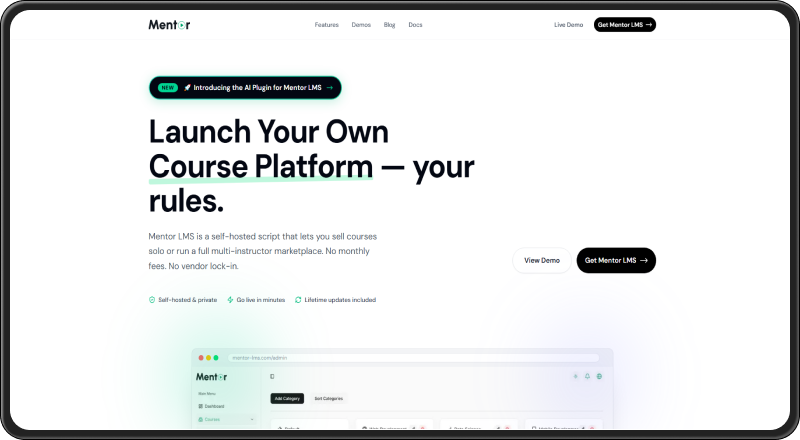
A self-hosted white-label LMS with mentoring add-ons. This solution offers deep branding control, including domain, dashboard, emails, and certificates. With a one-time purchase option, it is best suited to structured course delivery layered with lighter mentoring touches.
Pros:
- Genuinely deep white-labeling, logo, domain, dashboard styling, branded emails, and certificate design
- Self-hosted, one-time purchase option available with full source-code control
- Strong fit for agencies delivering structured training under multiple client brands
Cons:
- Built primarily around course delivery rather than live, session-based mentoring
- Turning it into a full open marketplace with mentiscovery and commission handling takes more configuration than a purpose-built marketplace platform.m
4. Guruz (Nyusoft)
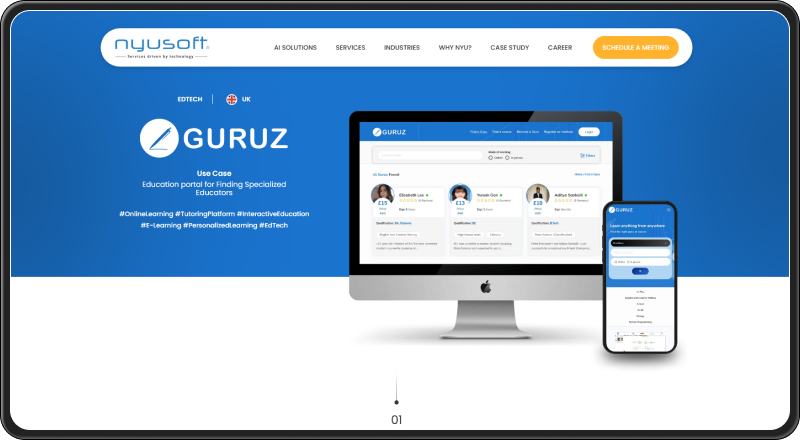
Guruz is a fully customizable platform covering logo, color, domain, and workflow branding, with integrated scheduling, automated booking, and video conferencing built around tutoring-style mentorship.
Pros:
- Fully customizable branding, logo, colors, domain, and workflows
- Includes integrated scheduling, automated booking, and in-platform video conferencing
- Positioned specifically around mentorship and tutoring use cases
Cons:
- Narrower scope than broader multi-niche marketplace platforms
- Less publicly available third-party review data to independently verify scalability
5. TutorCruncher
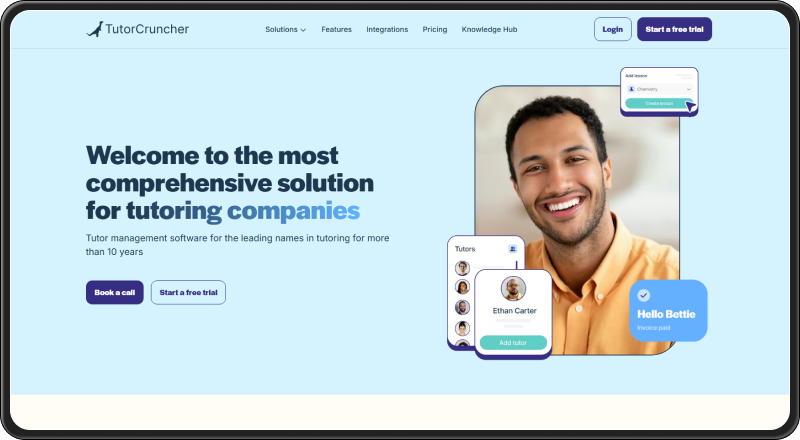
Designed to simplify business operations, TutorCruncher is more focused on the administrative side of running a mentoring or tutoring business, including scheduling, billing, and payroll. This solution is better suited to a managed team than an open, self-registration marketplace.
Pros:
- Strong administrative backbone for scheduling, billing, and payroll
- Well suited to agencies that want centralized control over a managed mentor or tutor roster
- Mature product with an established market presence
Cons:
- Built more for internal agency operations than an open, self-registration marketplace
- Pricing tends to run higher than lighter-weight alternatives, which matters for early-stage founders
6. UpCoach
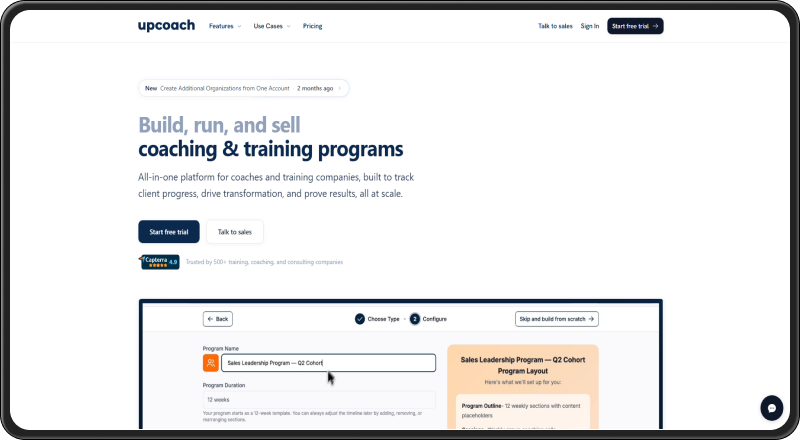
Built specifically for individual coaches, with program builders, habit tracking, client CRM, and community tools; custom domain and brand customization are available on higher-tier plans. It works well for personal coaching practices but offers limited functionality for businesses operating multi-mentor marketplaces.
Pros:
- Purpose-built for coaches, with habit tracking, smart documents, and program templates
- Strong community features, forums, group chat, and networking tools
- Custom domain and brand customization available on higher-tier plans
Cons:
- No native payment system in some configurations, often requires connecting Stripe separately
- No free trial, and brand customization is locked behind paid plans rather than available by default
- Built around a single coach’s practice rather than a multi-mentor marketplace
7. Kajabi

Known for its all-in-one platform for course creators and coaches that adds strong marketing tools such as email, funnels, and landing pages on top of coaching and community features. This solution is apt for personal coaching practices but offers limited functionality for businesses operating multi-mentor marketplaces.
Pros:
- Well-rounded all-in-one platform for courses, coaching, community, and marketing
- Strong marketing tools, email, landing pages, and sales funnels built-in
- User-friendly interface with responsive support
Cons:
- Can feel complex for beginners, given the breadth of features
- Pricing runs higher than the mentoring-specific alternatives
- Not built around a commission-based, multi-mentor marketplace model
8. LearnCube
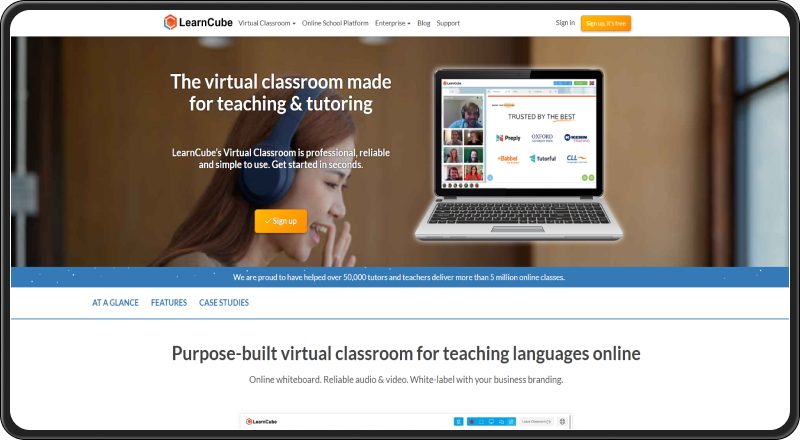
Specializing in virtual learning, LearnCube provides a white-label online classroom equipped with interactive teaching tools and reliable video conferencing. Since it focuses primarily on live sessions, businesses often pair it with separate software for marketplace management and billing.
Pros:
- Excellent live virtual classroom technology with reliable video delivery
- White-label branding available for the classroom experience
- Strong interactive whiteboard and multimedia lesson tools
Cons:
- Not a full marketplace or LMS on its own, it typically requires pairing with separate billing and mentor-management software
- No native tutor onboarding, profile management, or subscription billing
Take the First Step Toward Building Your Mentoring Marketplace
9. Teachworks
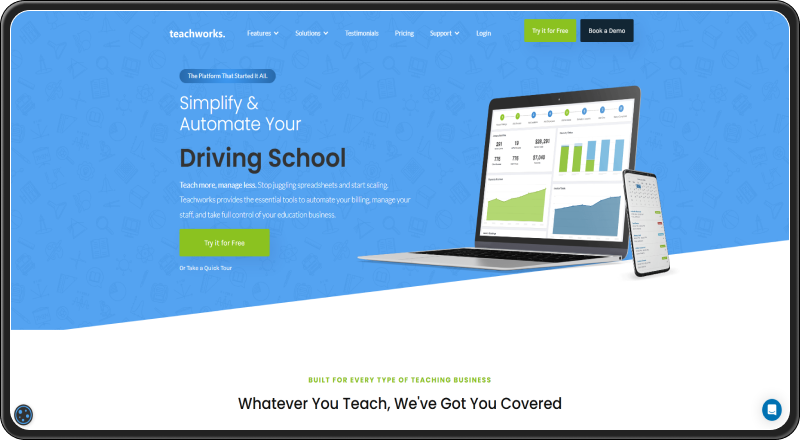
With an emphasis on operational efficiency, Teachworks emerges as a structured, admin-focused platform for scheduling, invoicing, and payroll at tutoring or mentoring centers that manage an internal team rather than an open marketplace. It is designed for businesses overseeing internal mentor teams rather than public-facing mentoring marketplaces.
Pros:
- Reliable, structured scheduling built for small-to-mid tutoring or mentoring centers
- Solid custom reporting and a modern interface
- Good fit for organizations managing an internal team rather than an open marketplace
Cons:
- Less suited to founders wanting a fully branded, public-facing marketplace
- Limited support for commission-based, self-registration mentor models
- Invoicing is less automated compared to some purpose-built alternatives
10. TutorBird
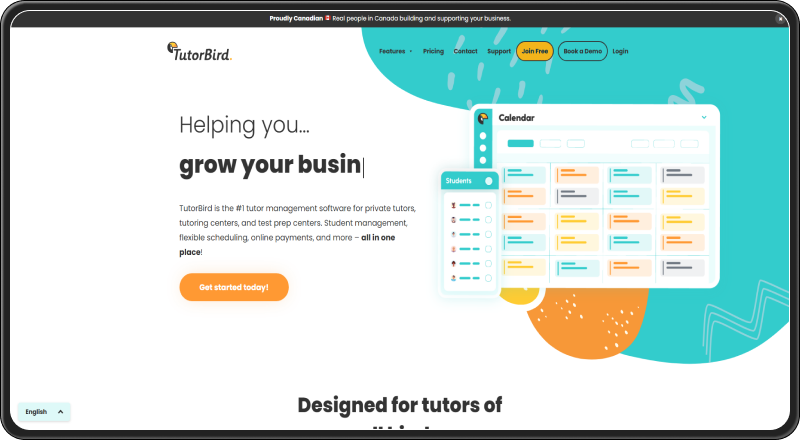
Offering a straightforward experience, TutorBird includes scheduling, invoicing, and client management tools that help independent mentors and small tutoring businesses operate efficiently. While affordable and easy to use, it lacks the advanced capabilities needed for large multi-mentor marketplace businesses.
Pros:
- Affordable and easy to set up, ideal for a solo mentor just starting out
- Clean scheduling, invoicing, and a built-in parent/client portal
- Genuinely responsive customer support, according to consistent user feedback
Cons:
- Built for individual tutors and small teams, not a multi-mentor marketplace
- Limited branding and website design flexibility
- No dedicated mobile app, and some administrative features (like edit history) are missing
How to Choose the Right Software to Launch Your Mentoring Platform?
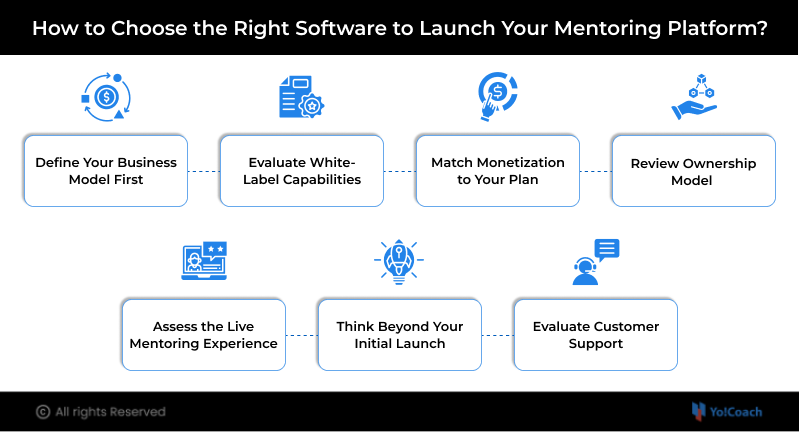
With ten legitimate options on the table, selecting one is a cumbersome task. Here’s how to actually narrow it down:
1. Define Your Business Model First
If you’re building a public-facing marketplace with multiple independent mentors and commission-based revenue, you need marketplace-specific software like Yo!Coach, not a single-coach tool like UpCoach or Kajabi.
2. Evaluate White-Label Capabilities
Look beyond visual branding. Ensure the platform allows customization of key elements such as payout logic, checkout flow, email domain, logo, and color swap.
3. Match Monetization to Your Plan
Your software should support multiple revenue streams, including commissions, subscriptions, mentoring packages, and service fees. Flexible monetization options allow you to adapt your pricing strategy as your business grows.
4. Review Ownership Model
Understand whether the platform is self-hosted or SaaS-based. Self-hosted solutions provide greater control, source code ownership, and long-term flexibility, while SaaS platforms offer easier deployment but less customization.
5. Assess the Live Mentoring Experience
High-quality mentoring relies on more than scheduling and payments. Evaluate the platform’s video conferencing, virtual collaboration tools, screen sharing, and session recording capabilities to ensure a seamless learning experience for mentors and mentees.
6. Think Beyond Your Initial Launch
Choose software that can support your long-term growth. A platform that works well for 10 mentors can break down at 500. Hence, ask about scalability limits before you’re locked in.
7. Evaluate Customer Support
Reliable customer support becomes increasingly valuable as your business grows. Review response times, onboarding assistance, documentation, and user feedback to ensure the vendor can support your platform beyond the initial launch.
Build a Scalable Mentoring Platform With a Reliable Solution
Conclusion
Choosing the best white-label mentoring software ultimately depends on your business model, growth plans, and long-term vision. Whether you’re building a solo coaching practice, a managed agency, or a full multi-mentor marketplace, selecting a platform that aligns with your operational and branding needs is essential. That said, for founders specifically aiming to build and own a scalable, commission-driven mentoring marketplace, Yo!Coach stands out from this list as the most complete option. It is purpose-built for the category, comes with real session tools, and gives you the branding and monetization flexibility a growing marketplace actually needs.
As the demand for personalized mentoring continues to rise in 2026, the opportunity to establish a strong presence in this growing market has never been greater. By investing in the right technology from the outset, entrepreneurs can accelerate their launch, deliver exceptional mentoring experiences, and build a sustainable marketplace that is well-positioned for future success.
FAQs
Q 1. What makes software “white-label” versus just “customizable”?
Ans. A true white-label software lets you build a mentoring platform that reflects your brand by replacing the vendor’s identity with your own. It includes customizing the logo, domain, emails, and certificates. Many tools that are labeled “customizable” only allow surface-level changes like color schemes, while the underlying platform is still visibly rented.
Q 2. Is white-label mentoring software worth it compared to building custom?
Ans. For most founders, yes. White-label software reduces development time and costs while providing essential mentoring features, allowing you to launch quickly without compromising branding or scalability.
Q 3. What’s the difference between mentoring marketplace software and single-coach tools?
Ans. Mentoring marketplace software like Yo!Coach supports multiple independent mentors under one brand with commission-based monetization. While single-coach tools like UpCoach or Kajabi are built around one practitioner’s personal brand and client list.
Q 4. Do I need technical skills to run a white-label mentoring platform?
Ans. No, most platforms include intuitive admin dashboards that simplify mentor management, bookings, payments, and user activities, allowing you to focus on growing your business rather than handling technical operations.
Q 5. How fast can I actually launch?
Ans. Launch timelines vary based on customization requirements, but most white-label solutions can be deployed within a few weeks, making them significantly faster than developing a platform from scratch.
Q 6. Can I switch platforms later if I outgrow one?
Ans. Yes, it is possible, but migration can be costly and disruptive. It involves transferring user data, bookings, and payment records, which may require additional effort. This is why evaluating scalability upfront matters more than optimizing purely for the fastest or cheapest launch.
Launch Your Mentoring Platform With the Right Software
Reach Out