
Online learning is no longer a niche concept. It has become a global education model that connects students and tutors beyond geographic boundaries. From academic tutoring and language learning to professional coaching and skill development, learners now prefer flexible, personalized learning experiences that can happen anytime and anywhere.
But what truly makes modern tutoring platforms effective is real-time interaction. Video communication allows tutors and students to connect face-to-face, explain complex topics visually, and collaborate during lessons just like in a physical classroom.
For entrepreneurs and education businesses, this shift presents a significant opportunity. Launching a tutoring website with integrated video communication can help create an engaging digital learning environment while building a scalable online education business.
However, setting up such a platform involves multiple steps, including choosing the right business model, implementing scheduling systems, integrating payments, and ensuring smooth video communication. In this blog, you will walk you through a step-by-step process to set up a tutoring website with video chat integration, covering everything from planning your platform to launching it successfully.
Table of Contents
- Why Online Tutoring Platforms Are Growing Rapidly?
- Why Video Chat Integration is Essential for Tutoring Websites?
- Types of Tutoring Platforms You Can Build
- Essential Features of a Tutoring Website
- Step-by-Step Guide to Setting Up a Tutoring Website with Video Chat Integration
- Launch a Video-Based Tutoring Platform with Yo!Coach
- Conclusion
- FAQs
Why Online Tutoring Platforms Are Growing Rapidly?
Before exploring how to build a tutoring website, it is important to understand why online tutoring websites are gaining such strong momentum worldwide. The shift toward digital learning, combined with the need for flexible education options, has created a growing demand for platforms that connect students and tutors online.
Given below are some of the key reasons behind the growth of online tutoring platforms:
1. Increasing Demand for Online Learning
Students today prefer flexible learning options that allow them to study at their own pace and connect with expert tutors regardless of geographical location. Online tutoring platforms make this possible by connecting learners with educators, enabling access to expert guidance from around the world. Personalized Learning Experiences
Traditional classrooms often make it difficult for students to receive personalized attention. Online tutoring platforms address this problem by enabling one-on-one learning sessions, allowing tutors to focus on a student’s specific learning pace, strengths, and challenges.
2. Global Tutor Marketplace
Online tutoring platforms are not limited by location. Students can find tutors from different countries, languages, and expertise levels, making it easier to find the right instructor for their specific learning goals.
3. Scalable Business Opportunity
For entrepreneurs and education providers, tutoring websites present a highly scalable digital business model. Once the platform infrastructure is in place, new tutors and students can join easily, allowing the platform to grow organically.
Why Video Chat Integration is Essential for Tutoring Websites?
Video communication plays a central role in the success of any online tutoring platform. Without a reliable video chat system, it becomes difficult for tutors and students to interact effectively and create a meaningful experience. Real-time communication helps replicate the feel of a traditional classroom while offering the flexibility of online learning.
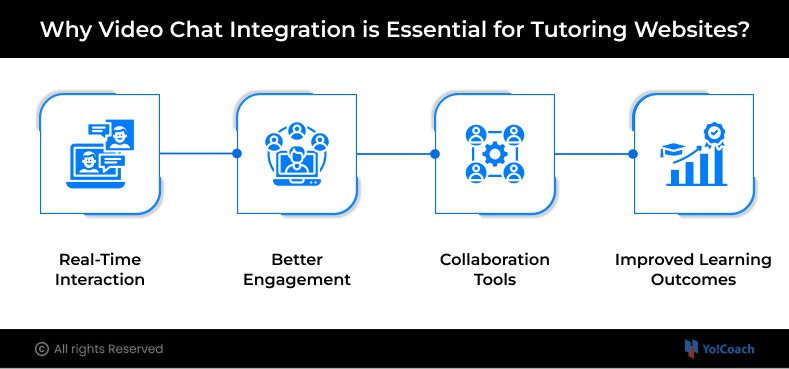
Here are some reasons why video integration is crucial for tutoring websites:
1. Real-Time Interaction
Video chat enables face-to-face communication between tutors and students, making lessons more interactive and engaging. This real-time interaction helps tutors explain concepts clearly while allowing students to ask questions and receive immediate feedback.
2. Better Engagement
Visual interaction helps tutors explain concepts more effectively. Tutors can demonstrate concepts, observe student reactions, and adjust their teaching approach instantly, which helps keep students focused and actively involved during sessions.
3. Collaboration Tools
Modern video tutoring platforms often include built-in tools that enhance the learning experience, such as:
- Screen sharing
- Digital whiteboards
- File sharing
- Session recording
These tools make online learning sessions more productive and interactive.
4. Improved Learning Outcomes
Studies have shown that students perform better when they have direct interaction with tutors. Live discussions, visual explanations, and instant clarification help reinforce understanding compared to relying solely on recorded lessons.
Because of these benefits, most modern tutoring platforms include built-in video conferencing capabilities to deliver a more engaging and effective online learning experience.
Build an Interactive Tutoring Platform with Live Video Learning
Types of Tutoring Platforms You Can Build
When planning to build a tutoring website, one of the first decisions is choosing the type of platform you want to create. Different tutoring platform models serve different audiences, learning formats, user needs, and monetization strategies. Selecting the right model early helps define your platform’s features, pricing structure, and overall user experience.
Below are some of the most common tutoring platform types, along with real-world examples:
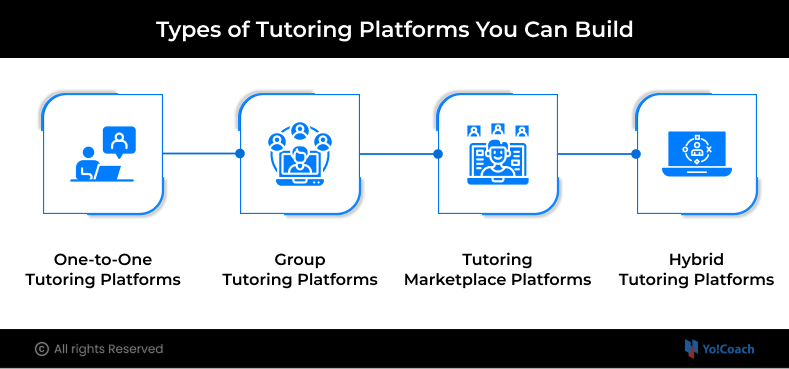
1. One-to-One Tutoring Platforms
One-to-one tutoring platforms focus on personalized learning sessions between a single tutor and a student. This model works especially well for subjects that require detailed explanations, focused attention, and customized teaching approaches.
Students can browse tutor profiles and book private sessions with tutors based on their availability, expertise, and hourly rates.
Key Characteristics
- Personalized learning experience
- Flexible scheduling
- Direct tutor-student interaction
- Premium pricing for private sessions
Example Platforms
Well-known platforms such as Wyzant and Preply primarily operate using a one-on-one tutoring model. They allow students to search for tutors and book individual learning sessions based on their learning goals.
This model is widely used for academic tutoring, language learning, and exam preparation.
2. Group Tutoring Platforms
Group tutoring platforms allow tutors to teach multiple students simultaneously during a live session. This model is commonly used for online courses, workshops, and test preparation classes.
Instead of booking private sessions, students enroll in scheduled group classes led by a tutor.
Key Characteristics
- One tutor teaches multiple students
- Lower cost per student
- Structured class schedules
- Collaborative learning environment
Example Platforms
Platforms like Varsity Tutors and Outschool offer group classes where multiple students can join the same session.
Group tutoring is particularly effective for:
- Exam preparation courses
- Language classes
- Skill-based training programs
3. Tutoring Marketplace Platforms
Tutoring marketplaces connect multiple tutors with students on a single platform. Tutors can create their profiles, list their services, and set their pricing, while students can browse and choose the tutor that best fits their needs.
The platform typically earns revenue by charging a commission on each session booking.
Key Characteristics
- Large network of tutors
- Multiple subject categories
- Competitive tutor pricing
- Ratings and reviews to build trust
Example Platforms
Popular tutoring marketplaces Superprof and Tutor.com operate on this model. These platforms allow tutors to operate independently while the marketplace manages essential functions, including payments, scheduling, and student discovery.
Marketplace models are considered one of the most scalable tutoring business models.
4. Hybrid Tutoring Platforms
Hybrid tutoring platforms combine multiple learning formats within a single platform. These may include private tutoring sessions, group classes, and self-paced online courses.
This approach offers greater flexibility for students who want different types of learning experiences.
Key Characteristics
- A combination of live tutoring and pre-recorded courses
- Flexible pricing options
- Multiple learning formats
- Higher revenue potential
Example Platforms
Platforms like Udemy and Coursera primarily focus on online courses but also offer instructor-led learning experiences and guided learning programs.
Many modern tutoring startups are adopting hybrid models to offer both structured courses and live tutoring sessions, giving students more learning options in one platform.
Essential Features of a Tutoring Website
A successful tutoring platform requires more than just tutor profiles and video calls. To deliver a smooth and effective learning experience, the platform must support seamless interaction between students, tutors, and administrators while simplifying session management.
The right set of features not only improves the user experience but also helps the platform scale as more tutors and students join. Below are some of the essential features every modern tutoring website should include.
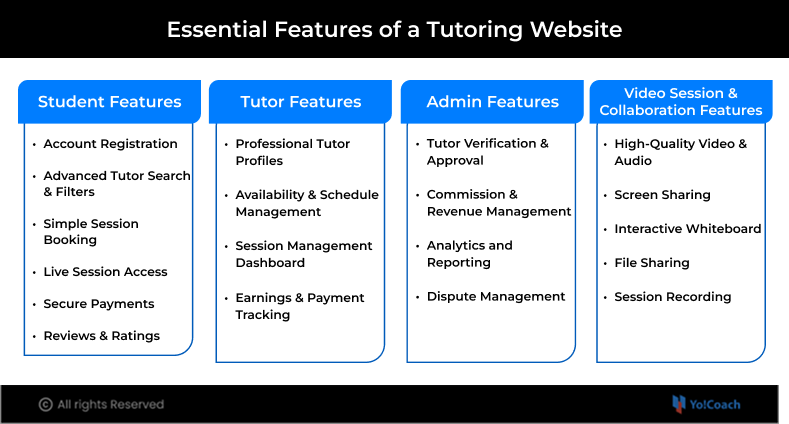
Student Features
Students are the primary users of a tutoring platform, so the system should be designed to make their learning journey simple, intuitive, and convenient.
Some of the essential features for students include:
1. Easy Account Registration
Students should be able to create accounts quickly using email, social login, or other authentication options. A simple and hassle-free onboarding process encourages higher user adoption.
2. Advanced Tutor Search and Filters
Students should be able to search for tutors based on various parameters such as:
- Subject expertise
- Price per session
- Tutor ratings and reviews
- Language proficiency
- Availability and time slots
Advanced filters help students quickly find tutors that match their learning goals and preferences.
3. Simple Session Booking
The platform should allow students to schedule tutoring sessions in just a few steps. A clear booking interface with calendar integration makes it easier for students to select available time slots and confirm sessions without confusion.
4. Live Session Access
Students should be able to join video tutoring sessions directly from their dashboard. Built-in video access removes the need for external tools and ensures a smoother learning experience.
5. Secure Payments
A tutoring platform should support multiple payment methods, such as credit/debit cards, net banking, eWallets, and more, so students can pay for sessions conveniently and securely.
6. Reviews and Ratings
Allowing students to rate and review tutors helps maintain quality standards and builds trust within the platform. It also helps new learners make informed decisions when choosing a tutor.
Tutor Features
Tutors are the backbone of any tutoring marketplace. Providing them with the right tools helps them manage sessions efficiently and deliver better learning experiences.
Key tutor features include:
1. Professional Tutor Profiles
Tutors should be able to create detailed profiles that showcase their expertise, qualifications, teaching experience, certifications, and pricing for sessions. This information helps students evaluate tutors and choose the right instructor before booking sessions.
2. Availability and Schedule Management
Tutors must be able to set their availability and update schedules easily. A flexible scheduling system helps prevent booking conflicts and ensures efficient session planning.
3. Session Management Dashboard
A centralized dashboard allows tutors to manage their teaching activities in one place. Through a centralized dashboard, tutors can view upcoming sessions, manage bookings, track completed sessions, and access student information. This dashboard helps tutors stay organized and manage their workload effectively.
4. Earnings and Payment Tracking
Tutors should be able to monitor their earnings, session payments, and withdrawal requests through a transparent financial dashboard.
Admin Features
Administrators play a crucial role in maintaining the quality and smooth operation of the tutoring marketplace. They ensure that the marketplace runs efficiently while maintaining trust among tutors and students.
Essential admin features include:
1. Tutor Verification and Approval
Admins should be able to review tutor applications, verify credentials, and approve or reject profiles before they go live on the platform. This helps maintain quality standards and build trust with students.
2. Commission and Revenue Management
Most tutoring marketplaces typically earn revenue by charging commissions on tutoring sessions. Admins need tools to configure commission percentages, monitor transactions, and manage tutor payouts.
3. Analytics and Reporting
Analytics dashboards provide insights into the platform’s performance. It helps admin/s to track important metrics such as total bookings, platform revenue, tutor performance, and student engagement. These insights help platform owners make informed business decisions.
4. Dispute Management
Occasionally, disputes may arise between tutors and students. A built-in dispute resolution system allows admins to review issues, communicate with both parties, and resolve conflicts fairly.
Video Session and Collaboration Features
Since tutoring sessions rely heavily on real-time communication, video collaboration tools are essential for creating an effective learning environment. These tools allow tutors and students to communicate clearly, share resources, and work together during live sessions, making online lessons more engaging and productive.
Key video session features include:
1. High-Quality Video and Audio
Reliable video and audio communication ensures smooth interaction between tutors and students during lessons. Clear communication is essential for explaining concepts, asking questions, and maintaining an interactive learning experience.
2. Screen Sharing
Screen sharing allows tutors to demonstrate concepts, presentations, or coding exercises during sessions, helping students follow along more easily.
3. Interactive Whiteboard
An online whiteboard allows tutors to visually explain complex concepts, solve problems step by step, and illustrate ideas during live sessions, making learning more engaging.
4. File Sharing
Tutors and students should be able to exchange documents, assignments, and study materials during sessions to support better collaboration and learning.
5. Session Recording
Recording tutoring sessions allows students to review lessons later, improving retention and learning outcomes.
Some tutoring platforms integrate these tools directly into the platform. For example, solutions like Yo!Coach includes built-in video conferencing and collaboration tools that allow tutors and students to conduct interactive sessions without relying on external video applications.
Want to Launch a Feature-Rich Tutoring Website?
Step-by-Step Guide to Setting Up a Tutoring Website with Video Chat Integration
Launching a tutoring platform involves multiple components, such as tutor management, scheduling systems, video communication, and secure payment processing. To build a platform that is scalable and user-friendly, it’s important to follow a structured approach.
Below is a step-by-step process that entrepreneurs and educational businesses can follow when building an online tutoring platform with integrated video communication:
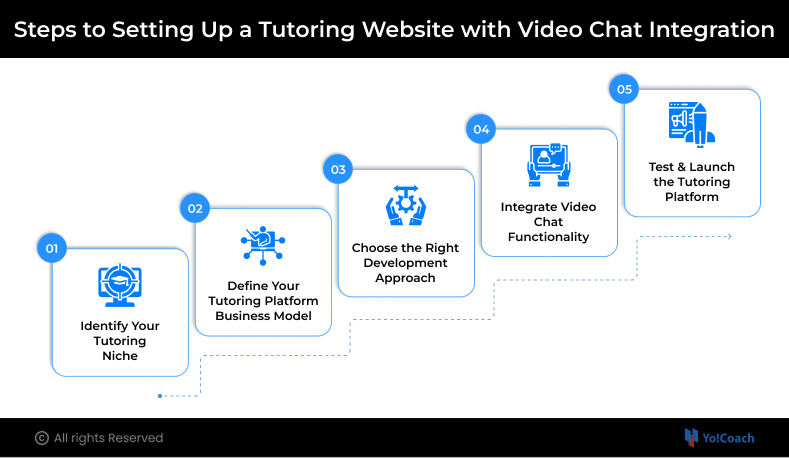
Step 1: Identify Your Tutoring Niche
The first step in launching a tutoring platform is defining your niche. While it may seem appealing to cover every subject initially, focusing on a specific area helps you attract a more targeted audience and establish a strong market presence.
Some popular tutoring niches include:
- Academic tutoring (Math, Science, Physics)
- Language learning
- Test preparation (SAT, GRE, IELTS)
- Coding and programming
- Professional skill coaching
- Music or creative training
Example
A tutoring platform focusing on English language learning can target international students who want to improve their speaking skills. Similarly, a platform dedicated to coding education can connect developers with students looking to learn programming languages like Python or JavaScript.
Starting with a well-defined niche allows you to build credibility and makes it easier to expand into additional subjects as the platform grows.
Step 2: Define Your Tutoring Platform Business Model
Once your niche is decided, the next step is determining how your platform will generate revenue. Your business model will influence the platform’s features, pricing structure, and user experience.
Some of the common monetization models include:
a. Commission-Based Model
In this model, the platform earns a percentage from each tutoring session booked.
Example: If a tutor charges $40 per session and the platform takes a 20% commission, the platform earns $8 per session.
b. Subscription Model
Students or tutors pay a recurring monthly or yearly fee to access the platform or its services.
Example: Students pay a monthly subscription fee to access unlimited group classes.
c. Session-Based Payments
Students pay for each session without subscriptions.
Example: Students pay $25 for a one-hour tutoring session.
d. Hybrid Model
Many successful tutoring platforms combine multiple revenue streams such as session fees, subscription plans, and premium tutor listings. This approach provides greater flexibility and higher revenue potential.
Step 3: Choose the Right Development Approach
After defining your niche and business model, the next step is deciding how you want to build your tutoring platform. The development approach you choose will influence the timeline, budget, and scalability of your platform.
There are two primary ways to develop a tutoring website.
a. Custom Development
In this approach, the platform is built from scratch based on your specific requirements. This method offers complete flexibility and allows you to design every feature according to your business needs.
However, custom development often involves:
- Higher development costs
- Longer development timelines
- Ongoing technical maintenance
Developing essential components such as video conferencing, scheduling systems, tutor dashboards, and payment integrations can take several months before the platform is ready to launch.
b. Using Ready-Made Tutoring Software
An alternative approach is using ready-made tutoring marketplace software that already includes the core features required for online tutoring platforms.
These solutions typically come with built-in functionalities such as:
- Tutor and student dashboards
- Scheduling and booking systems
- Integrated video conferencing
- Payment management
- Review and rating systems
Because the system already includes essential features like video sessions, scheduling tools, and payment management, businesses can significantly reduce development time and launch their tutoring platforms much faster.
Instead of building each component individually, platform owners can focus on growing the marketplace, onboarding tutors, and attracting students.
Step 4: Integrate Video Chat Functionality
Video communication is one of the most critical features of an online tutoring platform. It enables real-time interaction between tutors and students, creating a more engaging and effective learning environment.
There are multiple ways to integrate video chat functionality into a tutoring platform:
- WebRTC-Based Video Communication
WebRTC is a widely used technology that enables real-time video and audio communication directly within web browsers without requiring additional software installations.
- Third-Party Video Integration
Platforms can also integrate third-party services such as Zoom or other video APIs to conduct live tutoring sessions.
- Built-In Video Systems
Some tutoring platforms include native video conferencing systems designed specifically for online learning. These built-in tools often include features such as screen sharing, digital whiteboards, and session recording.
Example: During a tutoring session, a math tutor may use screen sharing and an interactive whiteboard to explain algebraic equations while the student follows along in real time.
These collaborative tools help create a more interactive learning experience and improve the effectiveness of online tutoring sessions.
Step 5: Test and Launch the Tutoring Platform
Before launching your tutoring website, it is crucial to conduct thorough testing to ensure everything works smoothly. Proper testing helps identify technical issues, usability gaps, or performance problems that could affect the user experience.
Key areas to test include:
- Video call functionality
- Session booking flow
- Payment transactions
- Tutor onboarding process
- Mobile responsiveness
Example: You can conduct beta testing by inviting a small group of tutors and students to use the platform before the official launch. Their feedback can help identify improvements and ensure the platform runs smoothly.
Testing ensures that users experience a smooth and reliable platform from day one.
Launch a Video-Based Tutoring Platform with Yo!Coach
Building a tutoring platform from scratch can be a complex and time-consuming process. As discussed above, launching a fully functional tutoring website requires multiple components, including tutor management systems, scheduling tools, video communication capabilities, and secure payment infrastructure. Developing and integrating all these features individually can take several months and require substantial technical resources.
This is where ready-made solutions can significantly simplify the process.
Yo!Coach is a ready-made tutoring marketplace software designed specifically for launching online learning platforms. It comes equipped with essential features such as tutor and student dashboards, scheduling and booking systems, integrated video conferencing, payment management, and review systems. By providing these built-in capabilities, Yo!Coach helps reduce development time and allows businesses to bring their tutoring platforms to market much faster.
Some key capabilities of Yo!Coach includes:
- Built-in video conferencing and virtual classroom tools
- Tutor and student dashboards for efficient session management
- Integrated scheduling and booking systems
- Secure payment and commission management
- Reviews and ratings to maintain platform quality
- Admin tools for managing tutors, students, and platform operations
Because these features are already built into the platform, entrepreneurs can significantly reduce development time and focus on growing their marketplace instead of managing complex technical infrastructure.
Schedule a Personalized Demo to See Yo!Coach in Action
Conclusion
Launching a tutoring website with video chat integration can be a rewarding venture in the rapidly growing online education industry. As more learners seek flexible and personalized learning experiences, platforms that enable real-time interaction between tutors and students continue to gain strong demand.
However, building a successful tutoring platform requires careful planning, the right technology stack, and a seamless learning experience for both students and tutors. By following the steps outlined in this blog, you can create a tutoring platform that delivers real value to learners. For entrepreneurs looking to accelerate the development process, purpose-built solutions like Yo!Coach provides many of the essential tools needed to launch and manage a tutoring marketplace efficiently.
With the right strategy, technology, and user experience in place, your tutoring platform can become a powerful hub for online learning and knowledge sharing.
FAQs
Q 1. Why is video chat important for tutoring platforms?
Ans. Video chat enables tutors and students to interact in real time, making online lessons more engaging and interactive. Additionally, features like screen sharing, chat messaging, and whiteboards help tutors explain concepts effectively, creating an experience similar to a physical classroom.
Q 2. What technologies are used to build video chat for tutoring websites?
Ans. Most tutoring platforms use technologies such as WebRTC, Twilio, Agora, or Jitsi to enable real-time video communication. However, integrating and maintaining these technologies requires development expertise. Some ready-made tutoring solutions like Yo!Coach comes integrated with a built-in virtual classroom, eliminating the need for complex video API integrations.
Q 3. Can tutoring platforms support group classes as well as one-on-one sessions?
Ans. Yes, modern tutoring platforms can support both 1-on-1 tutoring sessions and group classes. This flexibility allows tutors to conduct individual sessions, group sessions, and scheduled classes, making it easier for platforms to cater to different learning formats and pricing options.
Q 4. What features should a virtual classroom include?
Ans. An effective virtual classroom should include:
- HD video calls
- Screen sharing
- Interactive whiteboard
- Chat messaging
- File sharing
- Session recording
Many tutoring software solutions, such as Yo!Coach already provides these features within their built-in virtual classroom to ensure smooth online learning experiences.
Q 5. How do tutoring websites manage tutor scheduling and bookings?
Ans. Tutoring platforms typically use a calendar-based scheduling system where tutors set their availability and students book sessions accordingly. Automated scheduling, reminders, and time zone adjustments help ensure a smooth and convenient booking experience.
Q 6. How do tutoring platforms handle payments?
Ans. Most tutoring platforms integrate payment gateways such as:
- Stripe
- PayPal
- Credit/debit cards
Some platforms also support wallet systems and automated tutor payouts. Software like Yo!Coach includes built-in payment management features that allow platform owners to manage commissions and payouts efficiently.
Q 7. How long does it take to build a tutoring website with video chat?
Ans. Building a tutoring platform from scratch can take 6-12 months, depending on the complexity of features. Whereas, using ready-made tutoring software like Yo!Coach can significantly reduce the launch time because essential features like video chat, scheduling, and payments are already built into the platform.
Q 8. Can tutoring sessions be recorded for later access?
Ans. Yes, many tutoring platforms allow session recording so students can review lessons later. This feature helps learners review important concepts, reinforce understanding, and catch up on anything they might have missed during the live session.
Q 9. What is the fastest way to launch an online tutoring marketplace?
Ans. The fastest approach is using ready-made tutoring marketplace software rather than building everything from scratch. Readymade solutions like Yo!Coach typically includes corefeatures such as tutor management, virtual classrooms, session booking, and payment systems, allowing businesses to launch their tutoring platforms much faster.
Q 10. What types of businesses can benefit from tutoring platforms?
Ans. Many organizations can launch tutoring platforms, including:
- Educational institutes
- Coaching centers
- Language training providers
- Corporate training businesses
- Independent entrepreneurs
Solutions like Yo!Coach are designed to support various tutoring models, including language learning, academic tutoring, and professional coaching platforms.
Launch Your Own Tutoring Marketplace with Built-In Video Tools
Get Started