

The global eLearning industry is expanding at an unprecedented pace. As online tutoring, skill-based learning, professional coaching, and micro-learning continue to gain momentum, more entrepreneurs are increasingly investing in their own branded learning platforms.
That said, building a tutoring marketplace from scratch is rarely simple. Custom development can take anywhere from 6-12 months of development time and often costs between $30,000 to $100,000+, depending on features and complexity.
This is where white-label tutoring platforms come in as a smarter alternative.
A white-label tutoring platform allows you to launch your own branded online tutoring business without developing software from scratch. You get ready-built infrastructure with core tutoring features, built-in monetization tools, and the ability to scale, all under your brand name.
In this blog, you will explore the top white-label tutoring platforms, their strengths, limitations, and which business models they are best suited for, so you can choose the right foundation for your online education venture.
Table of Contents
- What is a White-Label Tutoring Platform?
- Key Features to Look for in a White-Label Tutoring Platform
- Top 10 White-Label Tutoring Platforms to Launch and Scale Your Online Education Business
- How to Choose the Right White-Label Tutoring Platform for Your Business
- Conclusion
- Frequently Asked Questions (FAQs)
What is a White-Label Tutoring Platform?
A white-label tutoring platform is a ready-made software solution that lets you launch an online tutoring business under your own brand, without building the technology from scratch. You retain complete control over how the platform looks, functions, and generates revenue.
Typically, a white-label tutoring platform allows you to:
- Rebrand the platform with your own logo, domain, and visual identity
- Customize features and workflows
- Monetize through commissions, subscriptions, or tutoring packages
- Manage tutors and learners from a centralized dashboard
- Delivers live sessions through built-in virtual classroom functionality
Unlike marketplace listings on third-party platforms, white-label solutions give you full ownership and control, allowing you to grow a sustainable and independent tutoringbusiness over your tutoring business.
Key Features to Look for in a White-Label Tutoring Platform
Choosing a white-label tutoring platform is not only about speed to launch. It is about selecting a robust infrastructure that supports long-term growth, monetization flexibility, and operational efficiency. The right feature set ensures your platform can scale without friction while delivering a high-quality learning experience.
Below are the critical features you should evaluate before making a decision.
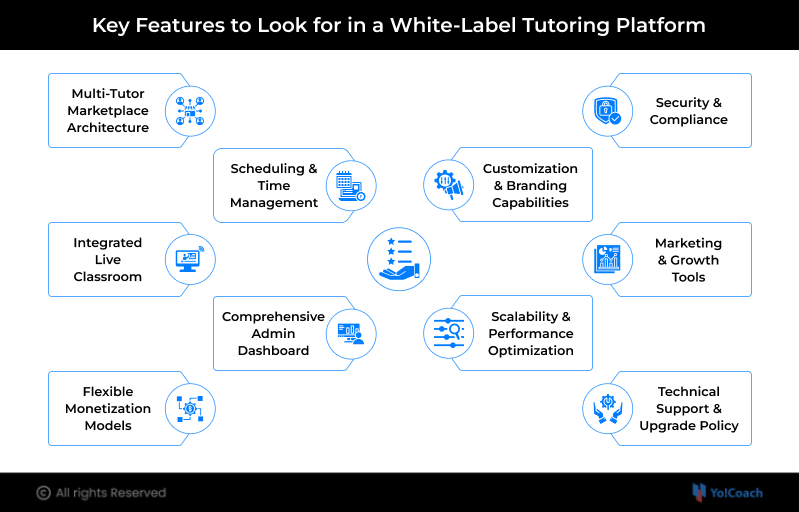
1. Multi-Tutor Marketplace Architecture
If your goal is to build a scalable tutoring business, not just a personal teaching website, the platform you select must support a true marketplace structure.
Look for:
- Tutor self-registration with approval workflow
- Detailed tutor profiles, including bio, expertise, pricing, and availability
- Rating & review system
- Commission management settings
- Tutor performance analytics
- Detailed earnings dashboard for tutors
Why It Matters:
Without built-in marketplace architecture, managing multiple tutors becomes manual and inefficient. A structured system allows you to scale smoothly from 10 tutors to 1,000+ without operational bottlenecks.
2. Integrated Live Classroom Technology
Live interaction is the backbone of tutoring platforms. Relying on third-party tools often leads to friction and a poor user experience.
Essential Capabilities:
- Built-in video conferencing
- Screen sharing
- Interactive whiteboard
- Session recording
- Chat & file sharing
- Low-latency streaming
- Mobile compatibility
Advanced Features to Consider:
- Automated session reminders
- Attendance tracking
- In-class polls & quizzes
- Breakout rooms for group sessions
Why It Matters:
A seamless virtual classroom experience directly impacts student satisfaction and retention. Even small improvements in session quality can significantly increase repeat bookings and long-term engagement.
3. Flexible Monetization Models
Your revenue model determines how profitable and scalable your platform can be.
Must-Have Monetization Options Include:
- Commission per session
- Subscription plans for tutors
- Subscription plans for learners
- Pay-per-session model
- Package-based pricing
- Featured tutor listings
- Promo code management
Advanced Options:
- Tier-based commission structure
- Automated payouts
- Wallet system
- Tax & invoice generation
Why It Matters:
Different markets require different pricing strategies. A platform that restricts monetization limits your ability to optimize revenue.
Build a Tutoring Platform With Flexible Revenue Models
4. Advanced Scheduling & Time Zone Management
Since tutoring platforms function across international markets and time zones, accurate scheduling is essential to maintain professionalism and credibility.
Look for:
- Real-time availability calendar
- Auto time-zone detection
- Buffer time between sessions
- Recurring session booking
- Rescheduling & cancellation policies
- Automated reminders via email/SMS
Why It Matters:
Smooth scheduling reduces administrative workload and improves user experience. Time-zone automation is especially critical for international marketplaces.
5. Comprehensive Admin Dashboard
The admin panel is the operational backbone of your marketplace. Weak backend systems create operational blind spots.
Key Admin Features:
- Revenue and financial tracking
- Tutor performance analytics
- Session and attendance reports
- Dispute management tools
- Content moderation
- User management
- Commission adjustment controls
Why It Matters:
Access to clear data enables faster, smarter decisions. You should be able to identify top-performing tutors, revenue patterns, and churn risks within minutes.
6. Customization & Branding Capabilities
True white-labeling ensures your brand remains the focus, not the software provider’s identity.
Evaluate:
- Custom domain support
- Logo & color customization
- Email template customization
- Landing page control
- Custom feature add-ons
- Customizable source code access (if applicable)
Why It Matters:
Strong branding builds trust and improves conversion rates. Even small branding inconsistencies can reduce credibility.
7. Scalability & Performance Optimization
Your platform should grow alongside your business without performance degradation.
Ensure the Platform Supports:
- High concurrent users
- Cloud hosting compatibility
- Multi-language support
- Multi-currency payments
- API integrations
- Mobile responsiveness
- Progressive Web App (PWA) or mobile apps
Why It Matters:
Performance issues during peak usage lead to user drop-off. Scalability should be built into the architecture from day one.
8. Security & Compliance
Tutoring platforms handle sensitive user data and financial transactions.
Non-Negotiables:
- SSL encryption
- GDPR compliance (if serving EU users)
- Secure payment gateway integration
- Data backup systems
- Role-based access control
Why It Matters:
Security breaches damage brand trust instantly. Even one compromised account can have long-term consequences for your business.
9. Marketing & Growth Tools
Launching your platform is only the beginning. Sustainable growth requires built-in marketing support.
Look for Built-In Tools:
- SEO-friendly URLs
- Blog integration
- Email marketing integrations
- Referral programs
- Affiliate modules
- Coupon & discount systems
- CRM integrations
Why It Matters:
Customer acquisition costs in the education industry can be high. Built-in marketing tools help optimize CAC and scale more efficiently.
10. Technical Support & Upgrade Policy
Your platform should evolve with changing technology and user expectations.
Evaluate:
- Frequency of product updates
- Dedicated support team
- Documentation quality
- Upgrade roadmap
- Customization support
Why It Matters:
A platform that fails to evolve quickly becomes outdated. Continuous updates ensure long-term competitiveness in the fast-moving edtech market.
Top 10 White-Label Tutoring Platforms to Launch and Scale Your Online Education Business
Selecting the right white-label tutoring platform depends on your business model. Whether you plan to build a multi-tutor marketplace, a structured course-based academy, or a coaching brand, the platform’s architecture, scalability, and monetization depth will directly impact long-term success.
Below is a curated list of 10 leading white-label tutoring platforms based on scalability, customization, monetization flexibility, and marketplace capabilities.
1. Yo!Coach: Purpose-Built Multi-Tutor Marketplace Software
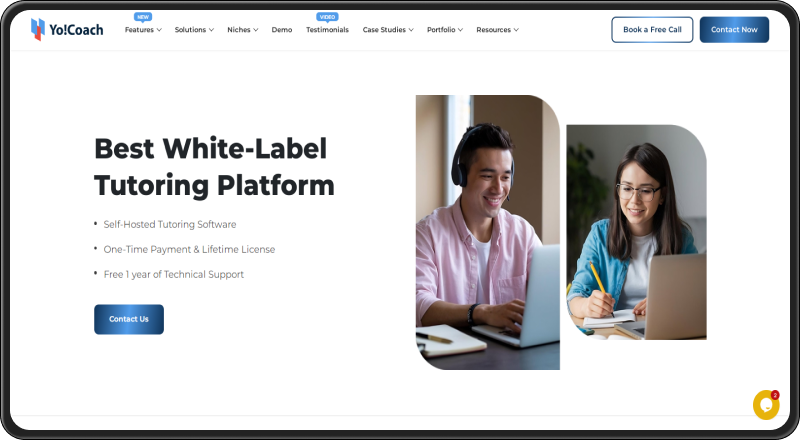
Yo!Coach is built specifically for launching tutor-led and consultation marketplaces. Unlike generic LMS platforms, it supports a structured ecosystem where multiple tutors can register, offer sessions, and monetize under one platform. The software emphasizes operational control, scalability, and monetization flexibility, making it suitable for entrepreneurs planning to grow beyond small tutor networks into large, commission-driven ecosystems with global reach.
Key Features:
- 1-on-1 and group live classes
- Built-in video conferencing
- Commission & subscription monetization
- Tutor self-registration & approval workflows
- Advanced scheduling with timezone management
- Multi-language & multi-currency support
- Fully white-label
Why Consider It:
If your goal is to build a marketplace similar to Preply or Wyzant, a platform designed around commission-based tutor ecosystems provides stronger long-term scalability than general course platforms.
Best For: Entrepreneurs building scalable tutoring marketplaces
Schedule a One-on-One Personalized Demo to See Yo!Coach in Action
2. Thinkific Plus

Thinkific Plus is designed for organizations delivering structured educational programs at scale. It offers deep branding control, robust integrations, and enterprise-grade analytics. While it excels in delivering standardized learning experiences and managing membership, it requires external customization to support tutor-driven marketplaces or commission-based business models.
Key Features:
- Course builder
- Custom domain & branding
- Membership management
- API access
- Advanced analytics
Limitation:
- Less suitable for multi-tutor marketplaces.
- Live tutoring features are limited without third-party tools.
- Tutor scheduling and real-time session management are not core features.
- Monetization models are skewed toward course sales, not live sessions.
Best For: Branded online academies and institutions
3. LearnWorlds
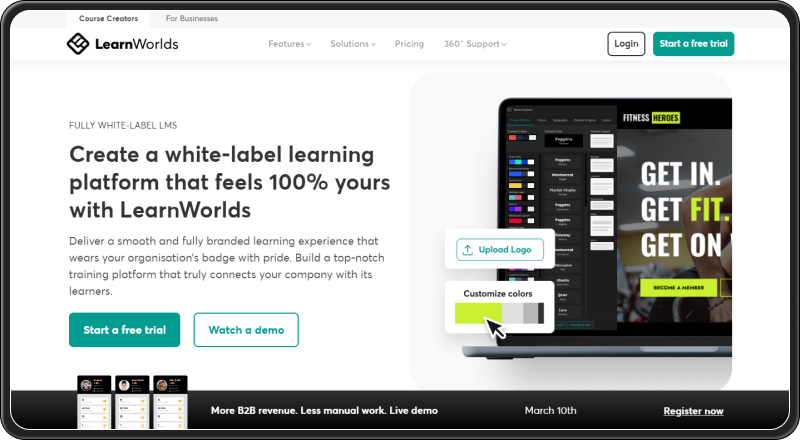
LearnWorlds focuses on learner engagement through interactive content and immersive course experiences. Its strength lies in content personalization, branded environments, and learner analytics. While it supports memberships and bundled offerings, businesses aiming for tutor-managed marketplaces may need additional integrations to handle commissions and tutor-level monetization.
Key Features:
- Interactive video tools
- Custom domain
- SCORM support
- Membership bundles
- White-Label mobile app (add-on)
Limitation:
- Limited built-in commission-based marketplace functionality.
- Limited features for tutor-led real-time tutoring.
- Live sessions require third-party integrations.
- Marketplace-style revenue splitting is unavailable.
Best For: Engaging, content-driven education platform.
4. Kajabi

Kajabi combines course delivery, website building, and marketing automation into a single ecosystem. It is ideal for educators who want to sell knowledge directly without relying on third-party tools. However, its architecture is centered around individual creators rather than multi-tutor ecosystems, limiting marketplace-style scalability.
Key Features:
- Sales funnels
- Email automation
- Website builder
- Membership programs
Limitation:
- Not designed for multi-tutor marketplace models.
- Scheduling and real-time classroom capabilities are basic.
- Limited support for multi-currency and global payment gateways.
- Custom workflows often need external tools or APIs.
Best For: Individual coaches and subject matter experts
5. LearnCube
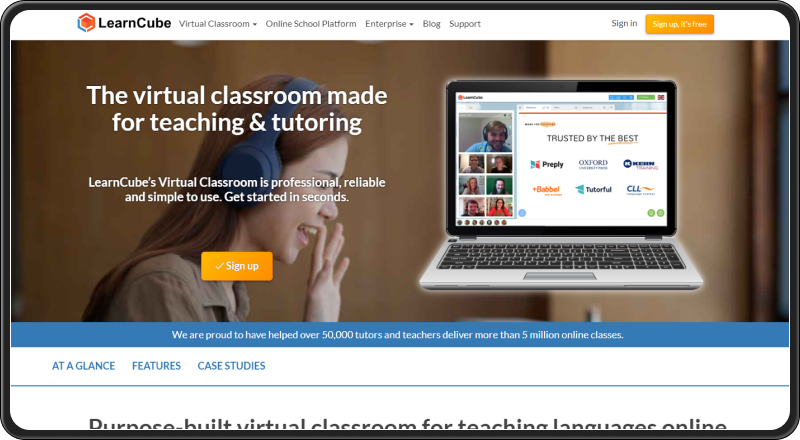
LearnCube specializes in high-quality virtual classroom technology for online tutoring businesses. It provides reliable live session tools, scheduling workflows, and white-label interfaces that integrate well with external platforms. While strong on real-time learning delivery, it requires pairing with a marketplace or LMS software for monetization and tutor management.
Key Features:
- Interactive whiteboard
- Student engagement tools
- Session recording
- Real-time audio/video
- Offline access options
- Branding customization
Limitation:
- Not a full LMS or marketplace by itself.
- Requires pairing with external systems for monetization.
- Limited tutor onboarding and profile management features.
- No native billing or subscription automation.
Best For: Businesses prioritizing live tutoring experiences
6. Teachworks
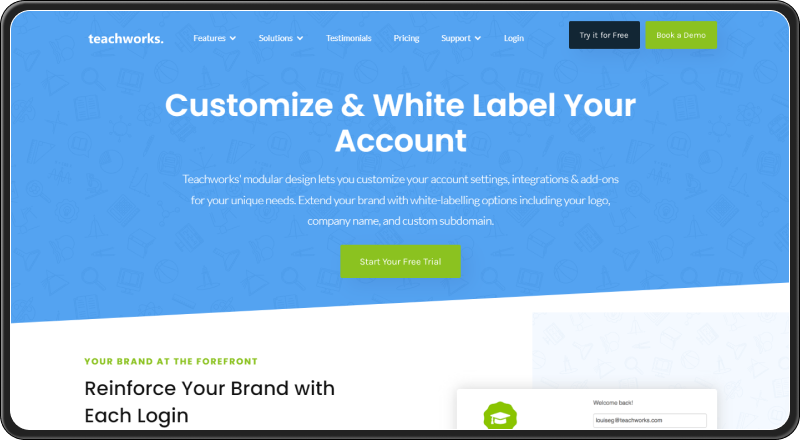
Teachworks is designed to streamline administrative operations for tutoring companies, including scheduling, billing, and tutor payroll. It works well for organizations managing internal tutor teams, but is less suitable for open marketplaces where tutors independently register, price services, and manage earnings.
Key Features:
- Tutor scheduling
- Payroll management
- Client billing
- Reporting tools
Limitation:
- Primarily management software, not a complete white-label marketplace builder.
- Not built as a marketplace platform for external tutors.
- No native live classroom technology included.
- Monetization options are limited to scheduling and billing.
Best For: Tutoring agencies managing internal tutors
7. Moodle (Customizable Open-Source LMS)
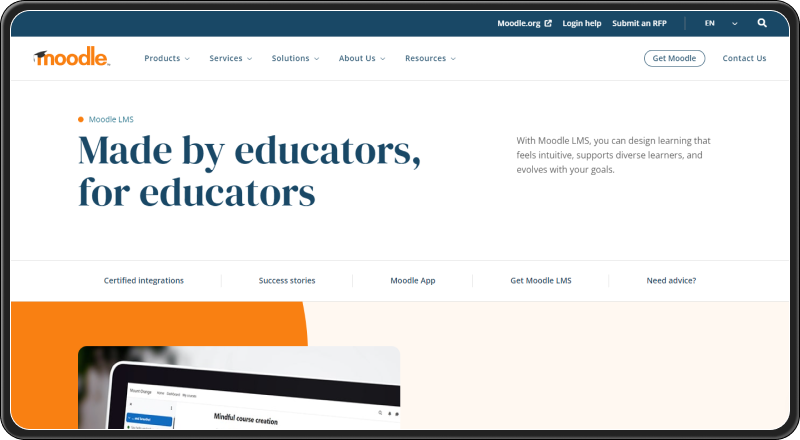
Moodle is a widely adopted open-source learning platform known for its flexibility and extensibility. With the right plugins and development resources, it can be adapted into a tutoring platform. However, converting it into a fully functional marketplace requires significant technical effort and ongoing maintenance.
Key Features:
- Plugin ecosystem
- Institutional-grade LMS tools
- Flexible customization
- SCORM compliance
- Modular course structure.
Limitation:
- Requires technical expertise to convert into a tutoring marketplace.
- No built-in commission or marketplace logic.
- Live tutoring features depend on plugins or third-party tools.
- Technical maintenance and hosting setup are required.
Best For: Institutions with internal development teams
8. Teachify
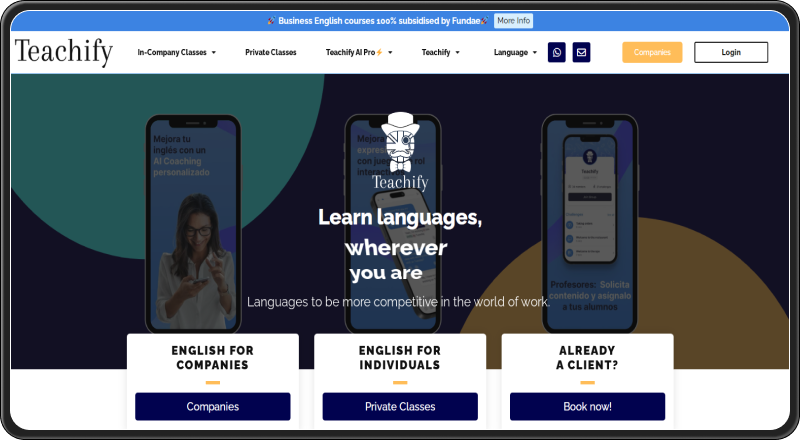
Teachify enables educators to deliver branded courses and coaching programs with relative ease. It supports memberships, payments, and customization, making it suitable for small to mid-sized education businesses. While it does not offer advanced marketplace features, it works well for controlled teaching environments and niche academies.
Key Features:
- Course hosting
- Membership plans
- Payment gateway integration
- Branding customization
Limitation:
- No built-in multi-tutor marketplace architecture
- Limited commission-based monetization options
- Lacks advanced tutor performance analytics
- Minimal support for complex scheduling workflows
Best For: Small academies and coaching programs
Turn Your Education Idea Into a Profitable Marketplace
9. LearnDash (With Custom Development)
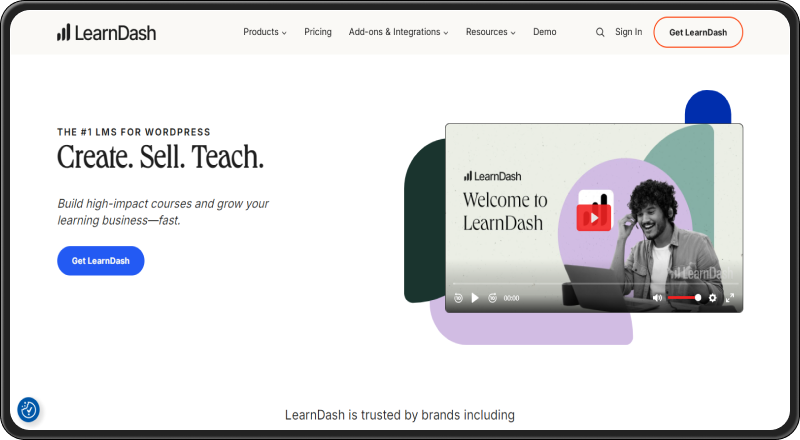
LearnDash is a WordPress LMS plugin, offering flexibility through plugins and custom development. It allows businesses to build tailored learning experiences while retaining content ownership. However, turning it into a tutor marketplace requires additional plugins, payment logic, and technical expertise.
Key Features:
- Course management
- Membership integration
- Third-party plugin ecosystem
- Flexible customization
Limitation:
- Requires additional plugins and development for marketplace features.
- Real-time classroom features require third-party tools.
- Tutor commission and revenue sharing must be custom-built.
- Performance depends on the WordPress hosting setup.
Best For: WordPress-based learning platforms
10. Podia
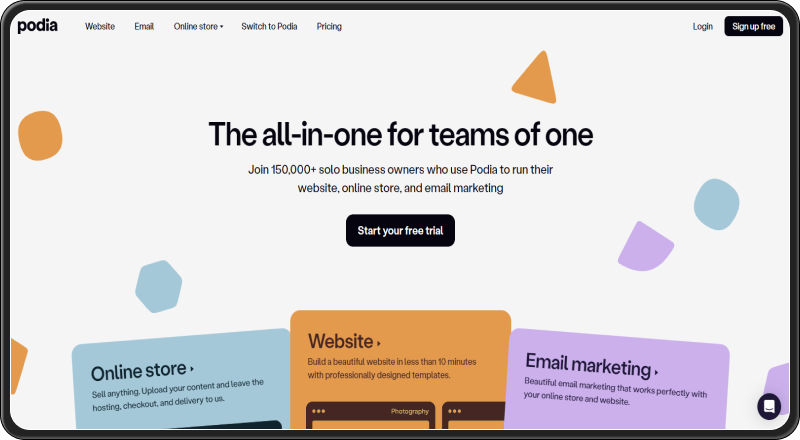
Podia enables educators to sell courses, memberships, and digital products through a clean, branded interface. It simplifies content monetization and audience management, but is best suited for single-brand education businesses rather than tutor-led marketplaces with commission-based structures.
Key Features:
- Course hosting
- Website builder
- Subscription models
- Marketing tools
Limitation:
- Not designed for multi-tutor marketplaces.
- Tutor earnings and commission features are unavailable.
- Limited scheduling and real-time teaching features.
- Marketplace-style user roles are basic or absent.
Best For: Educators launching branded academies
How to Choose the Right White-Label Tutoring Platform for Your Business
Choosing a white-label tutoring platform is not just a technical task; it is a long-term strategic business decision. The platform you select will shape how you scale, monetize, and operate your tutoring venture. The wrong choice can limit scalability, restrict monetization, and force costly migrations later.
Here is a structured way to evaluate platforms:
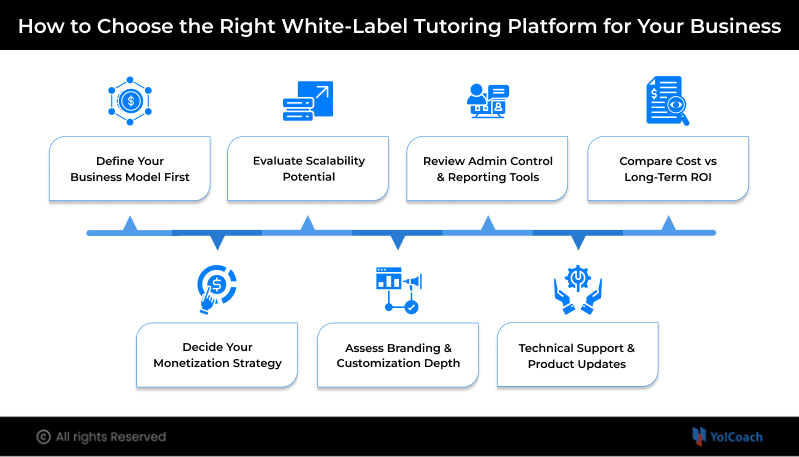
1. Define Your Business Model First
Before comparing features or pricing, clarify what you are building.
Ask Yourself:
- Are you launching a multi-tutor marketplace or a single-brand academy?
- Is your focus on live tutoring, recorded courses, or hybrid models?
- Will tutors operate independently or under your organization?
Why This Matters:
Marketplace-focused platforms are structured differently from LMS platforms. Choosing a course-centric system for a commission-based marketplace often leads to challenges with tutor onboarding, revenue distribution, and long-term scalability.
2. Decide Your Monetization Strategy
Your revenue model directly influences platform requirements and profitability.
Common Monetization Models:
- Commission per session (e.g., 15–30%)
- Tutor subscription plans
- Student subscription memberships
- Pay-per-session pricing
- Course bundles & packages
- Featured tutor listings
Strategic Tip:
For predictable and recurring revenue, ensure the platform supports subscription-based monetization in addition to commission.
3. Evaluate Scalability Potential
Your platform should support your growing business without requiring a rebuild.
Check For:
- Multi-language & multi-currency support
- High concurrent user capacity
- Cloud hosting compatibility
- API integration options
- Mobile responsiveness
- Future feature upgrade roadmap
Growth Perspective:
If you plan to expand internationally, timezone-aware scheduling and global payment gateways are critical from day one.
4. Assess Branding & Customization Depth
True white-label means the entire platform reflects your brand identity — not the software provider’s.
Your logo, domain name, brand colors, messaging, and customer experience take complete control, while the technology partner remains invisible in the background.
Look For:
- Custom domain support
- Full UI and visual branding control
- Email template customization
- Landing page control
- Customizable source code access (if required)
Why It Matters:
Consistent and strong branding improves trust and conversion rates. Even small design limitations can negatively affect how learners and tutors perceive your platform.
5. Review Admin Control & Reporting Tools
A powerful admin dashboard is essential for managing a growing tutoring ecosystem.
Must-Have Admin Features:
- Revenue and financial reports
- Tutor performance analytics
- Commission managements and adjustments
- Dispute and refund management tools
- User activity and engagement tracking
- Financial summaries
Business Impact:
Access to clear, real-time data helps you optimize pricing, improve retention, and make smarter marketing decisions.
6. Consider Technical Support & Product Updates
The edtech space evolves quickly. Thus, choose a platform with active updates.
Evaluate:
- Update frequency
- Support response time
- Customization assistance
- Documentation quality
- Upgrade policies
A stagnant platform can limit long-term competitiveness.
7. Compare Cost vs Long-Term ROI
Do not base your decision on upfront pricing alone.
Compare:
- Upfront cost
- Customization cost
- Maintenance fees
- Revenue sharing policies
- Scalability costs
A slightly higher upfront investment in a scalable marketplace platform may result in significantly better long-term profitability.
Launch a Future-Ready Online Tutoring Marketplace
Conclusion
The online tutoring industry has moved far beyond simple course delivery. Today’s learners expect real-time interaction, flexible scheduling, personalized learning paths, and seamless digital experiences across devices. At the same time, entrepreneurs are looking for scalable platforms that support sustainable growth and reliable monetization.
That’s why choosing the right white-label tutoring platform is a strategic decision, not just a technical one. The platform you select becomes the foundation for how efficiently you scale, monetize, and differentiate your brand over time.
If your goal is to build a multi-tutor marketplace where independent tutors can register, manage schedules, conduct live sessions, and earn through commission-based models, you need software structured around marketplace logic rather than simple course hosting.
Solutions like Yo!Coach are purpose-built for tutoring and consultation marketplaces. With built-in live sessions, commission flexibility, advanced scheduling, and branding control, it aligns well with businesses aiming to create scalable tutoring networks rather than single-instructor academies.
Frequently Asked Questions (FAQs)
Q 1. What is a white-label tutoring platform?
Ans. A white-label tutoring platform is a ready-made software solution that allows businesses to launch their own branded online tutoring website under their own brand. You can customize design, workflows, and monetization while retaining full ownership of users, data, and revenue.
Q 2. How much does it cost to build a tutoring platform from scratch?
Ans. Building a custom tutoring platform typically ranges between $30,000 to $100,000, or more. Expenses vary based on features like live classes, scheduling, payments, integrations, and scalability requirements.
Q 3. How long does it take to launch a white-label tutoring platform?
Ans. Most white-label tutoring platforms can be launched within 2-6 weeks. Timeline depends on customization, integration, and branding requirements, making them significantly faster than custom development.
Q 4. Can I run a commission-based tutoring marketplace?
Ans. Yes, many modern white-label marketplace-focused solutions allow you to earn a percentage from each session while automating tutor onboarding, earnings tracking, and payout through built-in marketplace tools.
Q 5. Is white-label better than SaaS marketplaces?
Ans. White-Label solutions give you full brand ownership, pricing control, and customization. Unlike SaaS marketplaces, you are not restricted by third-party branding, policies, or revenue-sharing limitations.
Q 6. Can a white-label tutoring platform scale internationally?
Ans. Many advanced white-label tutoring platforms support multi-language interfaces, multi-currency payments, and international payment gateways, making international expansion feasible from the early stages.
Q 7. Do I need technical expertise to manage a white-label tutoring platform?
Ans. Day-to-day operations usually require no technical expertise due to user-friendly admin dashboards. However, advanced customizations, integrations, or feature extensions may require developer support or vendor assistance.
Build a Branded Tutoring Platform Without Coding
Get Started