

The global demand for online language learning has grown rapidly over the past few years. As globalization accelerates, remote work becomes the new norm, and international mobility increases, millions of learners across the world are turning to digital platforms to learn and master new languages in flexible and practical ways. Well-known platforms such as preply, cambly, Duolingo, Babbel, and Rosetta Stone have already proven the potential of the language learning market.
For entrepreneurs, educators, or businesses planning to launch their own online language learning platform, the challenge is not the concept but the execution. Building a robust, scalable, and user-friendly website requires the right technical foundation and development expertise. This is where specialized development companies, like FATbit Technologies, come into play, offering turnkey solutions such as Yo!Coach to help launch language learning platforms efficiently and successfully.
Table of Contents
- What is a Language Learning Platform?
- Benefits of Launching a Language Learning Website
- Popular Language Learning Websites
- Key Features for a Global Language Learning Platform
- Challenges While Developing a Language Learning Website
- Top Companies for Language Learning Website Development
- Why Choose Yo!Coach for Language Learning Website Development?
- Language Learning Websites Built with Yo!Coach
- Conclusion
- Frequently Asked Questions (FAQs)
What is a Language Learning Platform?
A language learning platform is an online system that helps people learn new languages through a mix of interactive lessons, exercises, and live sessions with tutors. By combining technology with proven teaching methods, these platforms combine technology, pedagogy, and engagement tools to create a structured learning environment that can be accessed globally.
Key components of a language learning platform:
- Interactive Lessons: Well-structured courses with videos, audio, and reading materials to support different learning styles.
- Live Tutoring: Real-time classes with tutors that enable instant feedback and practical conversation practice.
- Gamification: Quizzes, challenges, and rewards to keep learners motivated and consistent.
- Progress Tracking: Tools that monitor learner performance and adapt lessons based on progress and skill level.
- Community & Collaboration: Discussion forums and chat options to connect learners and tutors worldwide.
In simple terms, these platforms make language learning flexible, accessible, and engaging for learners anywhere in the world.
Benefits of Launching a Language Learning Website
Launching a language learning website offers strong opportunities for businesses looking to enter the growing digital education space. With the right approach, it can deliver both commercial value and meaningful learning outcomes. Here are the main advantages:
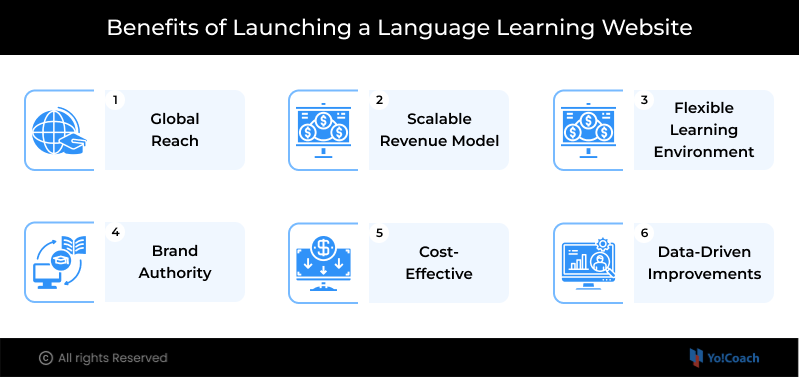
- Global Reach: Connect with learners across continents without geographical limitations, allowing your platform to grow internationally from day one.
- Scalable Revenue Model: Earn through subscriptions, course sales, session-based pricing, or premium memberships.
- Flexible Learning Environment: Offer live and self-paced courses, or a blended learning model to suit different learner preferences and schedules.
- Brand Authority: Establish your platform as a trusted name in the global eLearning market by delivering quality content and experiences.
- Cost-Effective: Digital platforms reduce overhead compared to traditional classrooms.
- Data-Driven Improvements: Use learner data and analytics to optimize courses and enhance user experience.
Launching a language learning platform allows entrepreneurs to tap into a growing global market while providing meaningful value to learners everywhere.
Build a Scalable Language Learning Platform
Popular Language Learning Websites
For anyone looking to enter the global language learning market, it’s important to understand how the leaders in this space operate. Here’s a curated list of the most popular platforms worldwide, each with a unique approach to language learning:
1. Duolingo
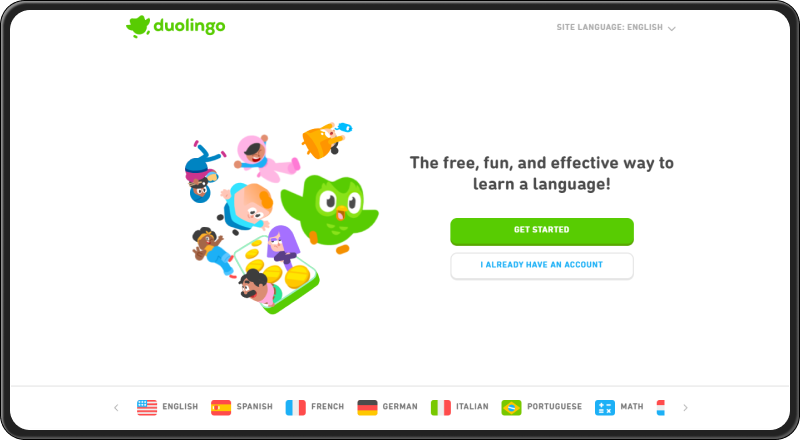
Duolingo is one of the most widely used language learning platforms globally, known for its gamified and engaging approach. Its playful design lowers the entry barrier for beginners while keeping learners engaged through consistency, making it especially popular among casual learners and younger audiences.
Key Features:
- Bite-sized interactive lessons
- Gamification tools such as points, streaks, and leaderboards
- Supports 40+ languages
- Free with optional premium subscription
Why It Stands Out: Its game-like interface makes learning addictive and accessible for learners of all ages, from casual users to serious language enthusiasts.
2. Babbel
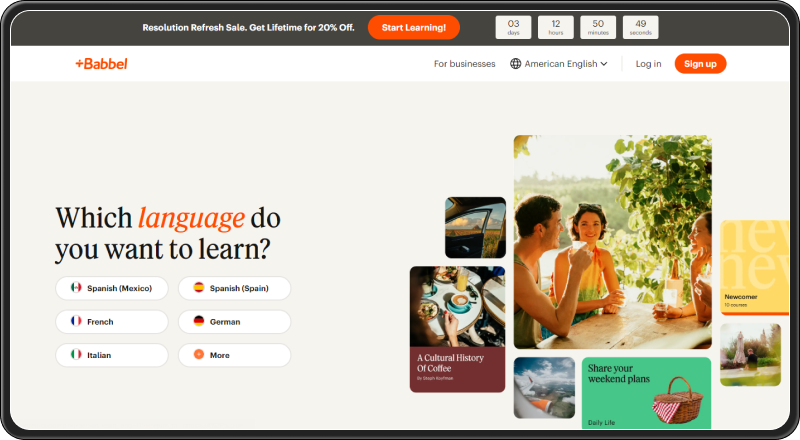
Babbel focuses on practical, real-life conversational skills and offers structured lessons. Its content is structured and purpose-driven, making it particularly appealing to professionals and adult learners who value clear progress and real-world application.
Key Features:
- Skill-focused courses, including speaking, listening, and comprehension
- Personalized learning paths based on skill level
- 14+ languages available
- Subscription-based with professional content
Why It Stands Out: Babbel emphasizes actionable learning, which makes it ideal for adults who want to speak confidently in real-world scenarios.
3. Rosetta Stone
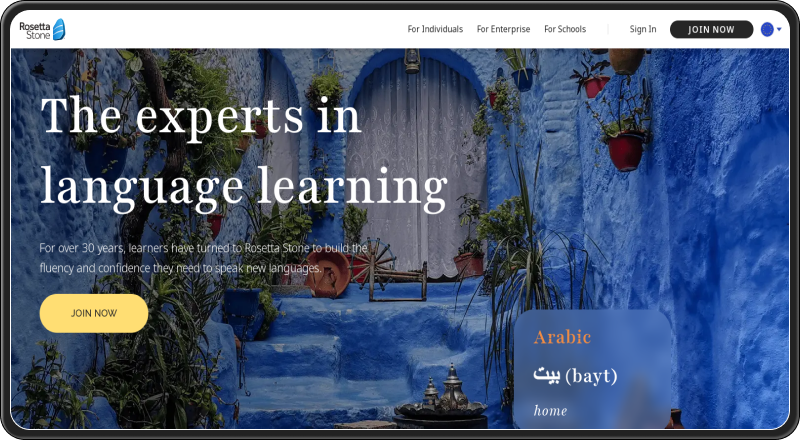
Rosetta Stone uses an immersive approach to teach languages naturally without relying on translation. It encourages learners to think directly in the target language. This method supports long-term retention and comprehension, making it a strong choice for learners seeking a more traditional, academic-style experience.
Key Features:
- Visual and auditory immersive lessons
- Speech recognition for pronunciation practice
- 24 languages offered
- Mobile app for learning anywhere
Why It Stands Out: Known for its immersive methodology, it replicates the way humans learn their first language, making it effective for deep learning.
4. Busuu
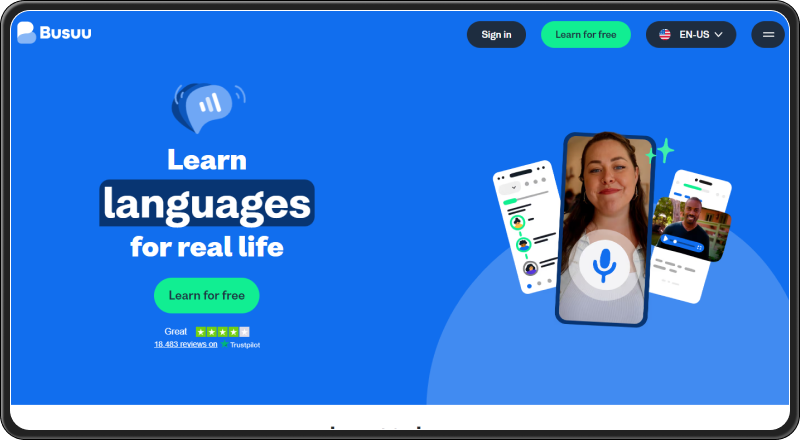
Busuu blends AI-driven lessons with a social community where learners interact with native speakers. Blending technology with peer interaction, it helps learners improve accuracy and confidence while benefiting from real feedback from native speakers around the world.
Key Features:
- AI-powered grammar and vocabulary exercises
- Community feedback from native speakers
- 12+ languages available
- Certification options for skill verification
Why It Stands Out: Combining technology and social interaction, Busuu provides a comprehensive and interactive learning experience.
5. Lingoda
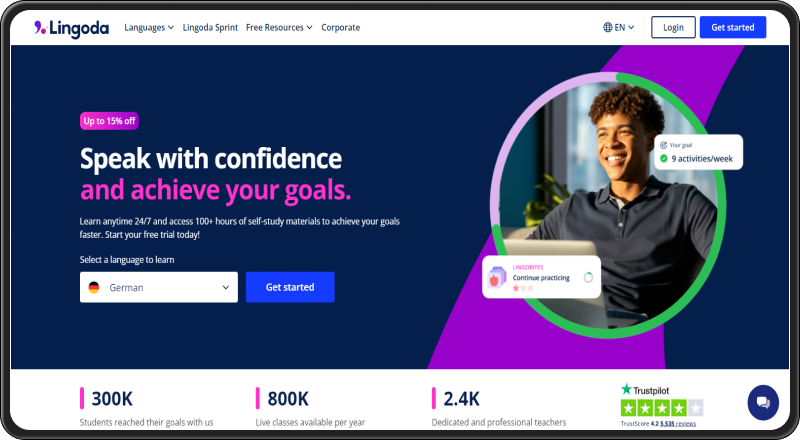
Lingoda is an online language school offering live, structured lessons with professional tutors. Its structured curriculum and scheduled lessons attract learners who prefer guided instruction, routine, and accountability from qualified language teachers.
Key Features:
- Small group or one-on-one live classes
- Certified teachers from native-speaking countries
- Flexible schedules for different time zones
- 4 main languages: English, German, French, and Spanish
Why It Stands Out: Its structured live classes mimic a traditional classroom experience, perfect for learners seeking real-time guidance and accountability.
6. italki
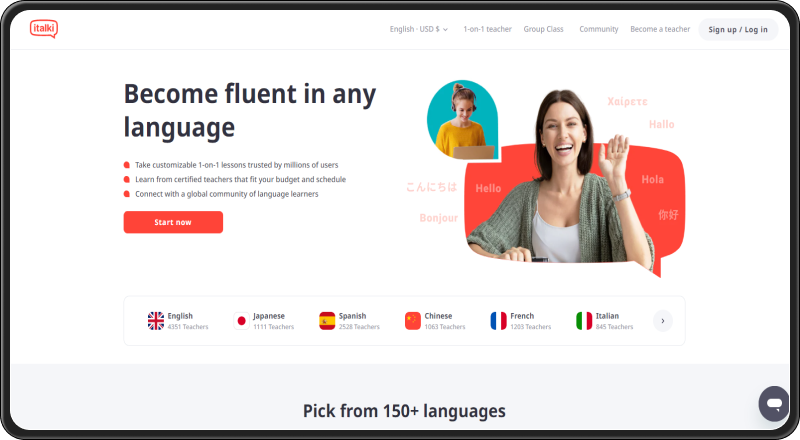
italki connects learners with professional teachers and community tutors for one-on-one lessons. By giving learners direct access to a wide range of tutors, it supports highly customized learning journeys tailored to individual goals, budgets, and learning styles.
Key Features:
- Personalized tutoring with native speakers
- Flexible pricing and scheduling
- 150+ languages offered
- Community-driven learning with forums and language exchanges
Why It Stands Out: italki’s massive teacher network and personalized one-on-one lessons make it ideal for learners who want tailored guidance.
7. Cambly
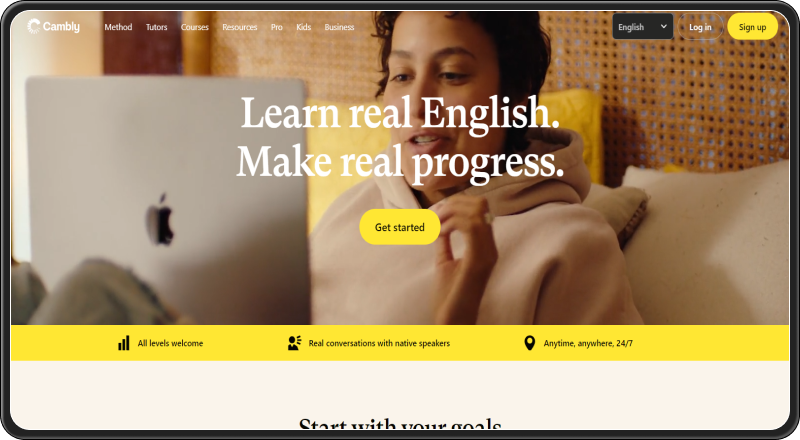
Cambly focuses on conversational practice with native English speakers, offering instant access to tutors. Its instant-access model is well-suited for learners who want to build fluency and confidence through frequent conversation without long-term commitments or complex scheduling.
Key Features:
- On-demand one-on-one lessons
- Native English-speaking tutors
- Flexible scheduling and pay-as-you-go options
- Focus on speaking and pronunciation skills
Why It Stands Out: Cambly is perfect for learners seeking practical conversation skills with minimal barriers to starting a session.
8. Preply
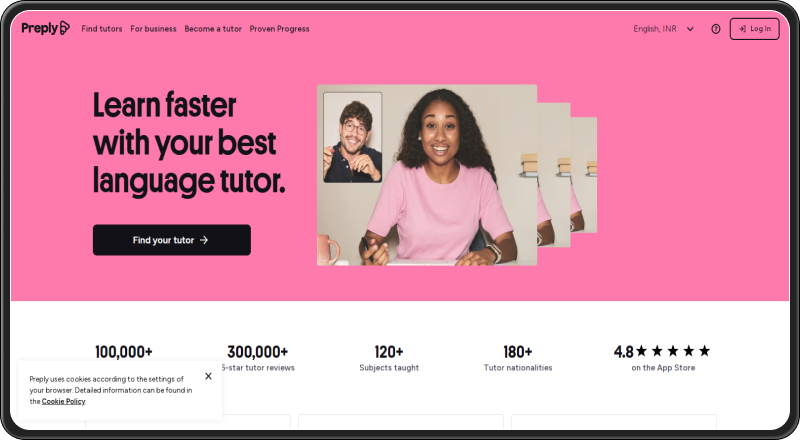
Preply is an online marketplace for tutors across a wide range of languages and subjects. Its flexible structure appeals to learners seeking customized instruction, whether for casual learning, professional growth, or exam preparation.
Key Features:
- One-on-one tutoring with vetted professionals
- Personalized lesson plans
- Flexible scheduling and pricing
- 50+ languages available
Why It Stands Out: Preply’s marketplace model allows learners to choose tutors that best fit their learning style, schedule, and budget.
Suggested Read: Best Company to Develop a Website Like Preply
9. Verbling
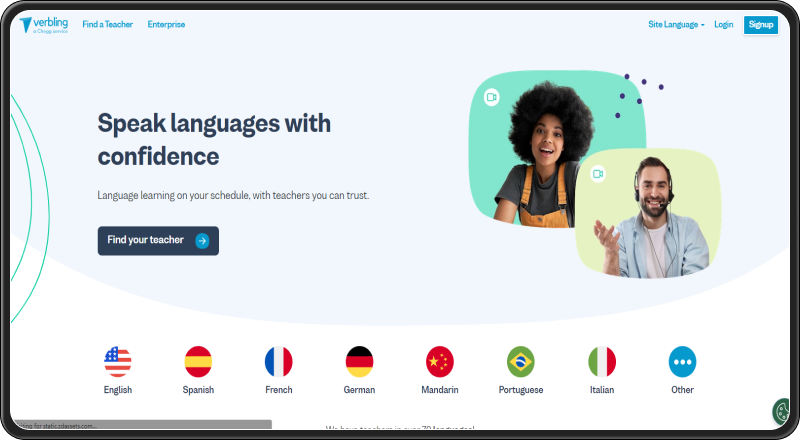
Verbling connects learners with professional teachers via live video lessons, emphasizing quality and convenience. With a focus on professional instructors and integrated lesson tools, it attracts learners who value structured sessions, consistency, and a polished virtual classroom environment.
Key Features:
- Certified native-speaking tutors
- Live video classes with integrated tools for lessons
- Flexible scheduling
- Multiple languages supported
Why It Stands Out: Verbling emphasizes quality instruction and seamless online teaching tools, making it a trusted choice for serious learners.
Key Features for a Global Language Learning Platform
Building a successful language learning platform for global learners requires a mix of technology, teaching skills, and engagement strategies. A well-designed platform should not only deliver quality education but also adapt to diverse regions, learning styles, and user expectations. Below are the essential features that every global-ready language learning platform should include:
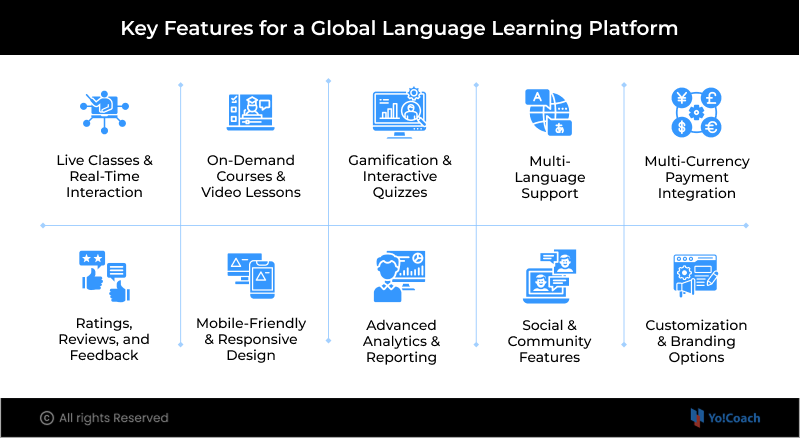
1. Live Classes & Real-Time Interaction
- Enable learners to attend live sessions with tutors from anywhere in the world.
- Integrated video conferencing, chat, and interactive whiteboard tools make classes more engaging and effective.
- Supports time zone management so learners can schedule classes conveniently.
Why It Matters: Real-time learning and interaction ensure instant feedback, conversation practice, and a personalized experience, which is crucial for language mastery.
2. On-Demand Courses & Video Lessons
- Pre-recorded lessons provide flexibility to learners to study at their own pace, anytime, and from anywhere.
- Courses should include tutorial videos, practice exercises, and downloadable resources.
- Ideal for learners in different time zones or with varying schedules.
Why It Matters: Flexibility is key for global learners and helps increase engagement and platform retention.
3. Gamification & Interactive Quizzes
- Gamification features, such as points, badges, streaks, and leaderboards, do motivate learners to complete lessons.
- Quizzes and mini-games reinforce learning and make practice fun.
- Includes progress tracking and adaptive difficulty levels for personalized learning paths.
Why It Matters: Gamification keeps learners motivated, improves retention, and enhances the overall user experience.
4. Multi-Language Support
- The platform interface, instructions, and content should support multiple languages.
- Helps learners navigate the platform easily and increases accessibility for international users.
- Enables tutors to create content in different languages for global reach.
Why It Matters: A multi-language interface expands your potential audience and drives higher adoption across regions.
5. Multi-Currency Payment Integration
- Accept payments from learners around the world with multiple currencies and payment gateway options.
- Supports subscriptions, one-time payments, or course bundles.
- Includes automated invoicing, refunds, and tax compliance.
Why It Matters: Simplifies international transactions and reduces friction, making the platform truly global.
6. Ratings, Reviews, and Feedback
- Learners can rate courses, tutors, and leave reviews, creating transparency and trust.
- Provides feedback mechanisms for continuous improvement of courses and teaching methods.
- Helps prospective learners make informed decisions.
Why It Matters: Trust is a critical component for online learning platforms. Ratings and reviews build credibility and improve learner satisfaction.
7. Mobile-Friendly & Responsive Design
- Ensures a seamless experience across smartphones, tablets, and desktops.
- Learners can access lessons and live sessions on-the-go, anywhere in the world.
- Includes offline access for pre-downloaded lessons.
Why It Matters: Mobile accessibility is a must in today’s global learning market, where many users rely on mobile devices for education.
8. Advanced Analytics & Reporting
- Track learner progress, engagement, and performance using dashboards and reports.
- Tutors and platform admins can identify popular courses, weak areas, and high-performing content.
- Provides insights to improve course design and teaching effectiveness.
Why It Matters: Data-driven decisions help optimize the platform for better outcomes and global scalability.
9. Social & Community Features
- Discussion forums, group chats, and language exchange communities allow learners to practice with peers and native speakers.
- Facilitates networking, collaboration, and real-world language practice.
Why It Matters: A strong learning community boosts engagement, collaboration, learner retention, and enhances the overall experience.
10. Customization & Branding Options
- Fully customizable interface to reflect your brand identity.
- Flexible features to adapt the platform for different languages, regions, or teaching methods.
- Enables creation of a unique user experience for your global audience.
Why It Matters: A distinct, branded experience builds authority and differentiates your platform from competitors.
Launch a Feature-Rich Language Learning Website
Summary Table
| Feature | Global Benefit | Importance |
| Live Classes & Interaction | Learners connect with tutors worldwide | High |
| On-Demand Courses | Study anytime, suitable for different time zones | High |
| Mobile-Friendly Design | Learning on-the-go for global users | High |
| Multi-Language Support | Increases accessibility and adoption | High |
| Multi-Currency Payments | Simplifies global transactions | High |
| Ratings & Reviews | Builds trust and transparency | Medium |
| Gamification & Quizzes | Boosts engagement and retention | Medium |
| Analytics & Reporting | Data-driven platform optimization | Medium |
| Community Features | Peer learning and engagement | Medium |
| Customization & Branding | Unique identity and adaptability | Medium |
Challenges While Developing a Language Learning Website and How to Overcome Them
Building a successful language learning platform is exciting, but it also brings several technical and operational challenges. Below are the most common obstacles and practical ways to address them:
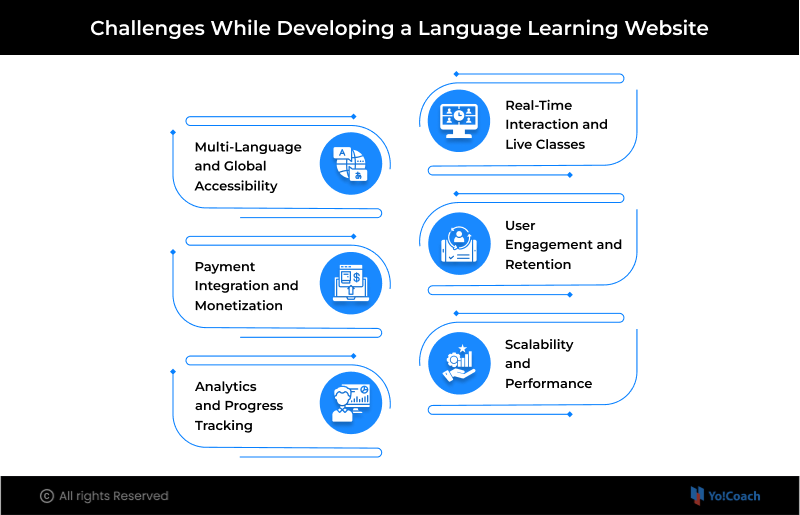
1. Real-Time Interaction and Live Classes
Delivering smooth live classes, video conferencing, and interactive sessions can be technically demanding. Features such as screen sharing, whiteboards, and low-latency video require reliable infrastructure and careful implementation.
Solution:
A platform with built-in live class functionality can simplify this process, including:
- One-on-one and group tutoring
- Integrated video chat and interactive whiteboard
- Real-time scheduling and class management
Benefit: You can launch a fully functional platform immediately, without worrying about a complex technical setup.
2. Multi-Language and Global Accessibility
Reaching learners across different regions requires support for multiple languages, currencies, and time zones. Building these capabilities from scratch can be time-consuming and costly.
Solution:
A global-ready platform typically offers:
- Multi-language interfaces for learners and tutors
- Multi-currency payment support
- Time zone-aware scheduling
Benefit: Your platform is globally ready from the start, making it easy to attract international learners.
3. User Engagement and Retention
Keeping learners motivated and engaged is one of the biggest hurdles. Without engaging tools, such as gamification, progress tracking, or interactive tools, learners may lose interest quickly.
Solution:
Engagement-driven features such as:
- Gamification features like points, badges, and progress tracking
- Quizzes, exercises, and interactive lesson modules
- Ratings and reviews to build trust and community
Benefit: Learners stay motivated, increasing retention and satisfaction.
4. Payment Integration and Monetization
Managing secure payments, subscriptions, refunds, and international transactions can be complex for language learning platforms.
Solution:
A flexible monetization system that supports:
- Multiple payment gateway integrations
- Subscription, one-time, and course bundle options
- Automated invoices and refund handling
Benefit: You can monetize your platform securely without worrying about compliance issues.
5. Scalability and Performance
As the platform grows, supporting large numbers of users, live sessions, and content can impact performance if not planned properly.
Solution:
A scalable, cloud-ready architecture that provides:
- Cloud-ready architecture
- Optimized for high user traffic and concurrent live classes
- Flexible to add new features and expand globally
Benefit: Your platform can grow seamlessly, serving a global user base without downtime or lag.
6. Analytics and Progress Tracking
Measuring learner progress, platform performance, and tutor efficiency can be complex without integrated analytics tools.
Solution:
Integrated dashboards and reporting tools that offer:
- Built-in dashboards for admins, tutors, and learners
- Detailed reports on course completion, engagement, and revenue
- Tools to identify popular courses and areas for improvement
Benefit: You can make data-driven decisions to continuously enhance the learning experience.
Suggested Read: Guide to Build a Language Learning Website
Top Companies for Language Learning Website Development
Building a language learning platform is a complex task that requires expertise in eLearning technology, scalability, user engagement, and global accessibility. Choosing the right development partner can significantly reduce time-to-market while ensuring your platform is reliable, competitive, and future-ready on a global scale. Here’s a detailed look at some of the top companies that can help you build language learning websites, along with their pros and cons:
1. FATbit Technologies (Yo!Coach)
FATbit Technologies is a globally recognized IT solutions provider. Their ready-made white-label software, Yo!Coach allows entrepreneurs and businesses to launch fully-featured language learning marketplaces quickly, without the need for complex custom development. Instead of spending months on custom development, businesses get a proven, scalable platform that supports global growth from day one.
Why FATbit Stands Out:
- Yo!Coach is white-label and fully customizable, allowing you to brand the platform as your own.
- Supports live classes, one-on-one and group tutoring, multi-language interface, and multi-currency payments.
- A scalable platform that can handle thousands of users simultaneously.
- Offers analytics, ratings, reviews, and subscription management.
- Ready-to-use platform for faster launch and reduced development time
- Built-in video classes, whiteboards, real-time chat, and scheduling tools
Pros:
- Ready-made solution reduces time-to-market
- Fully customizable and brandable
- Supports global features (multi-language, multi-currency)
- Scalable for high-traffic platforms
- Proven success with startups worldwide
Cons:
- Businesses may need to adapt processes to fit the platform’s existing architecture
See Yo!Coach in Action
2. S-PRO
S-PRO is a technology consulting and development company that focuses on building innovative, scalable digital platforms, including advanced eLearning and language learning solutions. The company often incorporates modern technologies for future-ready platforms.
Pros:
- Strong focus on scalable and secure platform architecture
- Experience with gamified and interactive learning solutions
- Suitable for complex, innovation-driven platforms
Cons:
- More suitable for tech-heavy projects than simple marketplaces
- Development costs may be higher for smaller businesses
- Requires detailed planning and technical involvement
3. LearnCube
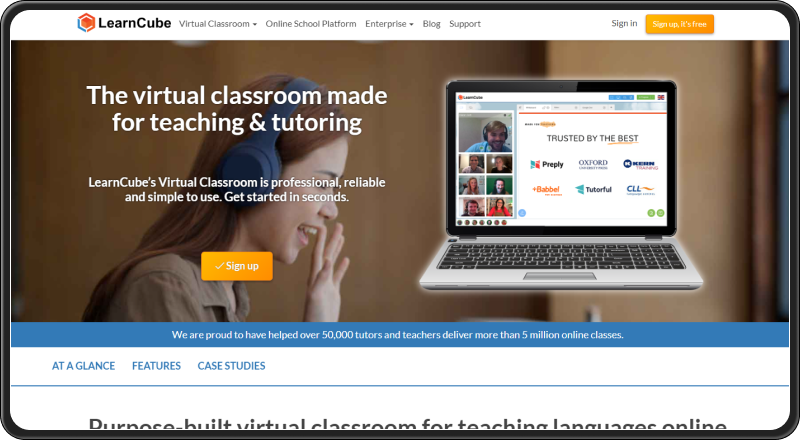
LearnCube provides a ready-made virtual classroom solution designed specifically for online tutoring and language learning businesses. It focuses on live teaching, virtual classrooms, and tutor-led instruction.
Pros:
- Purpose-built for live language tutoring
- Integrated virtual classroom and scheduling tools
- Quick setup for tutoring-based businesses
Cons:
- Limited support for large marketplace models
- Less flexibility for advanced customization
- Primarily focused on live classes only
4. Teachable
Teachable offers a ready-made solution for launching online education websites. It is commonly used by educators to monetize digital courses, including language learning programs.
Pros:
- Fast launch with built-in monetization tools
- Simple interface for instructors and learners
- Handles payments, hosting, and content delivery
Cons:
- Limited live interaction and tutoring features
- Not designed for tutor marketplaces
- Customization options are relatively basic
5. LearnWorlds
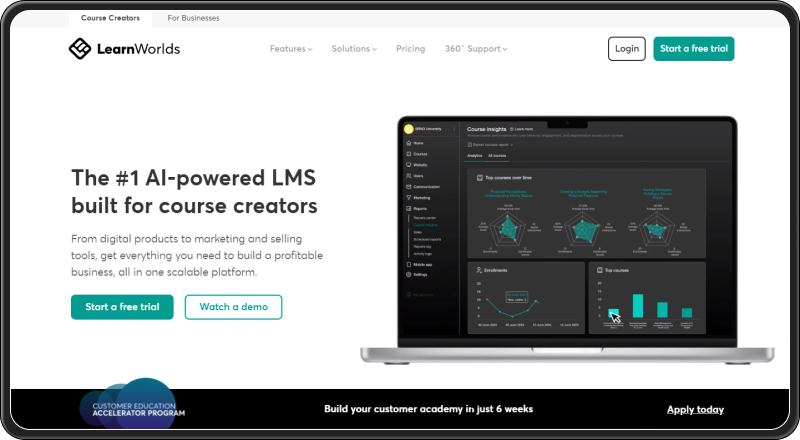
LearnWorlds is a UK-based company that offers a ready-made solution for creating and managing online learning websites. While not built for language learning, it provides flexible tools that can be adapted for language courses and tutor-led programs.
Pros:
- Ready-to-use platform with fast setup
- Built-in course creation and learner management tools
- Strong analytics and reporting features
Cons:
- Limited marketplace-style tutoring features
- Less suitable for live tutor marketplaces
- Customization beyond core features may be restricted
Comparing the Top Companies
| Criteria | FATbit Technologies (Yo!Coach) | S-PRO | LearnCube | Teachable | LearnWorlds |
| Solution Approach | Ready-made white-label marketplace software | Fully custom development | Ready-made virtual classroom | Ready-made course platform | Ready-made learning platform |
| Time to Launch | Short (weeks) | Long (months) | Very short (days to weeks) | Very short (days) | Short (days to weeks) |
| Platform Ownership | Full ownership with source access | Full ownership (custom-built) | Subscription-based | Subscription-based | Subscription-based |
| Business Model Fit | Tutor marketplaces and hybrid models | Custom, innovation-led platforms | Live tutoring businesses | Course sellers | Course creators and coaches |
| Customization Flexibility | High within a proven framework | Very high, built from scratch | Low to medium | Low | Medium |
| Scalability Readiness | High, designed for large user volumes | High, depends on the architecture | Medium | Medium | Medium |
| Global Expansion Support | Strong support for global audiences | Depends on project scope | Limited | Limited | Limited |
Why Choose Yo!Coach for Language Learning Website Development?
While many companies offer custom development, FATbit’s Yo!Coach is a robust, ready-made, and white-label solution built specifically for language learning marketplaces. This means:
- You can launch quickly, saving months of development time
- The platform is fully scalable and efficiently handles thousands of learners globally
- Supports multi-language and multi-currency support, which makes it globally accessible
- Customizable features allow you to brand and adapt the platform to your business model
- Includes all essential features such as live classes, analytics, ratings, and subscriptions
In short, Yo!Coach is a turnkey solution which offes the flexibility of a custom platform, making it an ideal choice for businesses looking to enter the global language learning market.
Language Learning Websites Built with Yo!Coach
Building a language learning website from scratch can be complex, but platforms powered by Yo!Coach, FATbit Technologies’ ready-made white-label solution, demonstrates how it’s possible to launch a scalable, feature-rich, and globally accessible language learning marketplace efficiently. These platforms cater to learners of all ages and languages, offering interactive lessons, live tutoring, and personalized learning paths.
Here are some inspiring examples of language learning websites built with Yo!Coach:
1. Language Explorer
Language Explorer connects students with native-speaking language tutors worldwide. Using Yo!Coach, the platform delivers:
- One-on-one and group tutoring sessions
- Custom learning paths based on proficiency
- Seamless scheduling and trial lessons
- Intuitive, multi-language interface for learners of all levels
This highlights how Yo!Coach helps launch professional platforms with minimal development time while supporting international learners.
2. FluencyABC
FluencyABC is a feature-rich online language learning platform created to help learners develop strong conversational skills and connect easily with tutors. Built with a flexible, customizable platform, FluencyABC delivers:
- Multiple learning modes, including one-on-one, group sessions, and self-paced courses
- Advanced search and tutor profiles for fast discovery and booking
- Automated tools like calendar syncing and location-based time zone updates
- Integrated payment options and personalized notifications
This example highlights how a versatile language platform can blend structured learning, live interaction, and convenience to deliver a comprehensive educational experience.
3. Syllable Space
Syllable Space is a holistic language learning platform focused on improving fluency and comprehension. Powered by Yo!Coach, it offers:
- Interactive live classes with real-time chat
- Gamified exercises for better engagement
- Secure, flexible payment options
- Peer-to-peer learning communities
The platform shows how Yo!Coach can enhance learner engagement and retention with interactive tools and structured lesson delivery.
4. Convrld
Convrld serves as a global marketplace connecting students with language tutors. Key capabilities include:
- Smart tutor-student matching based on preferences and goals
- Flexible class durations and group sessions
- Discussion forums and advanced search filters
Leveraging Yo!Coach, Convrld provides a customized learning experience while ensuring smooth operations for tutors and students alike.
5. Language Center of Congo
The Language Center of Congo focuses on preserving and teaching foreign languages. Built with Yo!Coach, it features:
- Courses in indigenous languages such as Lingala, Swahili, and Wolof
- Culturally rich content integrated into lessons
- Interactive sessions with native-speaking instructors
Yo!Coach allows mission-driven platforms like Congo Languages to combine cultural preservation with modern eLearning technology, making these languages accessible worldwide.
Other Notable Examples
- Langoli (Nigeria): It is an online tutoring marketplace offering one-on-one and group sessions. Langoli focuses on accessibility and flexible scheduling, making it easier for learners to connect with qualified tutors.
- Fluentile (USA): Fluentile delivers personalized learning plans across multiple proficiency levels. Additionally, the platform emphasizes skill improvement, combining live tutoring and progress tracking to support long-term learner success.
- Valingo (USA): Valingo specializes in French and English learning with assessment and certification features. It supports structured learning paths, skill evaluations, and tutor-led sessions, making it ideal for learners seeking measurable outcomes.
- SuikaTalk (Japan): It is a Japanese language tutoring platform for global learners. SuikaTalk supports conversational practice, cultural context learning, and flexible scheduling to accommodate international learners.
- TurkishMate (Turkey): TurkishMate is focused on Turkish language instruction with tailored workflows. It combines structured lessons, live tutoring, and practical language usage for real-world communication.
- Lessonspace.ca (Canada): It is an English learning platform with integrated scheduling and analytics. Lessonspace.ca supports tutor management, learner progress tracking, and data-driven insights to improve teaching effectiveness and learner engagement.
Launch An Online Language Learning Platform With Yo!Coach
Conclusion
Building a language learning platform can be a complex journey, but to turn it into a strategic advantage, it is critical to partner with the right development company. Platforms built with Yo!Coach, FATbit Technologies’ ready-made white-label solution, demonstrates how entrepreneurs and educators can launch fully-featured, scalable, and globally-ready language learning websites quickly and in a cost-effective manner.
From live one-on-one and group classes to interactive exercises, gamification, and multi-language support, Yo!Coach provides the essential tools needed to engage learners worldwide. Combined with strong development expertise from global IT companies, launching a language learning platform today is more accessible than ever.
Whether you aim to replicate popular platforms like Verbling, Cambly, Preply, or italki, or create a niche-focused language tutoring marketplace, leveraging a solution like Yo!Coach ensures you focus on education and learner experience while leaving the technical complexities to a proven solution.
In short, Yo!Coach helps transform your vision of a global language learning marketplace into a faster, smarter, and fully scalable reality.
Frequently Asked Questions (FAQs)
Q 1. What is language learning website development?
Ans. Language learning website development is the process of building an online platform or marketplace where learners can connect with experienced tutors or structured courses to learn new languages. These platforms typically include live classes, interactive lessons, quizzes, progress tracking, and secure payment integration.
Q 2. How long does it take to develop a language learning website?
Ans. The timeline to develop a language learning website depends on the approach you select. Custom development can take several months, whereas using a ready-made white-label solution like Yo!Coach allows you to launch a fully-featured language learning platform in weeks, with live classes, scheduling, and payment features included.
Q 3. What features should a language learning website have?
Ans. Essential features of a language learning website include:
- Live tutoring (one-on-one or group)
- Interactive lessons and exercises
- Gamification and progress tracking
- Multi-language and multi-currency support
- Scheduling and booking tools
- Payment gateways and monetization options
Q 4. How can I build a scalable language learning website?
Ans. To ensure scalability, the platform must use robust architecture, cloud-ready hosting, and optimized performance for multiple users. Solutions like Yo!Coach are already built for scalability, supporting thousands of concurrent learners and tutors globally without performance issues.
Q 5. Can I customize a language learning website built with Yo!Coach?
Ans. Yes, you can build a customized language learning website using Yo!Coach. It is a fully white-label solution, which means you can customize branding, course structures, workflows, and features to match your business goals and target audience.
Q 6. How can I monetize a language learning website?
Ans. A language learning website can generate revenue through multiple channels. Generally, it includes:
- Subscription plans
- One-time course purchases
- Session-based payments
- Bundled packages
Yo!Coach provides built-in monetization features and integrates with multiple payment gateways to make revenue management simple.
Q 7. Are there successful examples of language learning websites built with Yo!Coach?
Ans. Yes, platforms like Language Explorer, Syllable Space, Convrld, That English Accent, and Congo Languages have leveraged Yo!Coach to launch professional, globally accessible language learning websites.
Ready to Launch Your Own Language Learning Marketplace?
Get In Touch